Streams and Mountains by Xu Ben (Chinese, 1335–1380)
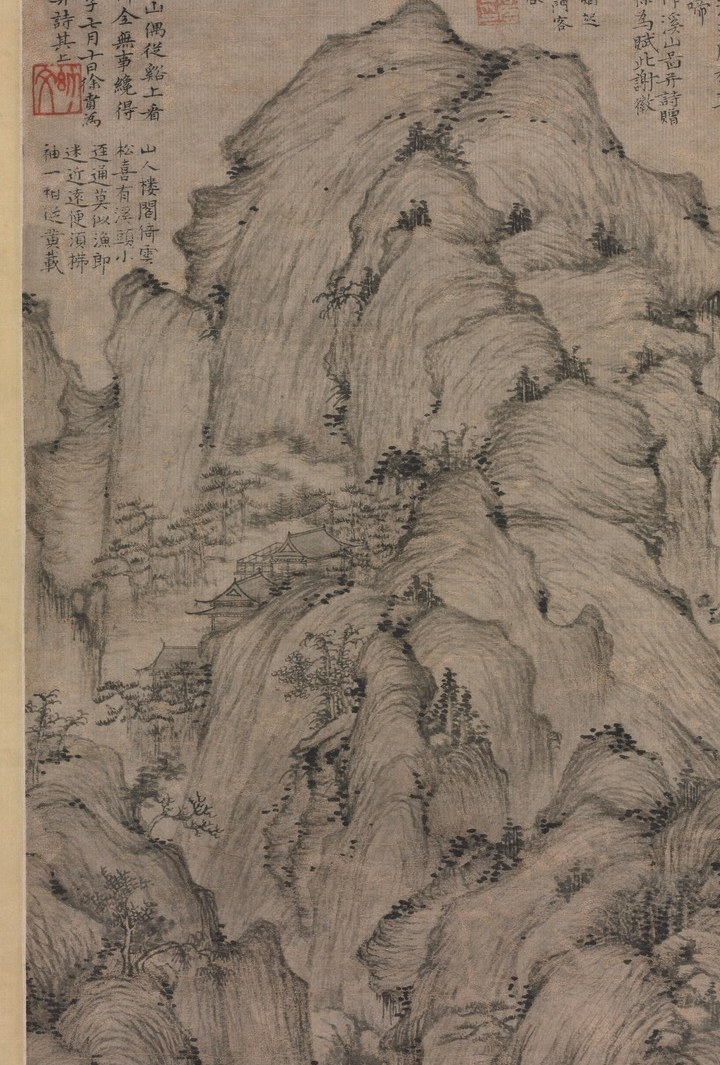
Xu Ben painted "Streams and Mountains" in 1372. The work hangs today as a quiet masterclass in literati painting, how to conjure a mountain of impossible weight with only ink, water, and the raw silk left bare.
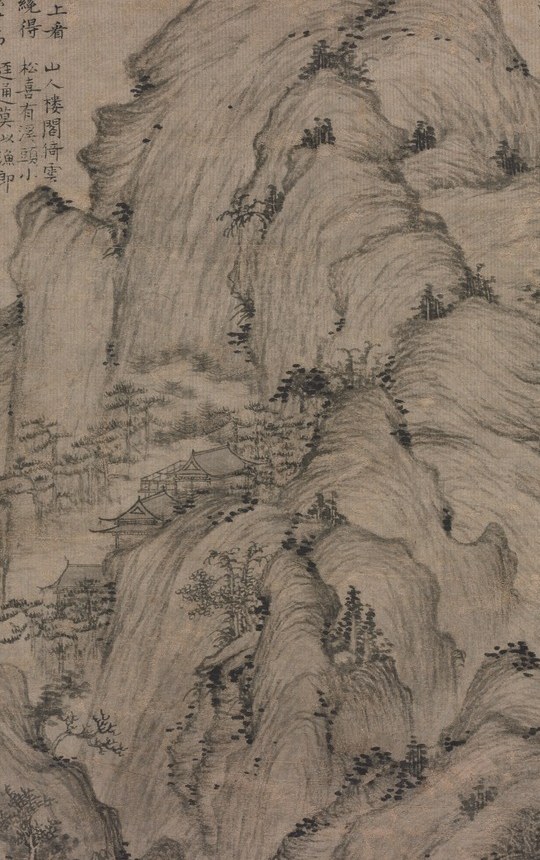
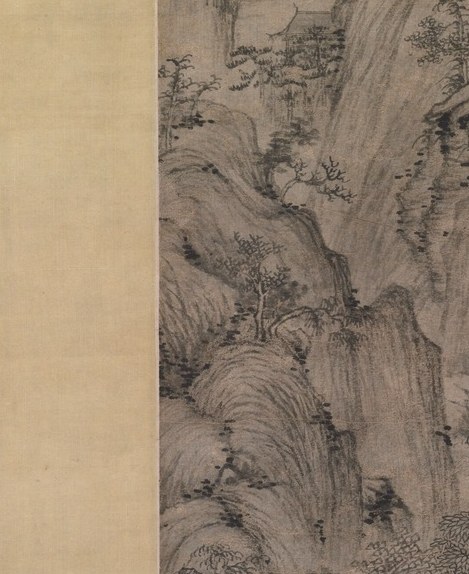
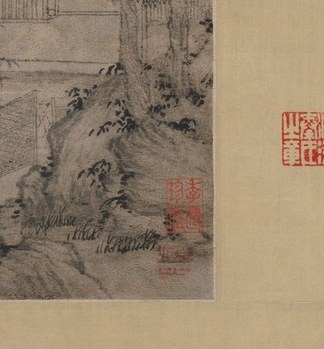
Look at the cliff face. The rough texture is built from rapid, dry brush marks called cun fa, or wrinkle strokes. These are not careful outlines. They are gestural, almost impatient, and they describe rock geology and the artist's hand in the same instant. Then look at the mist between the peaks: Xu Ben painted nothing there at all. The unpainted silk becomes atmosphere. In the Daoist principle of xu, emptiness carries as much meaning as what is brushed.
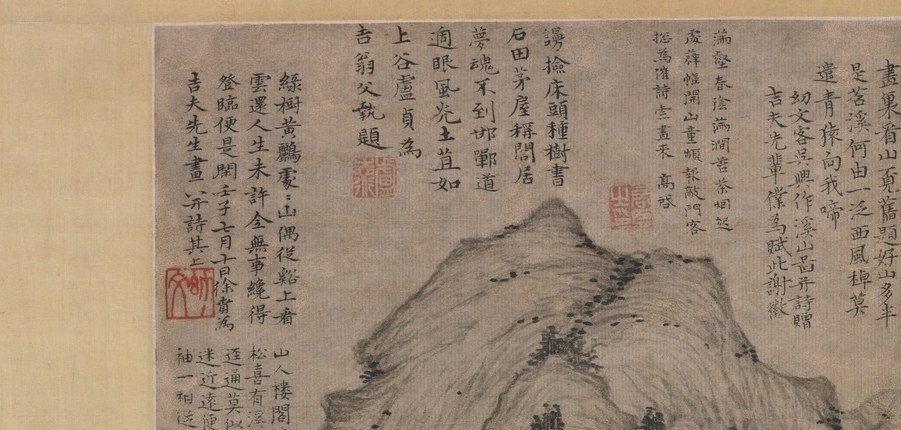
Xu Ben lived from 1335 to 1380, a period of intense transition in Chinese painting. The literati tradition prized calligraphic brushwork and personal expression over polished finish. A multi-column poem at the top of the scroll, likely the artist's own, fuses text and image as equal halves of the work's meaning. Red collector seals scattered along the right edge map the painting's passage through centuries of hands.
The whole mountain rises from nearly nothing, a few fast strokes, a stretch of bare silk, and a conviction that what is absent completes what is there.
Details
Transcript
A single towering peak, nearly bare. Look closer. The rock is built from rapid, dry strokes. These wrinkle strokes are called cun fa. Xu Ben painted this in 1372, using only ink and water. Now watch the mist. It is not painted at all. Raw silk stands for atmosphere. Emptiness given form. The weight of the mountain, made of almost nothing.