The Lone Tenement by Bellows, George
George Bellows' "The Lone Tenement" (1909) is a powerful oil on canvas work, capturing the stark reality of urban life in early 20th-century New York. This painting, held in a private collection, exemplifies Bellows' connection to the Ashcan School, a group of American Realists dedicated to depicting the unvarnished conditions of the city's working class.
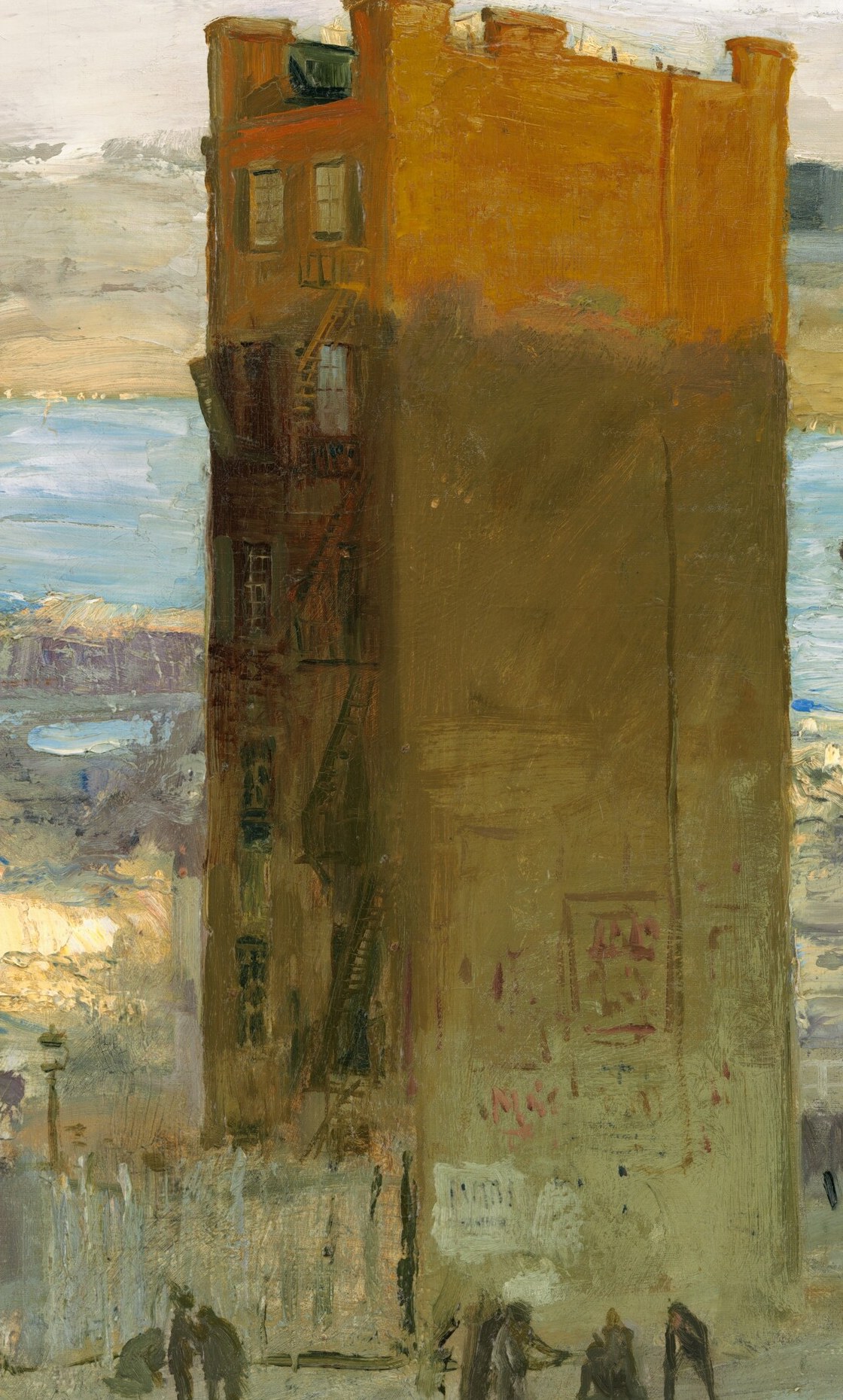
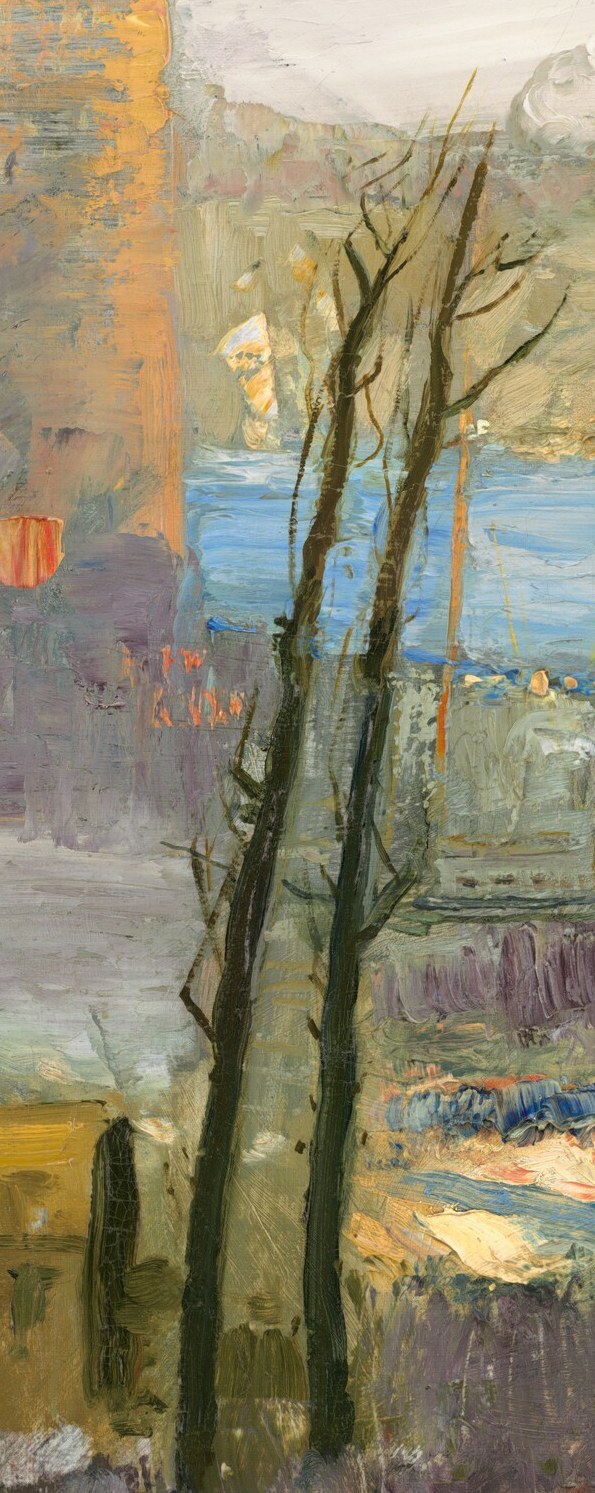
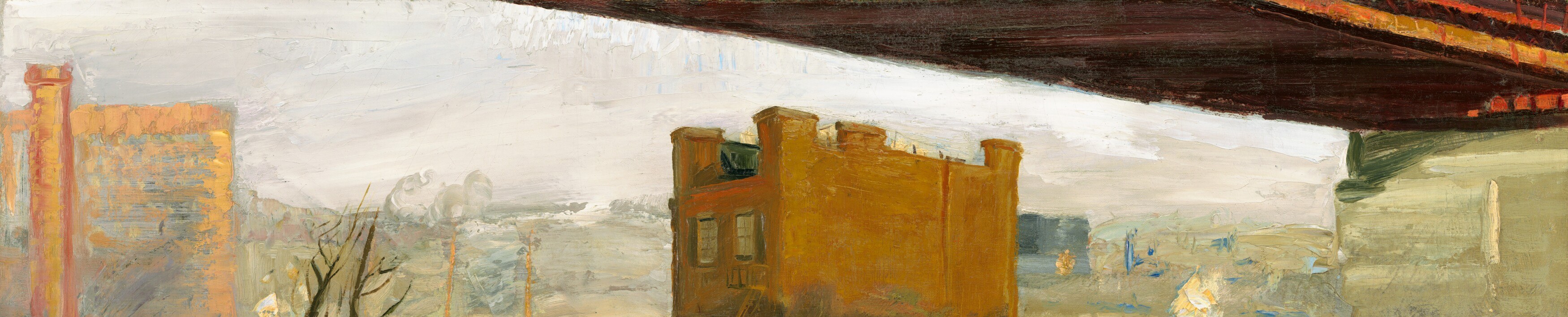
Look closely at the central tenement building. Bellows' characteristic vigorous and broad brushwork is evident here, creating a dynamic texture and a strong sense of volume. His skillful manipulation of light and shadow, a technique known as chiaroscuro, enhances the sense of depth and gives this everyday structure a dramatic, almost theatrical presence.
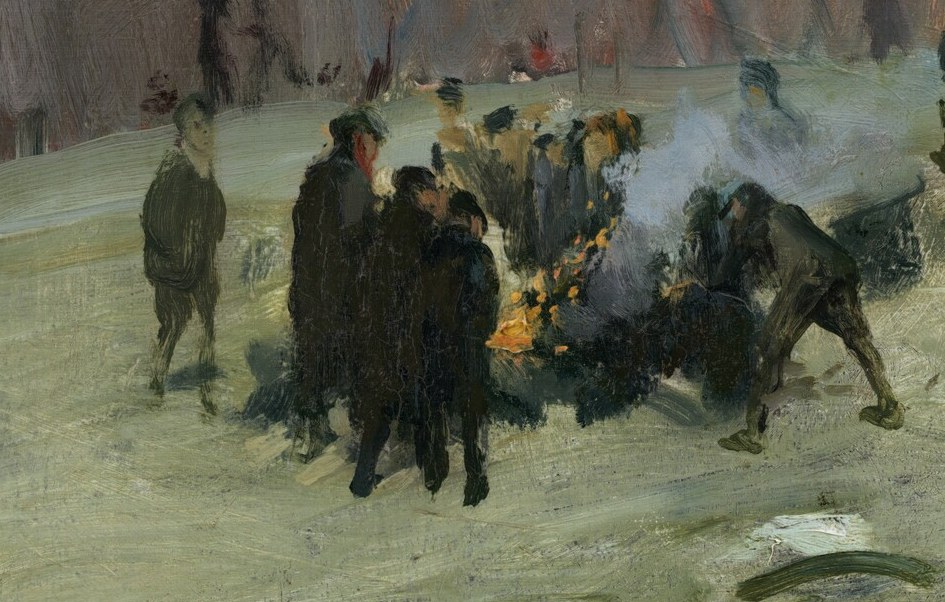
Created shortly after his move to New York, this work marks a shift in Bellows' career towards social commentary. He was drawn to the energy of the city's slums, painting dockworkers, street scenes, and the raw energy of urban life. Bellows, who died young at 42, captured the grit and beauty of city life like no one else.
How does Bellows' use of light transform your perception of this building?
Details
Transcript
This painter turned everyday city scenes into high drama. He was part of the Ashcan School, painting working-class New York. See how he uses broad, vigorous brushstrokes on this building? These strokes create texture and a sense of volume. He used strong contrasts of light and shadow, chiaroscuro, for drama. It makes this simple tenement feel monumental, almost theatrical.