Isle of the Dead by Arnold Böcklin
View the artwork: Isle of the Dead →
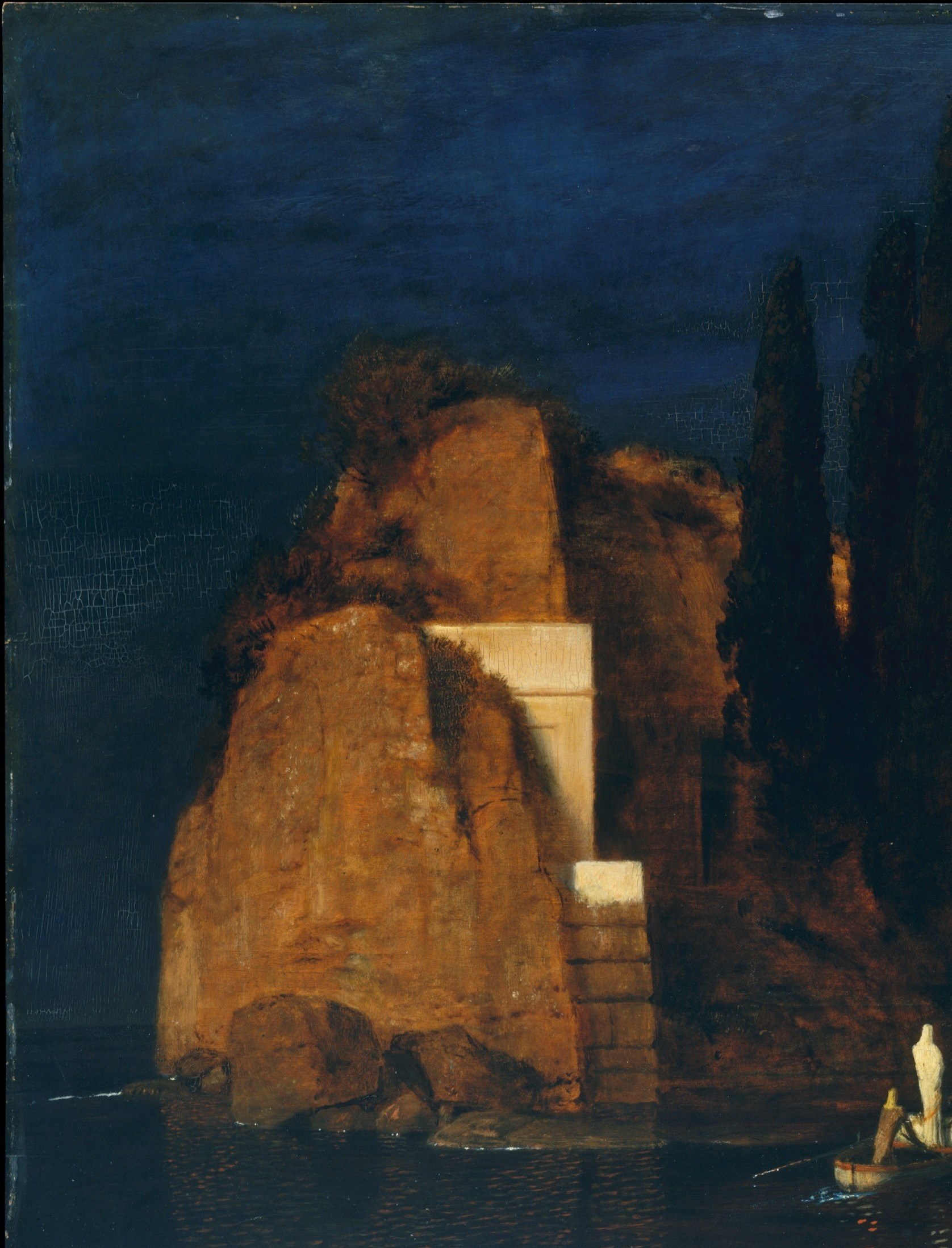
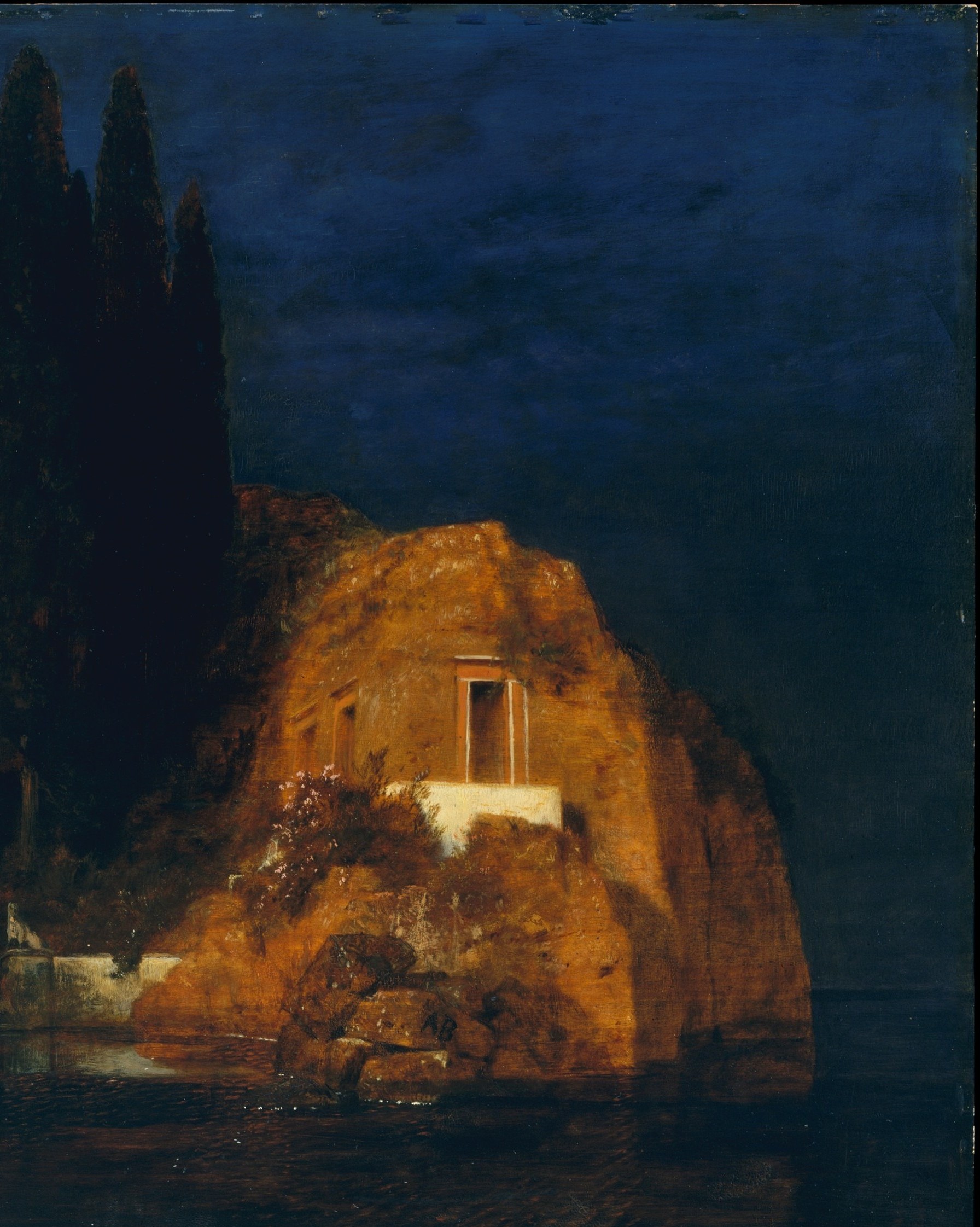
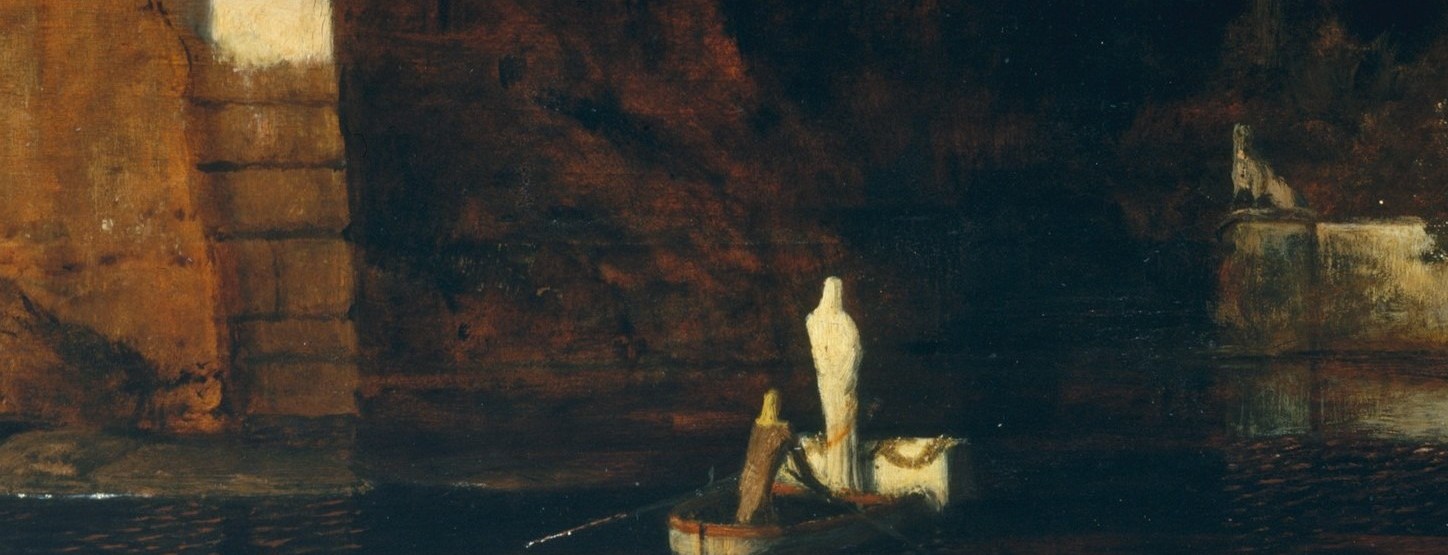
Arnold Böcklin's 'Isle of the Dead' is a complete symbolic grammar of passing from life into death, painted in oil on a wood panel in Florence in 1880. The Metropolitan Museum of Art holds this version, the only one in an American public collection.
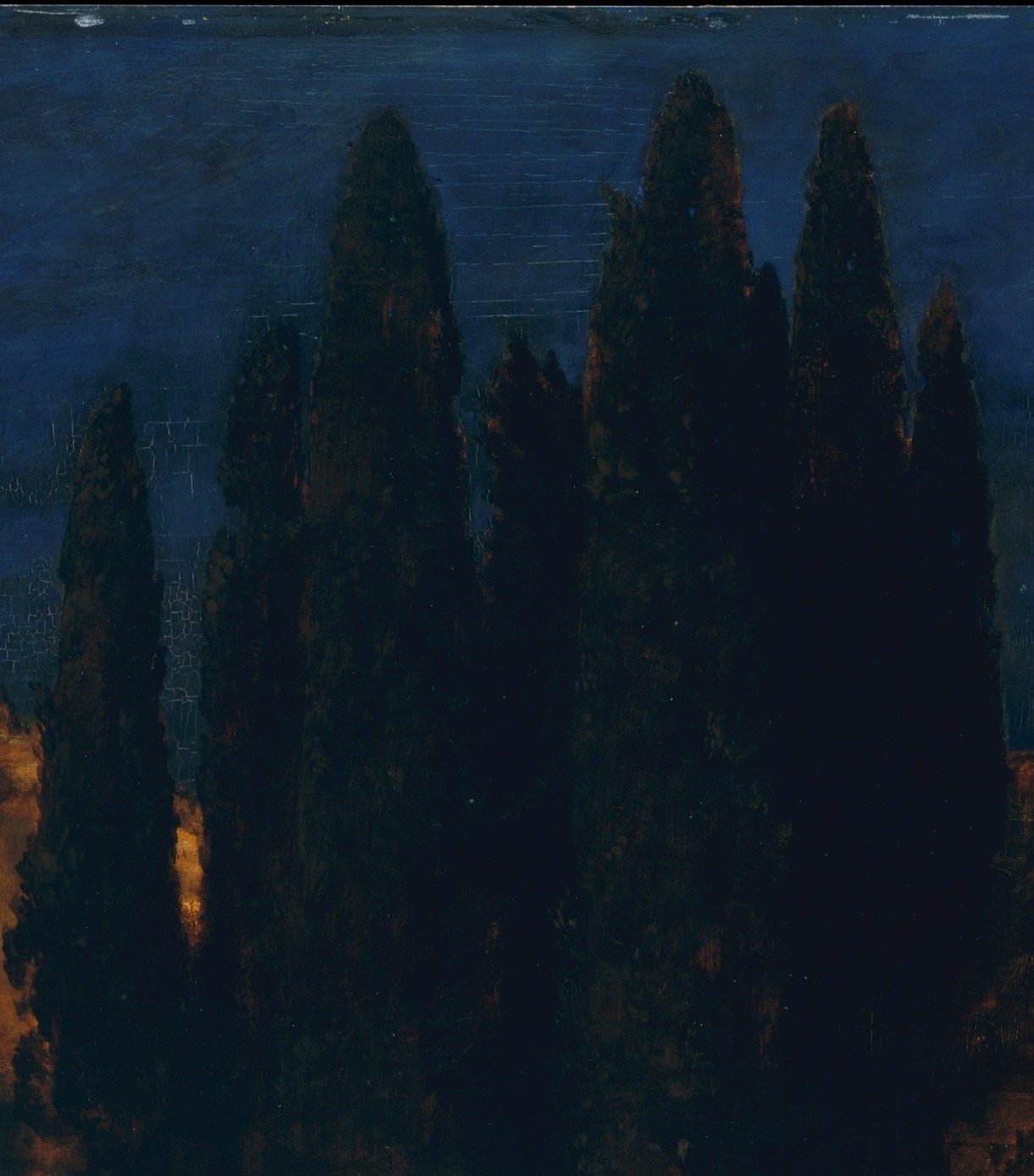
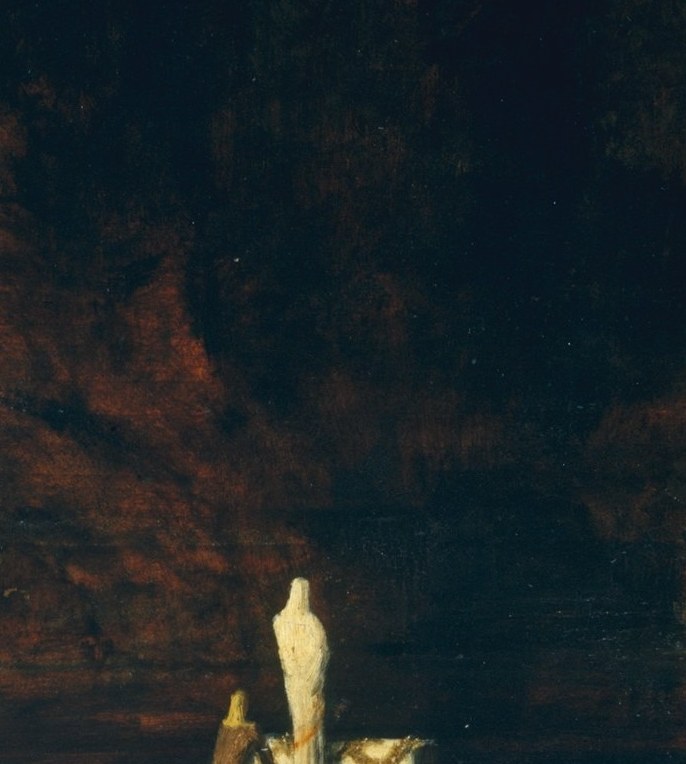
The painting reads like a visual dictionary of ancient funeral customs. The tall dark trees are cypresses, the classical tree of mourning planted in Mediterranean cemeteries. A shrouded figure stands in a small rowboat beside a draped coffin, and the boat drifts toward luminous rectangular openings carved into the cliff face, tombs lit from within by no visible source.
Marie Berna, an American widow, commissioned this work as a memorial to her late husband. She visited Böcklin's studio, saw an unfinished first version, and asked him to add the shrouded figure and coffin. What she received was an image that would become one of the most reproduced paintings in early twentieth-century Germany, a print even kept by Sigmund Freud in his office.
Rachmaninoff composed a symphonic poem after seeing a black-and-white reproduction. Surrealists returned to it for decades. But the painting itself gives you every answer within its frame: boat, trees, tomb, soul. A quiet, complete sentence about what comes next.
#arthistory #symbolism #bocklin
Details
Transcript
Start with the trees. Cypresses. In the Mediterranean, cypresses were planted outside tombs. They announce a cemetery. The boatman. Not a person, a posture. A shrouded soul or Charon himself. He stands beside a draped coffin. The widow who paid for this painting asked for it. Now look into the cliff. Those glowing rectangles are carved tombs. Lit from inside, by no visible source. A necropolis, waiting. The boat is aimed at a narrow dark passage between the cliffs. That is the threshold. Böcklin gives you every symbol: cypress, coffin, soul, tomb. And then he closes the gate.