Artwork
Isle of the Dead
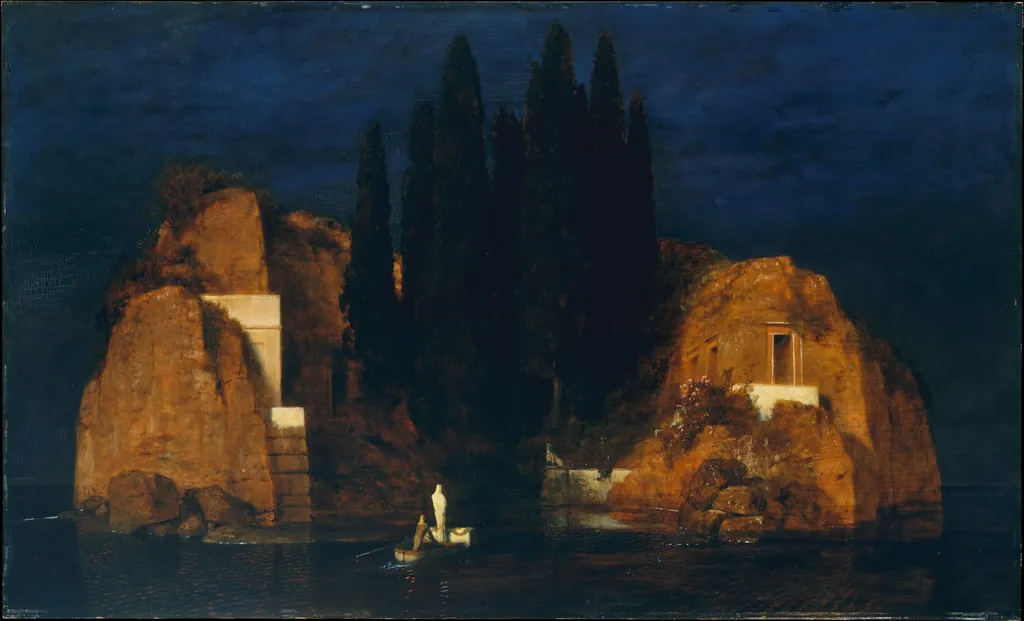
Isle of the Dead is an oil painting by the Symbolist artist Arnold Böcklin. It dates from 1880 and is held in the collection of the Metropolitan Museum of Art.
About this work
In 1880, Marie Berna saw an unfinished canvas on Arnold Böcklin's easel in Florence and commissioned this second version of Die Toteninsel as a memorial to her late husband, asking him to add the shrouded figure and draped coffin in the rowboat. The oil on wood entered the Metropolitan Museum of Art in 1926 and inspired Sergei Rachmaninoff's 1909 symphonic poem.
Subject & Meaning
The painting depicts the mythological figure Charon ferrying a shrouded corpse to a rocky island tomb, surrounded by cypress trees in the evening light.
The painting depicts the mythological figure Charon ferrying a shrouded corpse to a rocky island tomb, surrounded by cypress trees in the evening light. This iconography directly references classical mythology and the journey to the underworld. As a Symbolist work, the scene evokes themes of death, transition, and the eternal.
The use of sunset and somber colors emphasizes a contemplative, melancholic mood. The island, with its tombs, symbolizes the final resting place, while the boat and oar represent the passage from life to death. The work thus serves as a meditation on mortality and the unknown beyond.
Technique & Style
Executed in oil paint on a wood panel, the painting measures 73.7 by 121.9 cm. The panel support and oil medium align with traditional 19th-century painting practices. Stylistically, the work exemplifies the Symbolist movement through its somber, imagined scene of a small island at sunset. Böcklin creates a highly atmospheric composition with a towering grove of cypress trees, a rugged cove, and a funereal bark rowed by Charon carrying a shrouded corpse and a standing woman.
The handling is meticulous, with smooth brushwork that renders the sky, water, and architecture in a polished, illusionistic manner. The overall formal arrangement, centered on the island and the solitary boat, reinforces the painting's meditation on mortality.
Overview
Arnold Böcklin's "Isle of the Dead," painted in Florence in 1880, is an oil on wood panel and the second of five versions the Swiss Symbolist artist created. This particular work, measuring 29 by 48 inches, depicts a somber journey towards a rocky, cypress-laden island. Commissioned as a memorial, it has become Böcklin's most recognized image, resonating with themes of mortality and the afterlife, and is the sole version held in a public collection in the United States.
History & Provenance
This version of "Isle of the Dead" originated from a commission by Marie Berna, an American widow who sought a commemorative piece for her deceased husband after seeing an early iteration in Böcklin's studio. The artist completed it in 1880. Decades later, in 1926, The Metropolitan Museum of Art acquired the painting through the Reisinger Fund.
It holds the distinction of being the only one of Böcklin's five "Isle of the Dead" compositions to reside in an American public institution.
Legacy
"Isle of the Dead" achieved widespread recognition, particularly in early twentieth-century Germany, where reproductions became common in middle-class homes. Its evocative power extended to influential figures like Sigmund Freud, who kept a print in his office. The painting also inspired other art forms, notably Sergei Rachmaninoff's 1909 symphonic poem.
Its haunting imagery continued to influence filmmakers and Surrealist artists, including Salvador Dalí, cementing its place in cultural history.
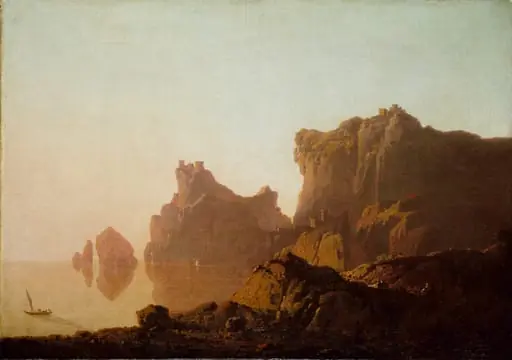
Own this work as a print
Artist & collection
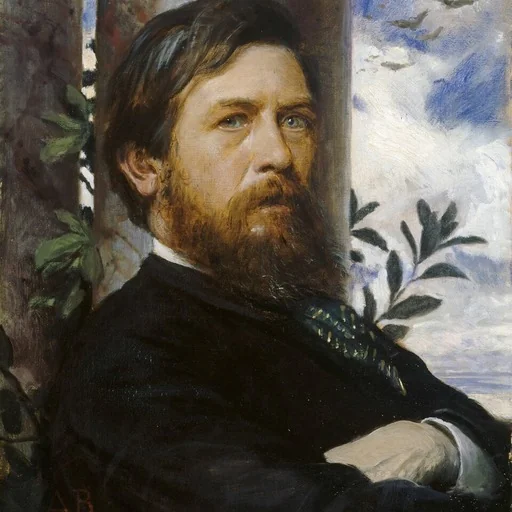
Artist
Arnold Böcklin was a Swiss Symbolist painter. His five versions of the Isle of the Dead inspired works by several late Romantic composers.

- The Gulf of Salerno
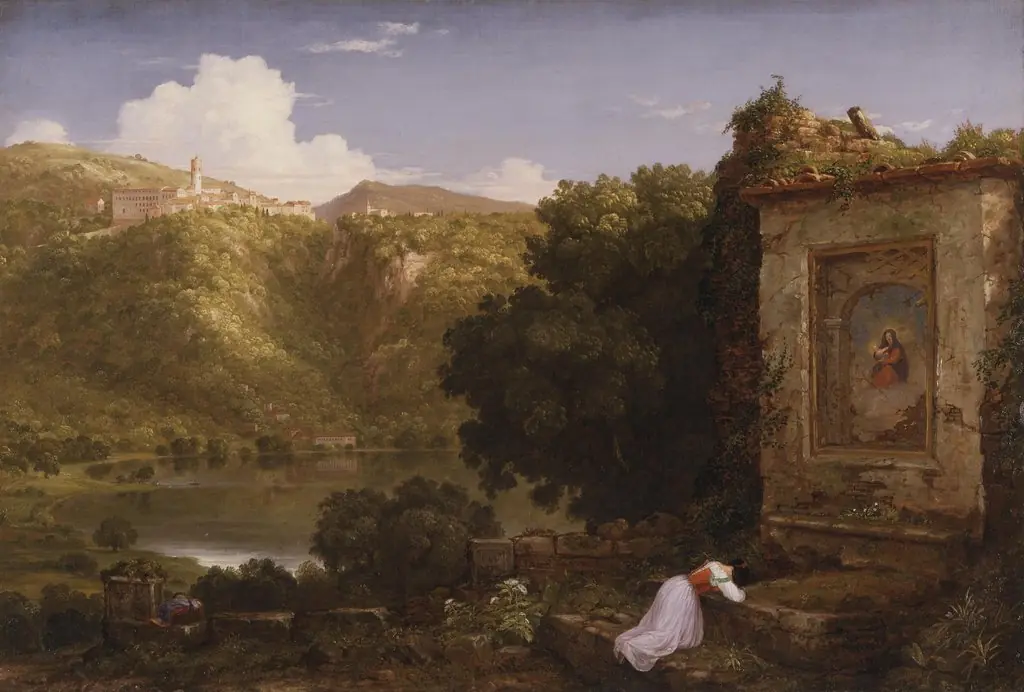 II Penseroso
 Landscape, with pond and classical ruin
 Waterfalls in Tivoli
 Landscape with the Good Samaritan
 Ansicht des Nemisees im Albanergebirge bei Rom
 Evening at Medfield, Massachusetts
 The Voyage of Life: Manhood
 The Deluge
 Romantic Landscape with a Temple
 Matlock Tor by Moonlight
 Waterfall near Tivoli

 Studied in the Mythology in Art course