Louis Kronberg in His Studio in Copley Hall by Arthur Clifton Goodwin
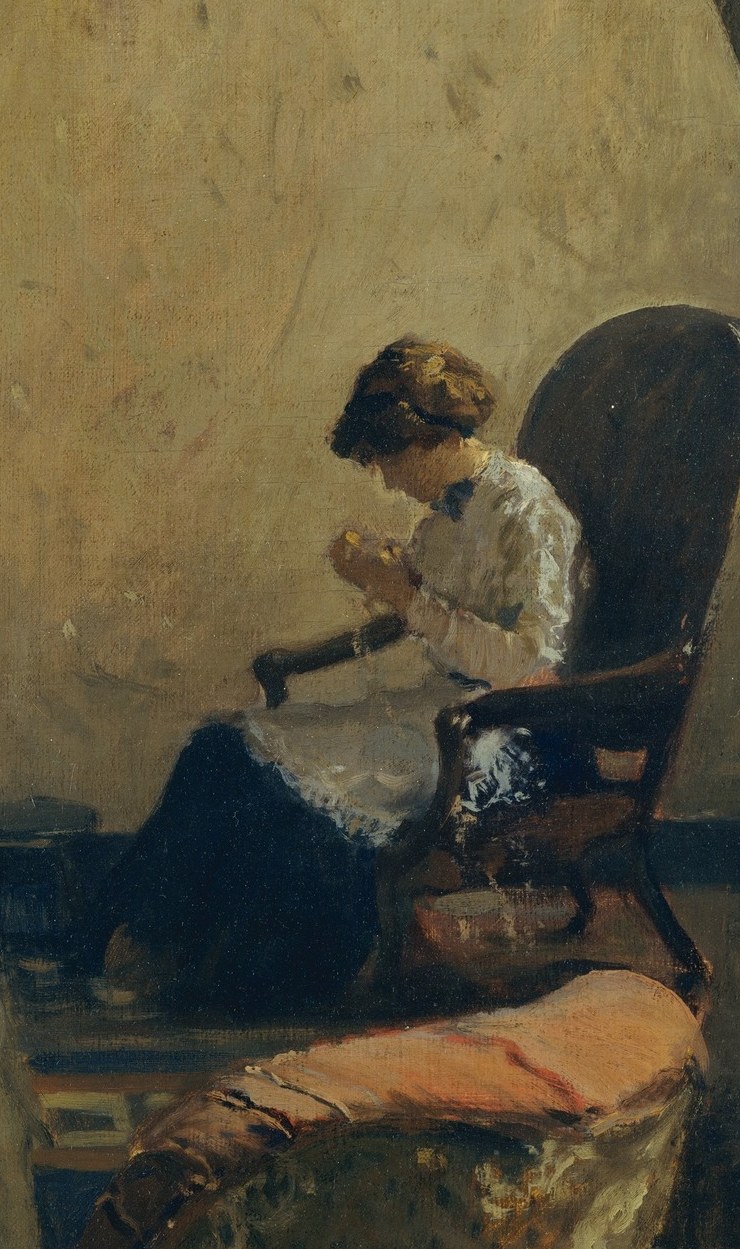
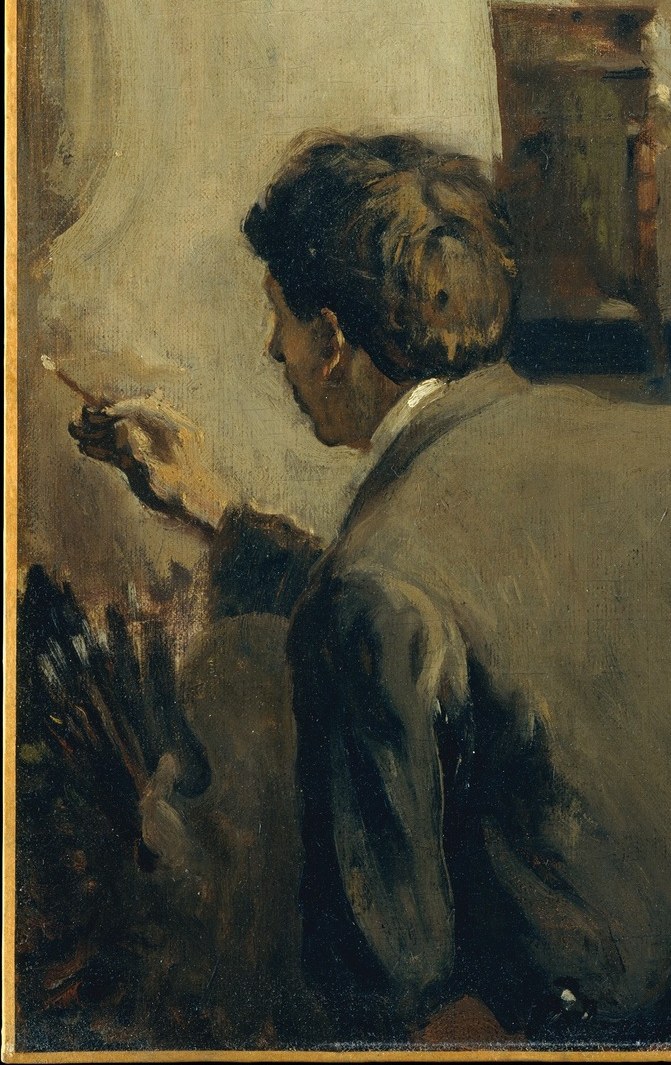
Arthur Clifton Goodwin's 1913 oil painting, Louis Kronberg in His Studio in Copley Hall, captures a fascinating secret within its frame. Held at The Metropolitan Museum of Art, this work offers a glimpse into an artist's world, but not without a clever twist.
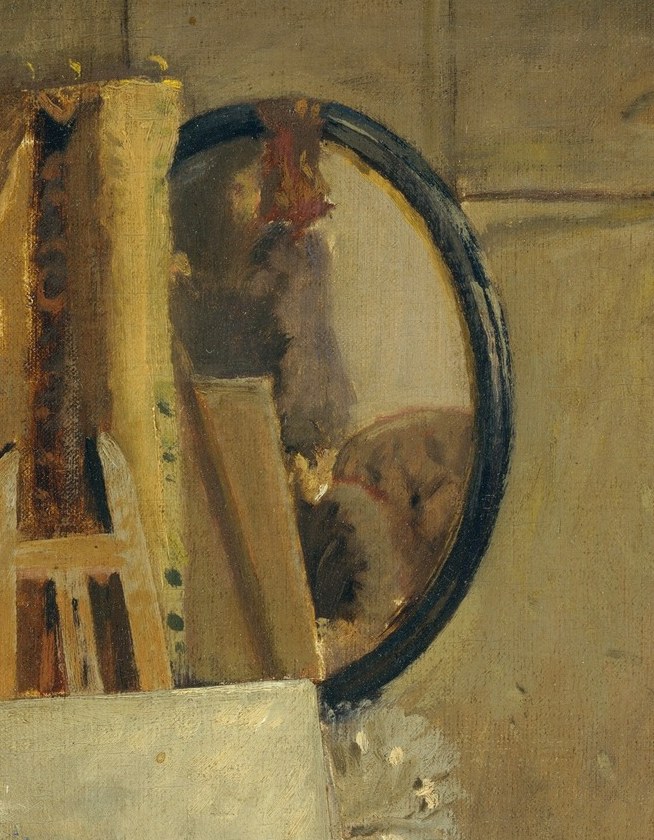
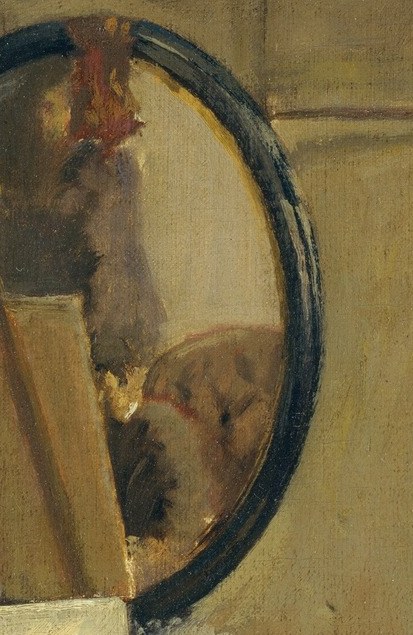
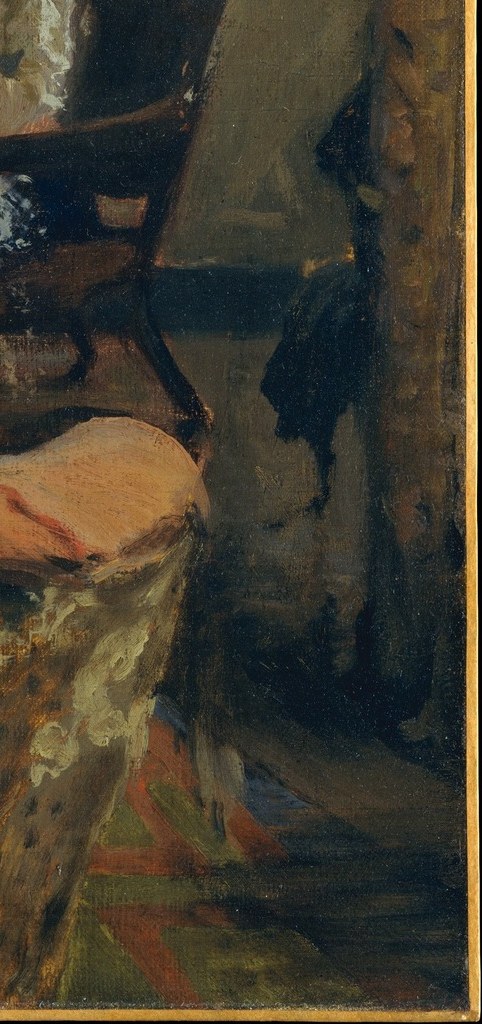
While one figure, likely Louis Kronberg, is seen painting at an easel, another stands with their back to us, their identity initially a mystery. The key lies in the circular mirror on the wall, a common studio prop that Goodwin uses to brilliant effect.
Goodwin himself, born in Portsmouth, was known for his painterly approach and for depicting intimate studio scenes. Here, he uses the reflection to disclose the face of the obscured figure, turning a simple composition into a layered narrative of artistic observation. It's a subtle detail that transforms our understanding of the scene.
Did you spot the reflection on your first look?
Details
Transcript
This painter, Arthur Clifton Goodwin, loved to show studios. He captures another artist, Louis Kronberg, mid-work. Kronberg sits, painting at an easel. But the figure closest to us has their back turned. Who is this person? Look closely at the mirror on the wall. It reveals the face of the painter, watching us.