The Banks of the Seine at Conflans by Jean Baptiste Camille Corot
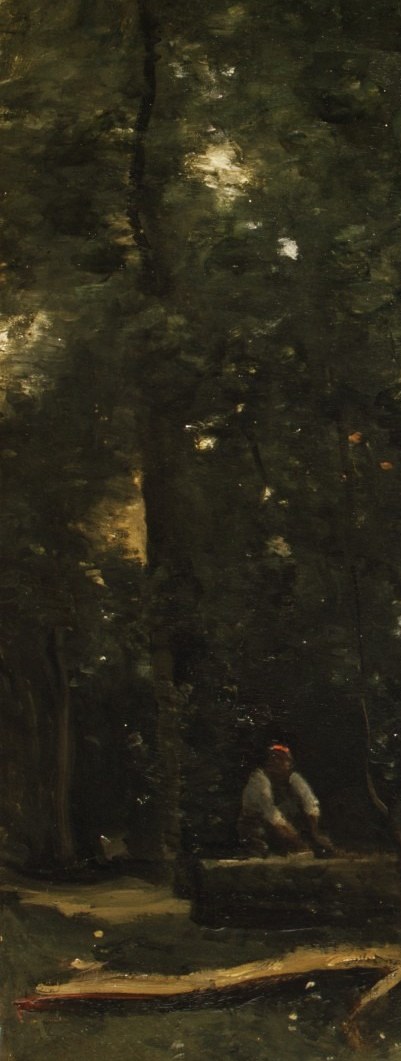
This is The Banks of the Seine at Conflans, painted by Jean-Baptiste-Camille Corot in 1865, now held by the National Galleries of Scotland. The painting looks like a quiet woodland interior, with Corot’s characteristic silvery trees and dappled shadow. But walk into it with a 19th-century map in mind, and the picture shifts: this is not a remote forest, but a functioning riverside corridor just outside Paris.
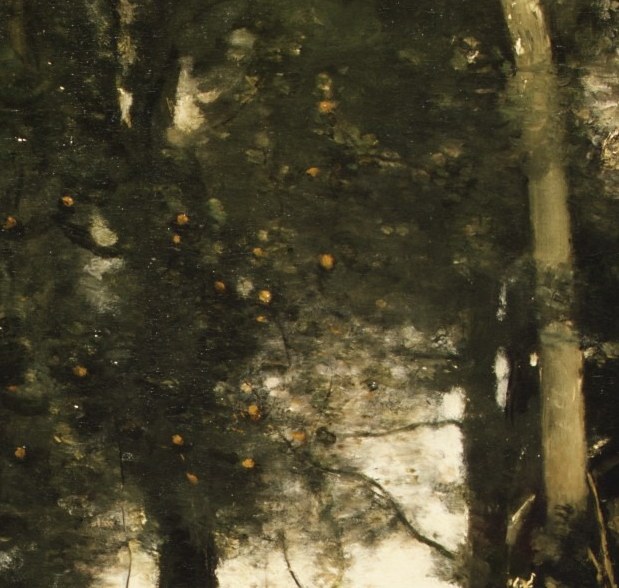
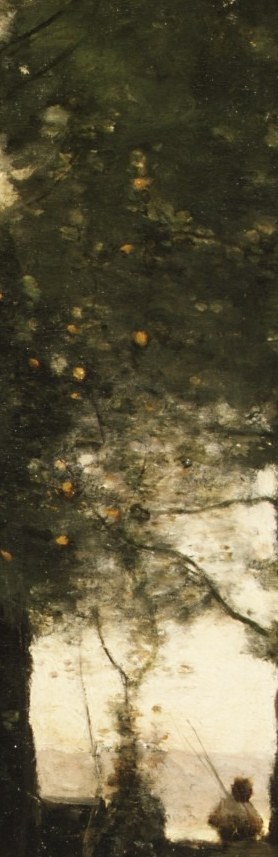
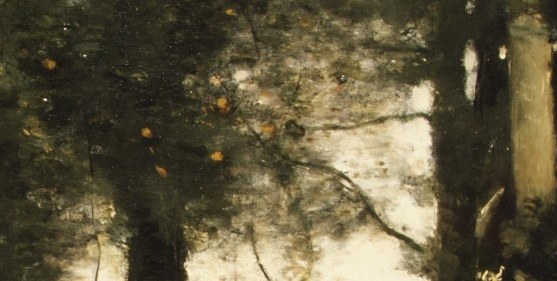
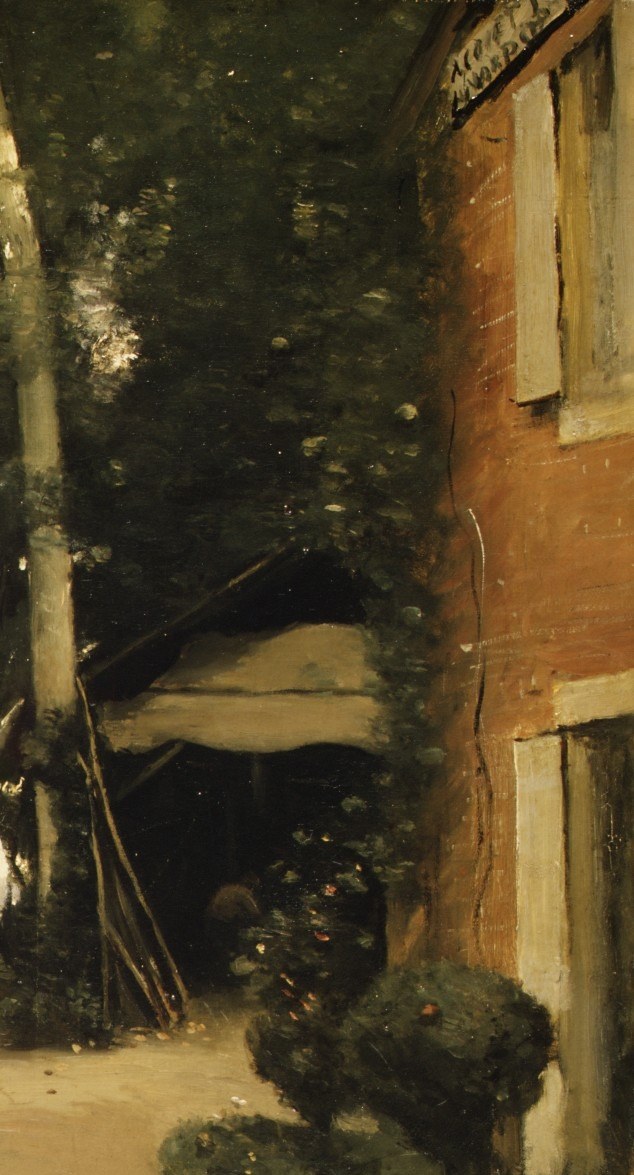
Look into the central gap of light. A tall diagonal mast cuts the sky, a moored barge, the kind that carried grain, wine and building stone along the Seine. The pale water below it widens the river, confirming the navigation channel. Then look to the right margin, where a tall brick building stands nearly absorbed by the trees. Its rectangular window openings mark it as a lockhouse or riverside station, the infrastructure that made the river a highway.
Corot knew this stretch intimately. Conflans sits where the Oise meets the Seine, and by the 1860s it was a hub of leisure boating and commercial traffic. His loose, feathery brushwork, especially in the leaf canopy, was radical for its time, prioritising atmosphere over hard edges. It was exactly this handling of light and foliage that the young Impressionists, Monet and Pissarro among them, would study and stretch further.
So the painting holds two truths at once: the pastoral mood Corot loved, and the working river he actually saw. Next time you look at a Corot woodland, check the edges, he often left the real world quietly visible.
Details
Transcript
It looks like pure, timeless woodland. Corot built his reputation on places like this. But follow the light through the centre. A barge mast cuts the sky. This is the Seine at Conflans, a busy waterway. Now look to the right margin. A brick lockhouse. It managed the river traffic.