The Last Supper by http://www.wikidata.org/.well-known/genid/e57a4c89456fff62dcf0966b0ce37be6
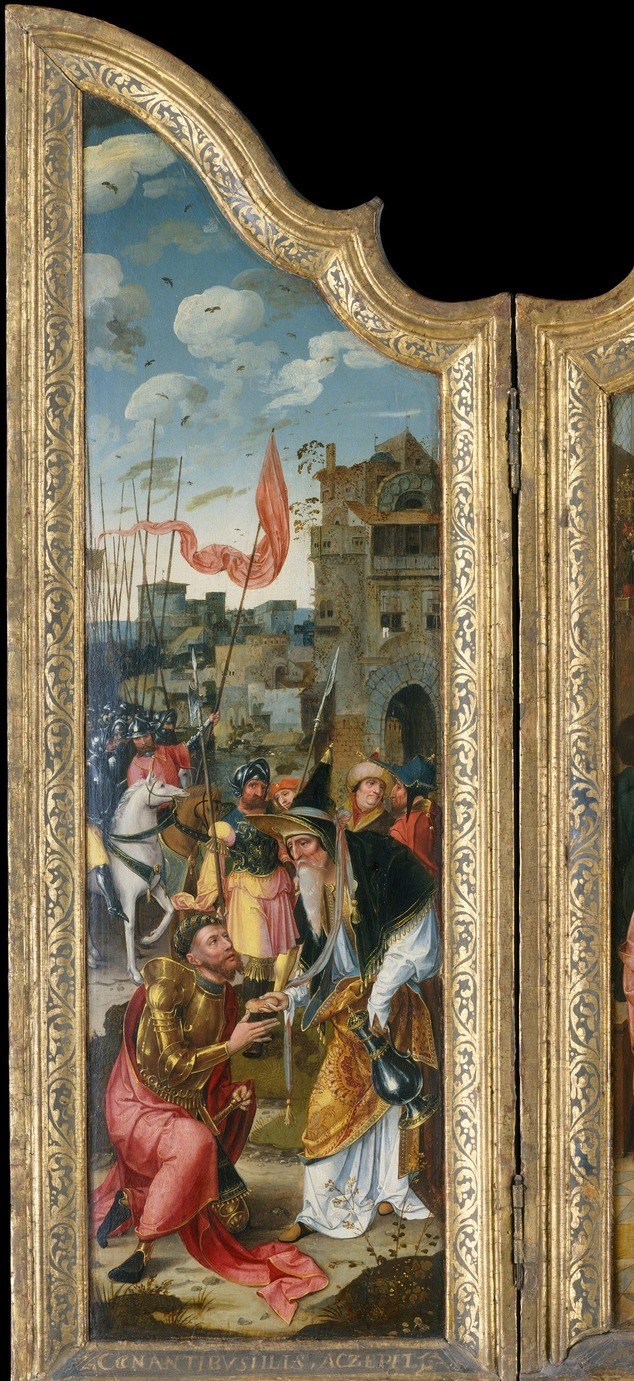
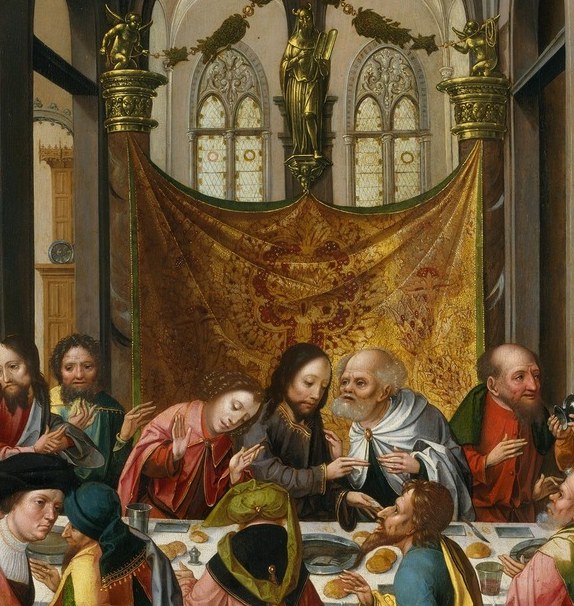
The Last Supper Triptych, painted around 1515 by an artist known only as the Master of the Antwerp Adoration, holds a quiet human truth in its lower left corner. The painting splits its sacred moment across three panels: Christ and the apostles in the center, crowded Passion scenes flanking them. But the story begins much lower.
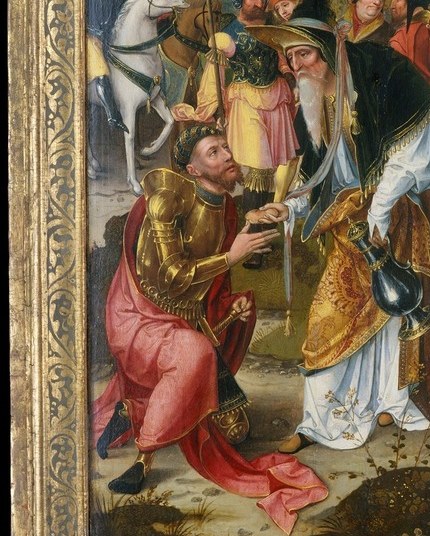
Look to the very edge of the left wing. Two figures kneel there, impossibly small against the architecture. They are donors, the people who commissioned this altarpiece. The artist has carved out a space for them inside the holy narrative, a practice common in early 16th-century Flemish painting. It was their way of ensuring perpetual prayer, a presence at the Eucharist that would last as long as the paint held.
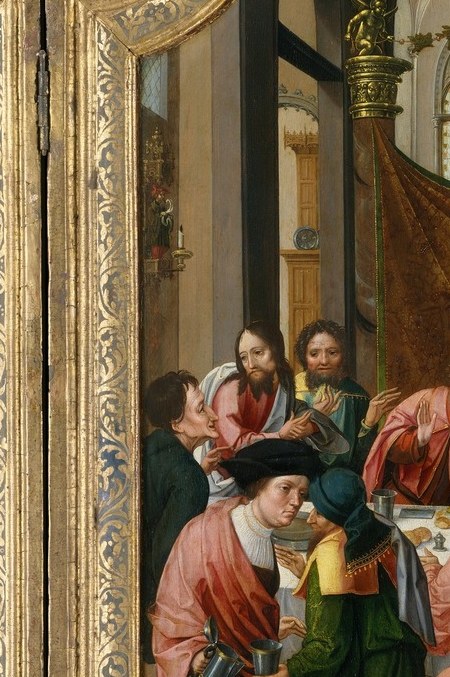
What moves me is the distance. The donors are inside the picture, but they are not in the room. They kneel in a separate panel, outside the grand vaulted hall, watching the central mystery from the margins. Their hands are folded. Their gaze is directed toward Christ, yet the architecture and the frame divide them from his table. They paid for proximity and received a kind of sacred exclusion, close enough to see, but forever outside the door.
There is a humility in that position that feels very different from later, grander donor portraits. They are not apostles. They did not pretend to be. They asked only to kneel nearby, in painted stone, and wait. What would you have asked for?
Details

Transcript
You could miss them. Most people do. Two figures, kneeling in the left margin of a triptych. They paid for this painting. It was their ticket into the scene. The artist gave them eternal witness to the Last Supper... ...but placed them outside the room, in a different panel. Their eyes never meet Christ's.