Pope Gregory XVI Visiting the Church of San Benedetto at Subiaco by Jean François Montessuy
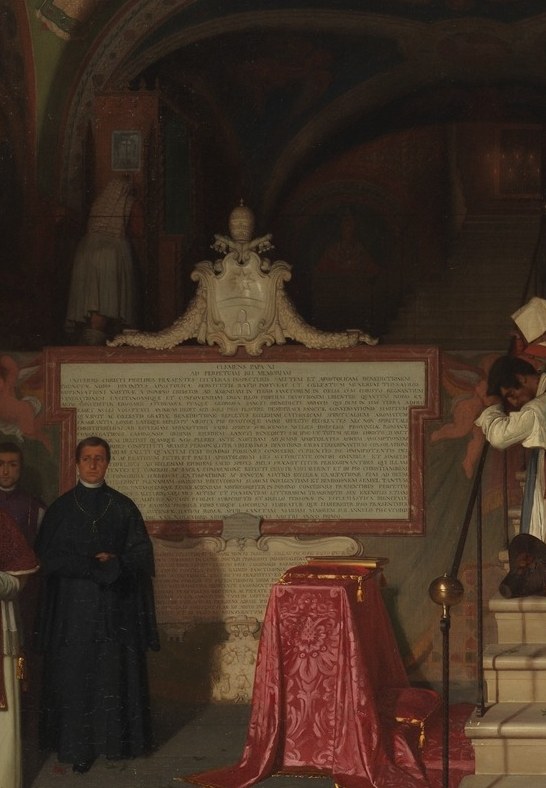
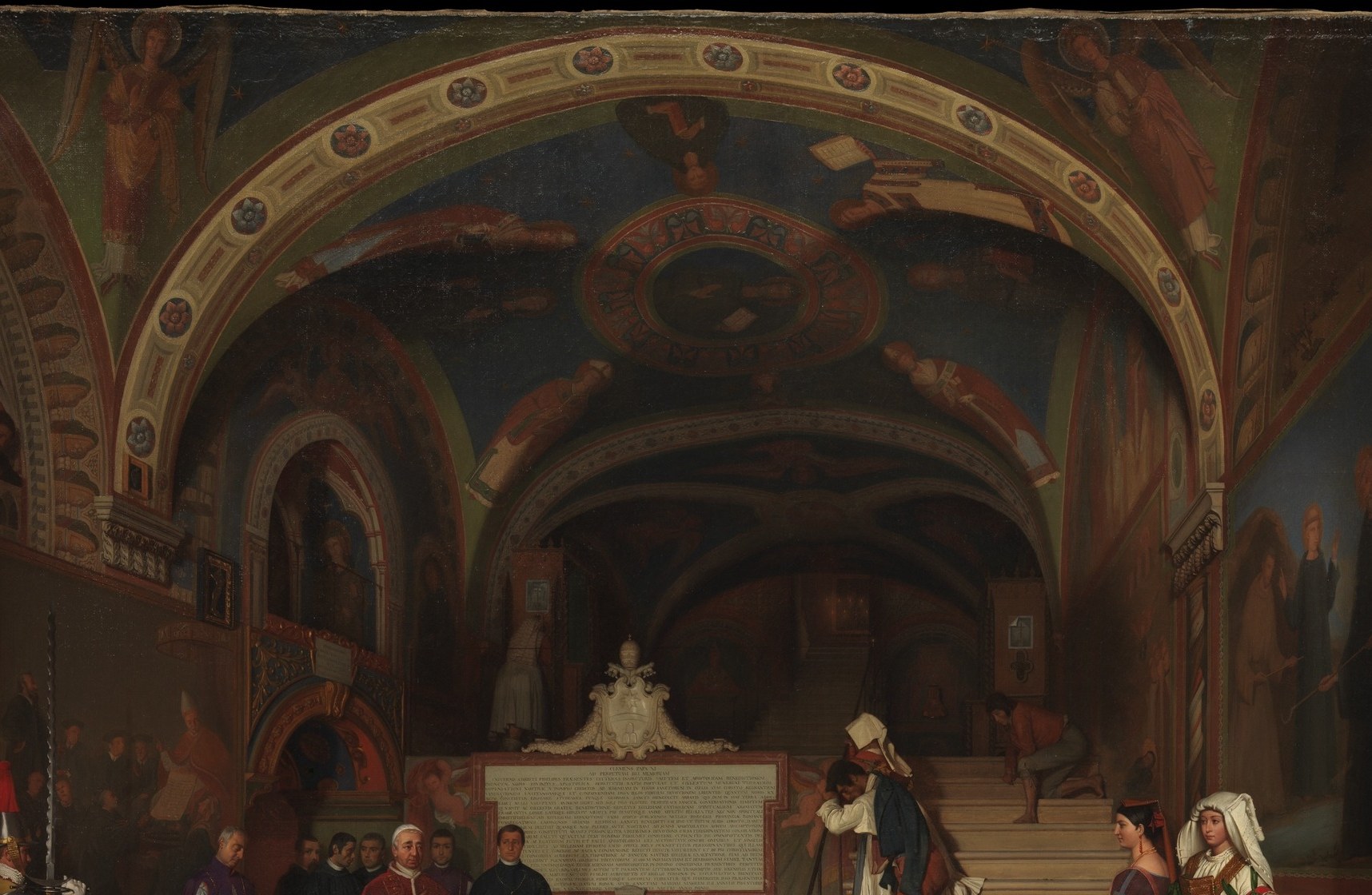
Pope Gregory XVI Visiting the Church of San Benedetto at Subiaco, painted by Jean François Montessuy in 1843, is a study in how oil paint can make you feel temperature. The painting records a papal visit to the ancient monastery at Subiaco, but its real subject is light itself: how a white robe glows in a stone interior, how unseen candles warm the walls they never touch.
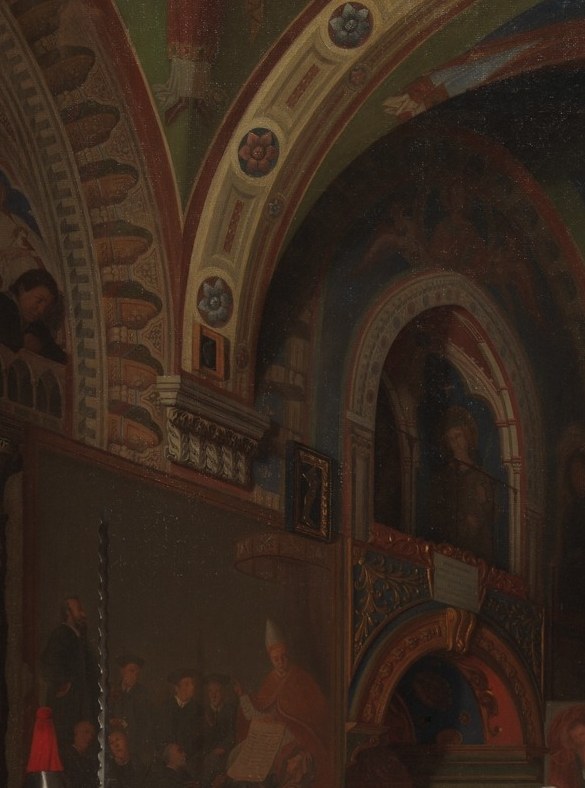
The luminous figure of the Pope anchors the composition, Montessuy built that white from lead white paint laid beside cool, shadowed stone so the vestments radiate heat against the dark. Look left into the arcade and you will find amber light falling across Romanesque masonry with no visible source. The painter understood that light is a color before it is a thing, and he let the stone carry it.
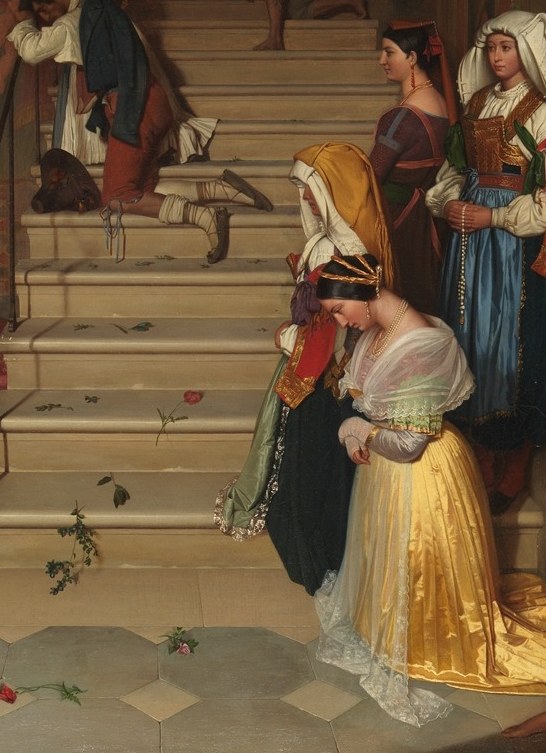
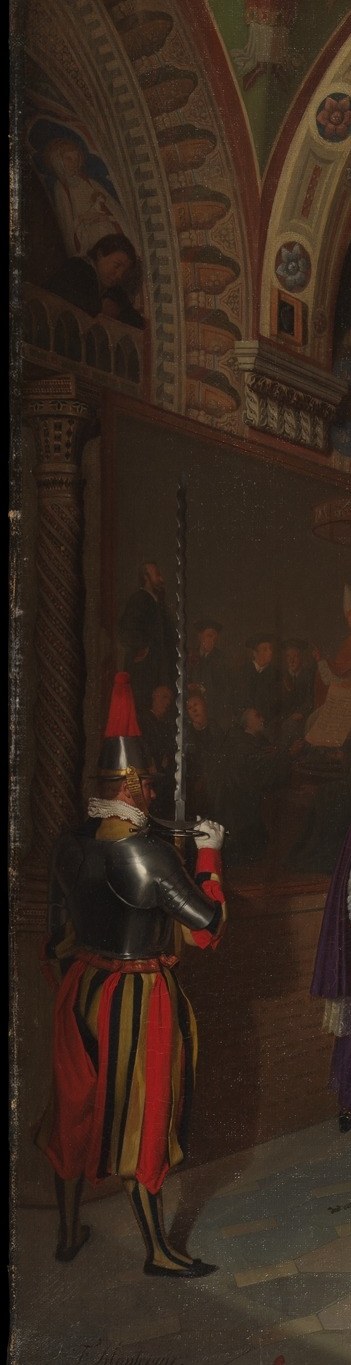
Subiaco is the cave where Saint Benedict first lived as a hermit in the 6th century, and the church still stands there. Montessuy, a Lyonnais artist born in 1804, was painting the institutional church visiting its own origins. The ceremony matters, but the atmosphere matters more: the dim apse receding into shadow, the armor gleaming on the left, the women kneeling at the margin, all of it held together by a controlled tonal range that makes the darkness feel inhabited rather than empty.
Next time you see a white garment in a painting, check what color the shadows are. Montessuy’s shadows are cool stone-gray, and that tiny decision is what makes the robe feel warm.
Details
Transcript
A dark stone church, and a ceremony in progress. One figure pulls all the light in the room. Montessuy painted Pope Gregory XVI visiting Subiaco in 1843. The robe is not just white. It is warm lead white laid next to cold shadow. Now look left. Amber light hits the ancient stone arcade. No candles are visible. Only their warmth on the rock. By 1843 oil paint could hold a feeling you almost recognize by touch.