Peasant Interior by Le Nain, Louis
This is "Peasant Interior," a quiet oil painting by Louis Le Nain from around 1645, now in the National Gallery of Art. At first glance, it looks like a family sharing a humble meal. But the painter had something else in mind.
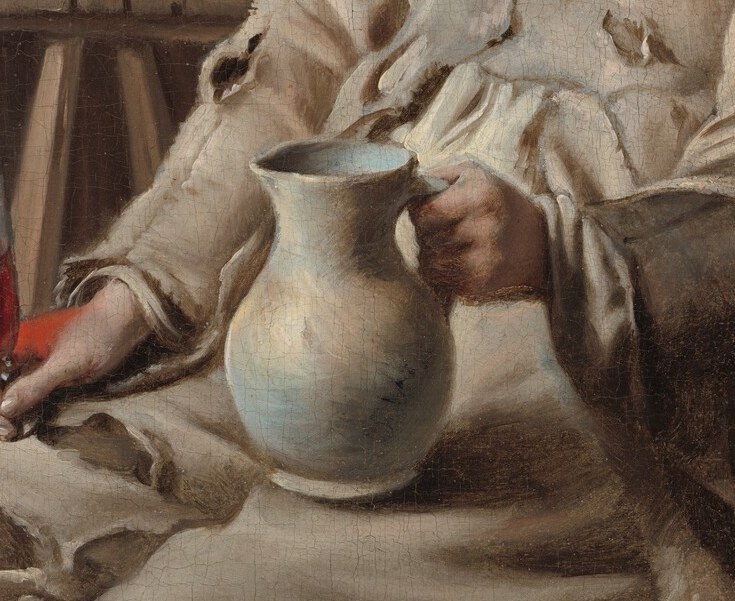
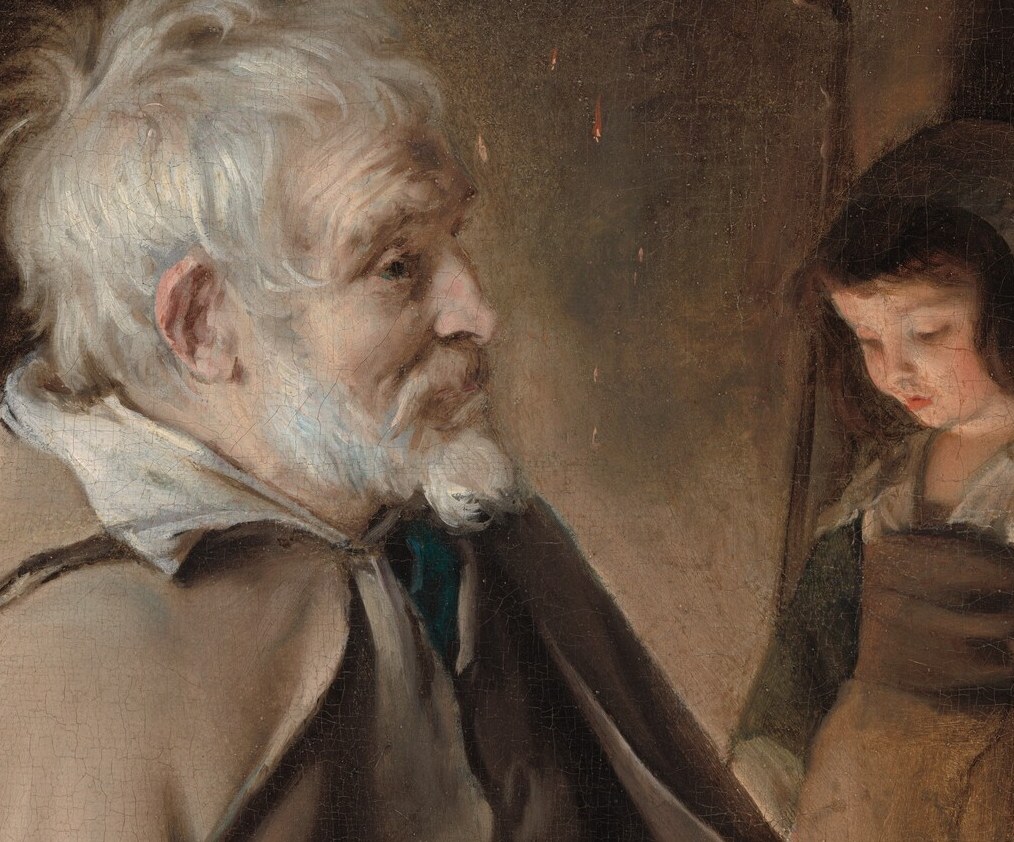
The boy in the center isn't eating. He clutches a ceramic jug, a vessel for pouring wine, not a child's cup, and he stands apart from the table. His wide eyes and soft face sit somewhere between childhood and adult responsibility. Le Nain painted him with the same serious attention he gave the old man and the woman, refusing to make him a background detail.
In mid-17th-century France, it was common for poor rural families to send their children into domestic service in other households. The Le Nain brothers, who all painted, were known for this kind of honest, unsentimental look at peasant life. They didn't idealize it. They just watched it closely, recording the textures, the light, and the human relationships without judgment.
The boy belongs fully to this scene, but he isn't family. He works here. Look at how Le Nain positioned him, central to the composition, directly between the two seated adults, yet holding the tools of his trade. The painting quietly asks whose labor built this modest moment of rest.
Details
Transcript
They look like a family at dinner. A shared meal. A quiet evening. But the boy isn't eating. He holds a jug meant for pouring wine. In 1645, children from poor families were sent to work as servants. This isn't his family. He's a household servant. The painter gives him the same gravity as the adults.