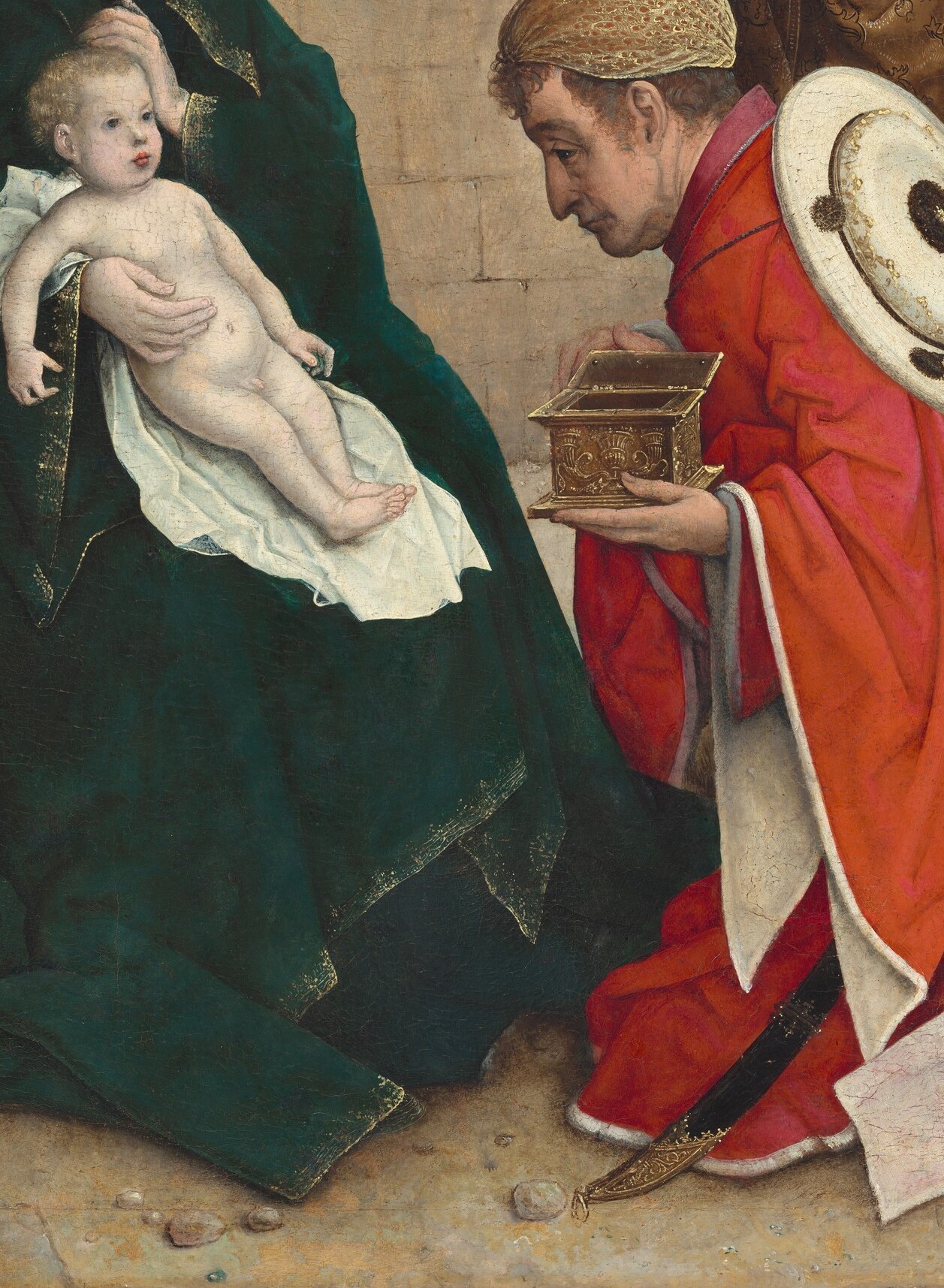
The Adoration of the Magi by Juan de Flandes
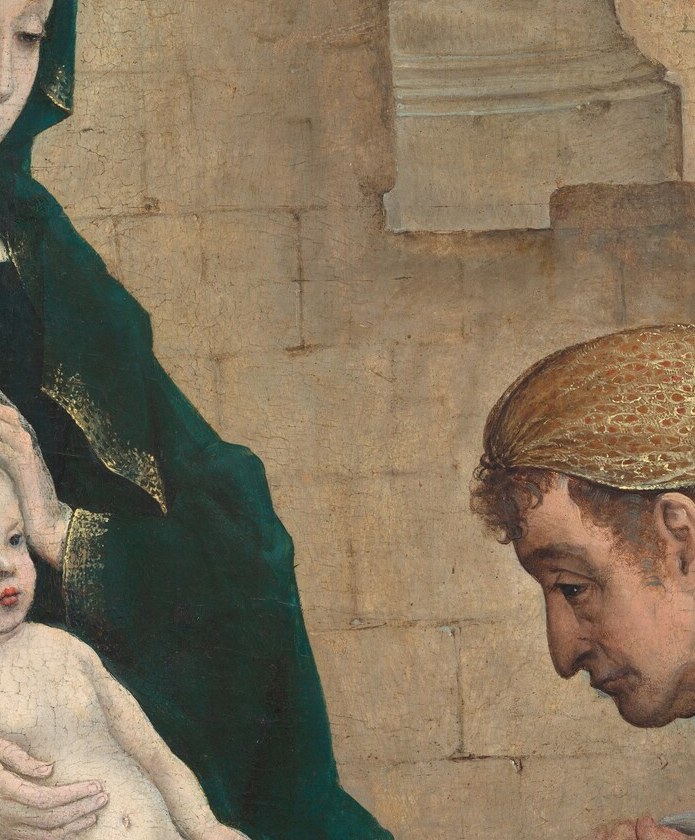
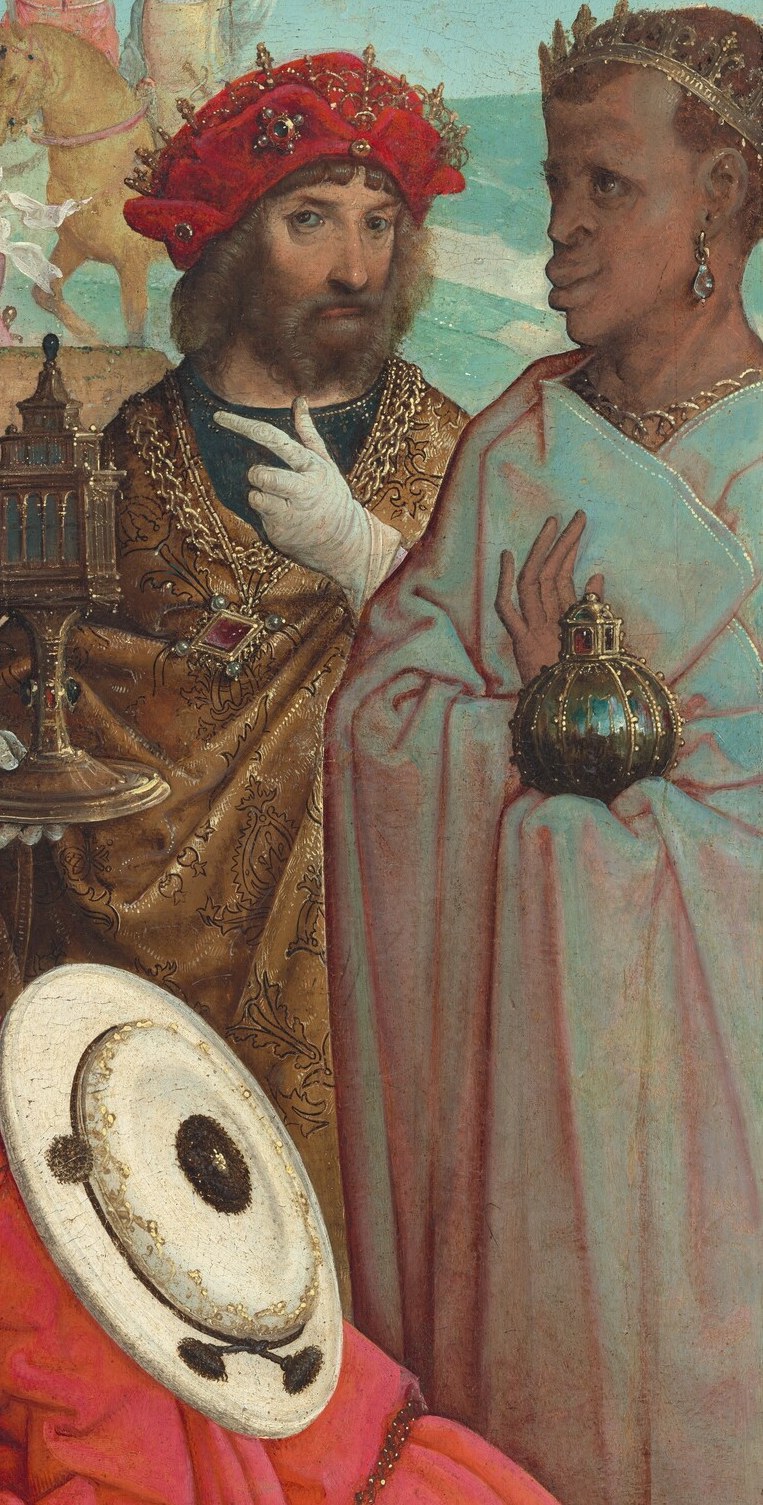
Juan de Flandes's "The Adoration of the Magi" is a masterclass in hidden narrative, with subtle details enriching the central drama. While the vibrant figures of Mary, the Christ Child, and the Three Kings dominate the canvas, the background holds vital symbolic and contextual information.
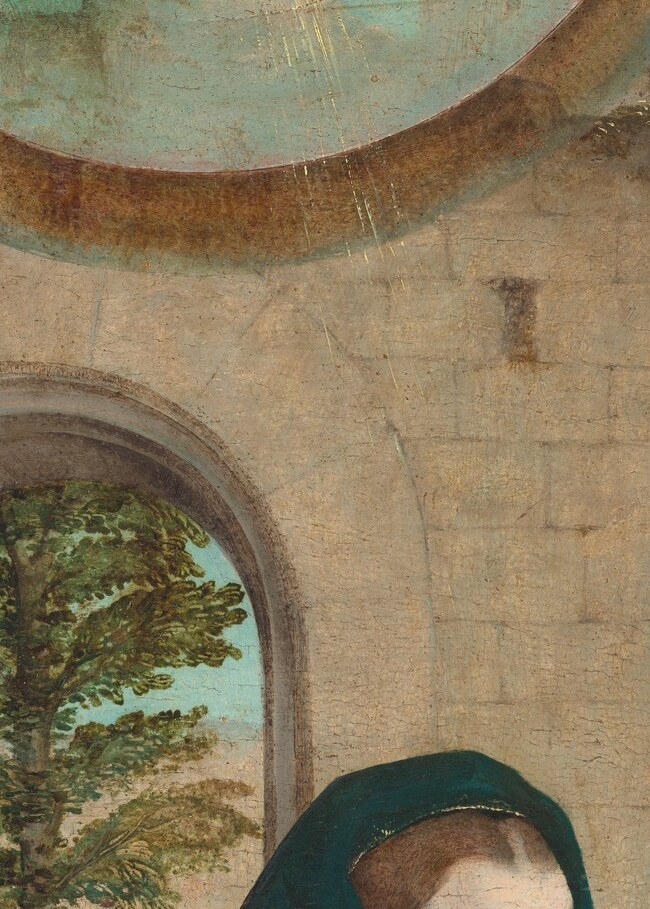
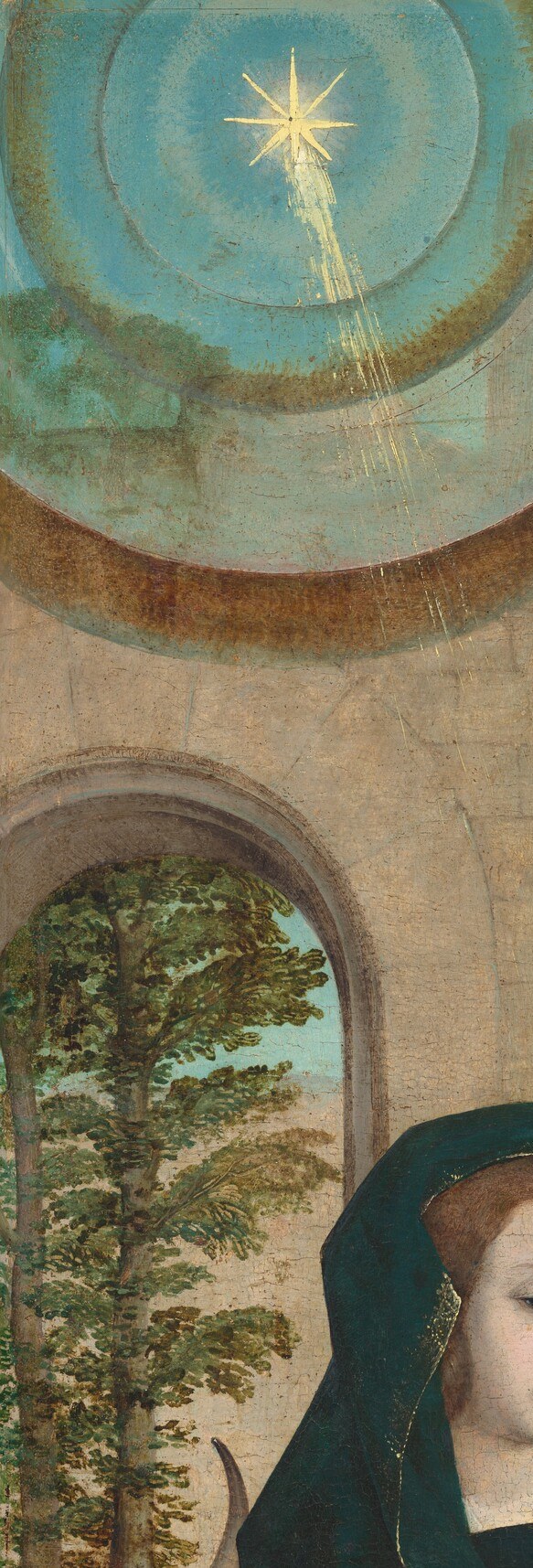
Look closely at the ruined archway behind the Virgin Mary. This architectural decay is a common motif in Adoration scenes, symbolizing the passing of the Old Law and the dawn of the New Covenant with the birth of Christ. Then, in the far right background, a shadowed retinue of attendants and horses waits, indicating the Magi's journey and their worldly status.
Created around 1514, this oil on panel painting showcases Juan de Flandes's meticulous attention to detail and his ability to weave complex theological and historical threads into his compositions. It is housed in a prominent collection, a testament to its enduring artistic and historical value.
These often-overlooked elements transform the painting from a simple devotional image into a rich tapestry of meaning. What other small details do you notice?
Details
Transcript
This painting shows the Adoration of the Magi. The first king kneels, offering his golden gift. Mary gazes downward, contemplating the scene. But look closely, high in the upper left corner. A crumbling arch symbolizes the Old Law passing away. And in the far distance, the Magi's retinue awaits. Small details, easily missed, tell the full story.