Wooded Landscape with Travelers by Pynacker, Adam
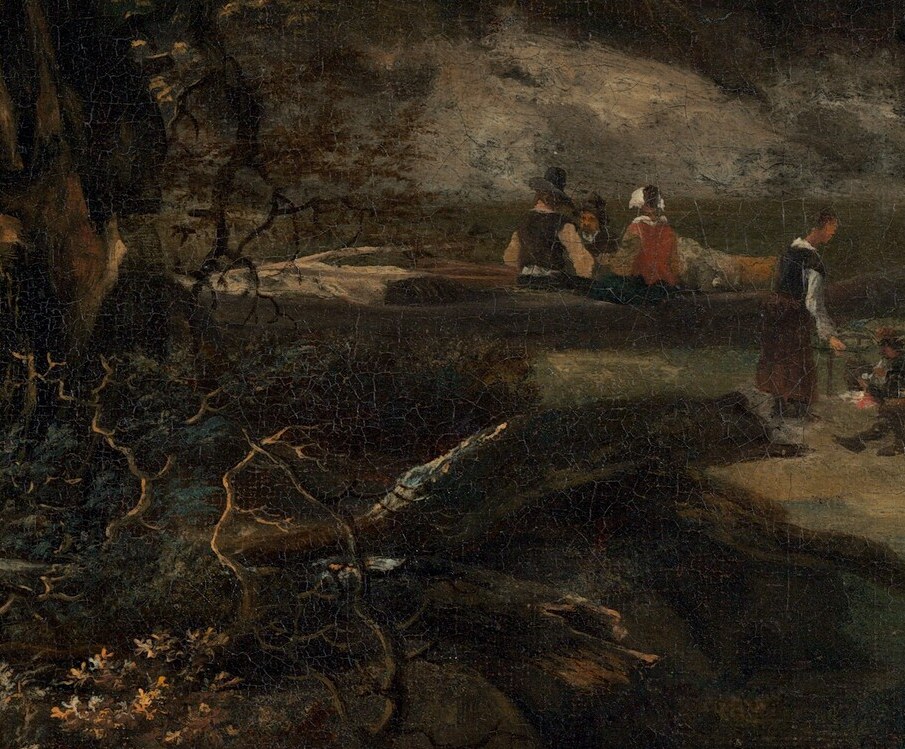
Adam Pynacker's "Wooded Landscape with Travelers," painted around 1644, at the Rijksmuseum, uses natural elements to tell a deeper story. This oil on canvas shows a small group of figures navigating a dense, imposing forest, a common motif in Dutch Golden Age art.
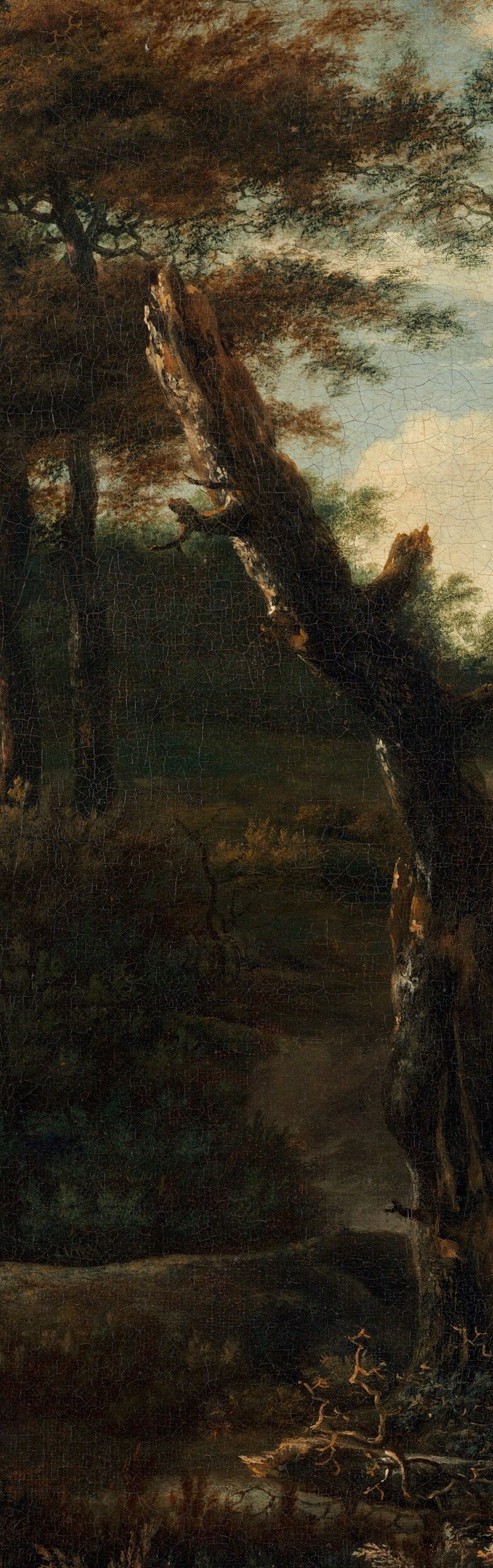
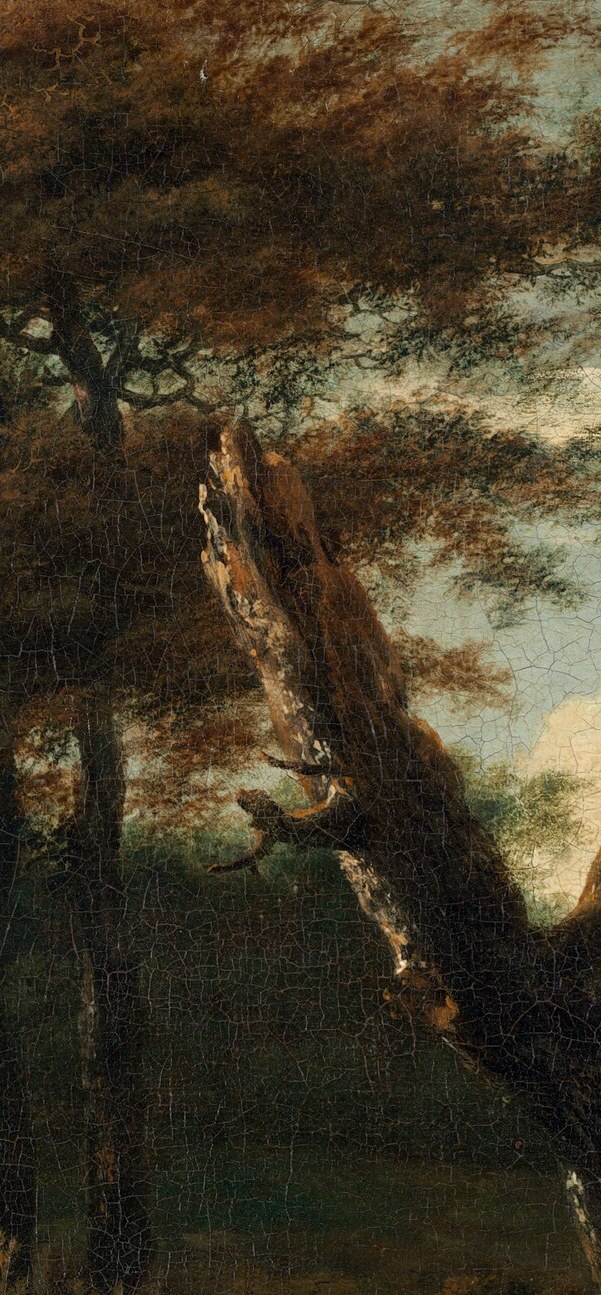
Look closely at the dominant tree on the left, its gnarled trunk representing enduring life. Yet, a stark, broken branch reaches out from above it. This striking contrast between living and dead wood was often a subtle symbol of life, death, and the natural cycle of decay and renewal in paintings of this era.
Pynacker was known for his masterful use of light and shadow, which gives the trees a robust, three-dimensional quality and emphasizes the vastness of nature. His works often highlight the human presence as small within the grand landscape, inviting viewers to reflect on their own place in the natural world.
What other symbols do you notice in the natural world around you?
Details
Transcript
This painting captures travelers dwarfed by an immense forest. Notice the massive, gnarled tree trunk on the left. It shows nature's enduring power and age. But above it, a stark dead branch reaches out. This contrast often symbolized life and death in Dutch landscapes. The artist, Adam Pynacker, masterfully used light and shadow. He emphasized nature's grandeur, and our small place within it.