A Member of the de Hondecoeter Family [obverse] by Antwerp 16th Century
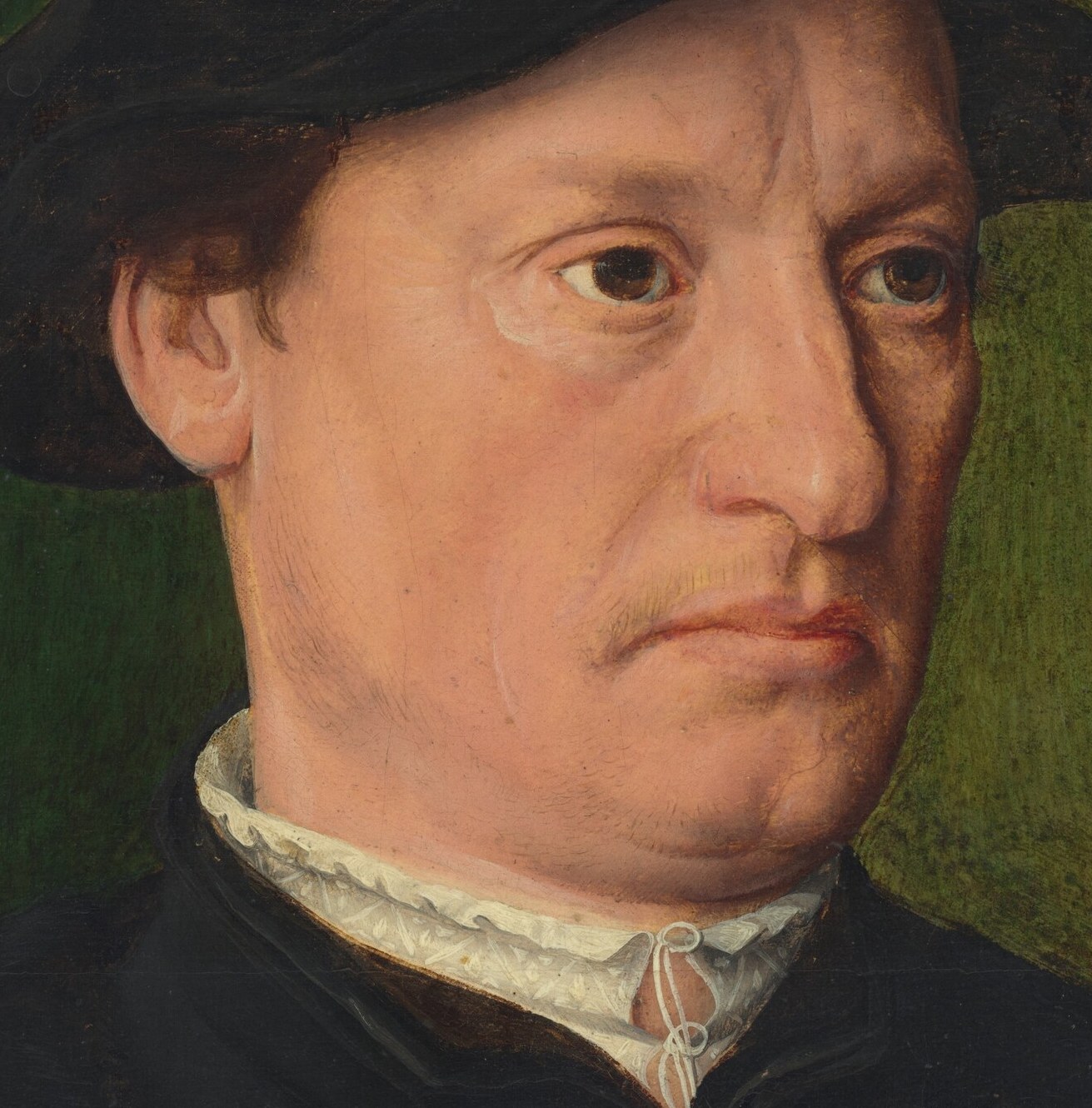
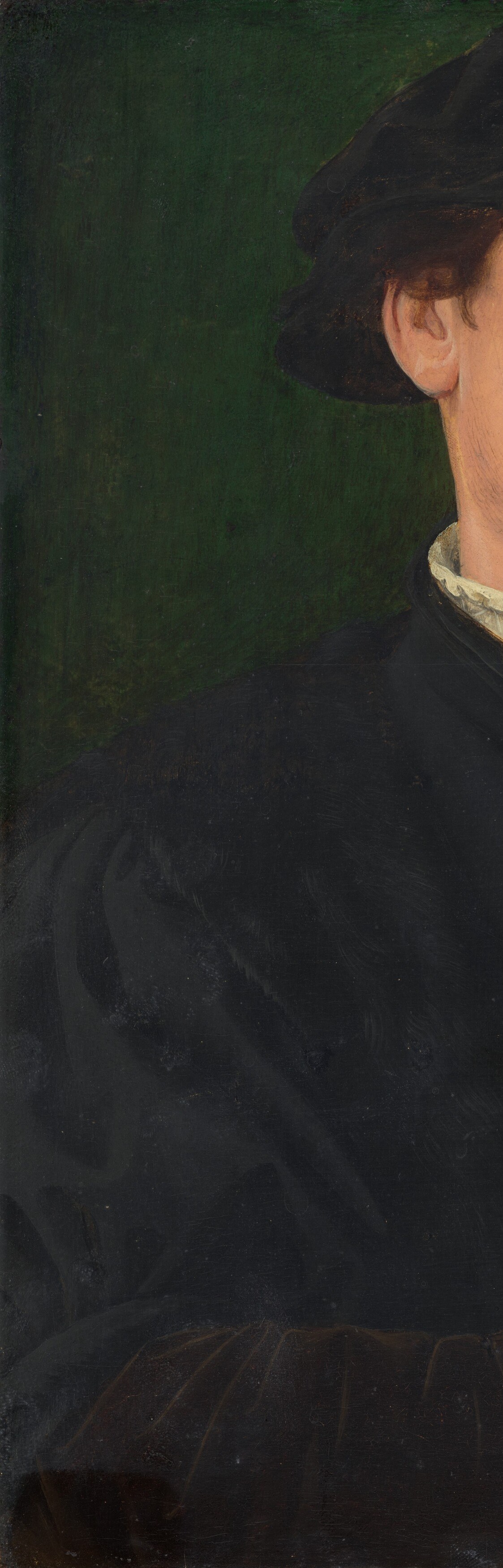
Step back in time to 1543 with "A Member of the de Hondecoeter Family," an oil on panel portrait by an unknown Antwerp artist of the 16th century, held at a museum whose collection this piece enriches.
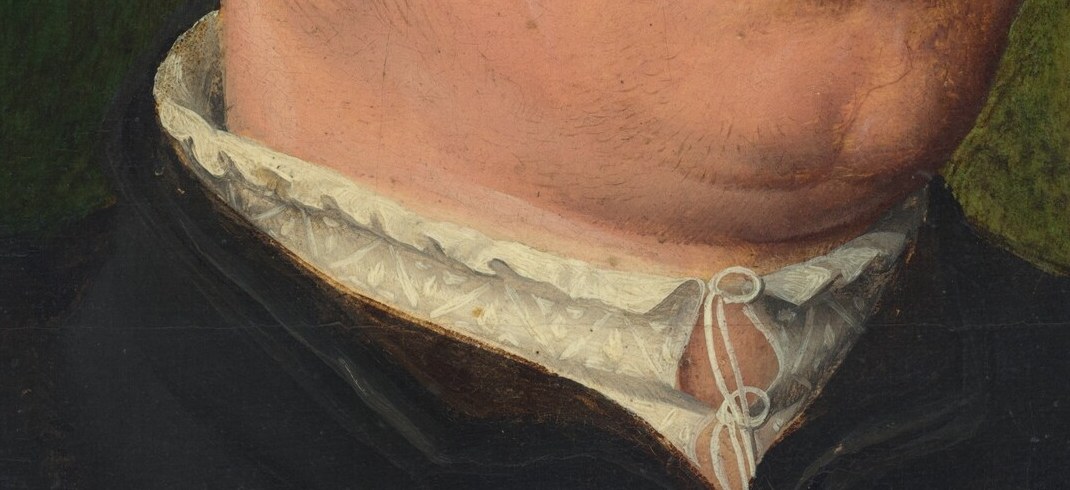
This painting captures the solemn demeanor of a man whose identity, though part of the prominent de Hondecoeter lineage, remains unconfirmed. Notice his crisp white collar, a detail that speaks volumes about the fashion and status symbols of the Renaissance period. The dark, rich fabrics of his hat and jacket further emphasize his affluence and the formal nature of such a commission.
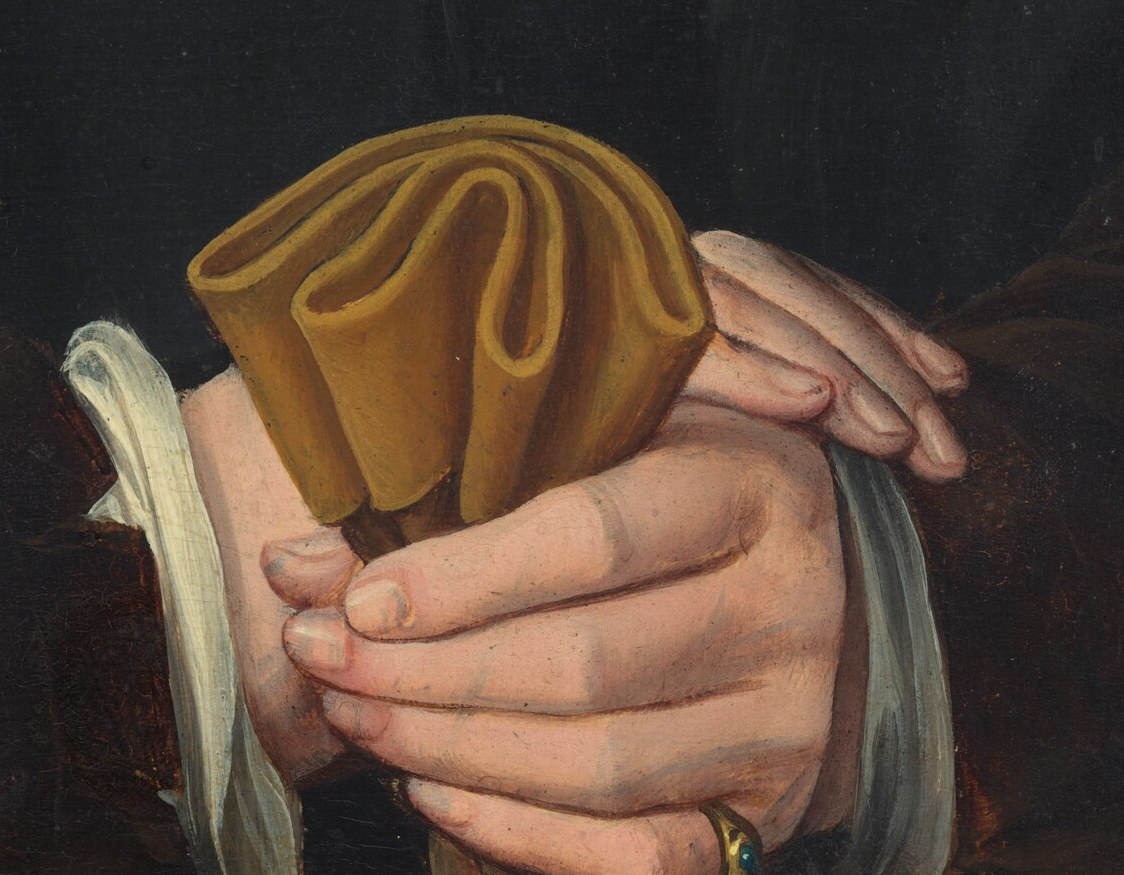
The artist's technique, using oil on a wooden panel, was characteristic of the time, allowing for the subtle rendering of textures and the grave expression on the sitter's face. While the purpose of the folded brown cloth in his hands is no longer known, it adds an intriguing layer to this historical document. It's a window into an era where portraits were not just likenesses, but statements of family legacy and social standing.
What do you think the folded cloth might have symbolized?
Details
Transcript
This man watched us, 480 years ago. It was 1543. Portraiture was the ultimate status symbol. His family, the de Hondecoeters, commissioned it. His crisp white collar shows wealth in fine linen. The artist used oil on a wooden panel, typical for the era. He holds a folded brown cloth. Its meaning is lost to time.