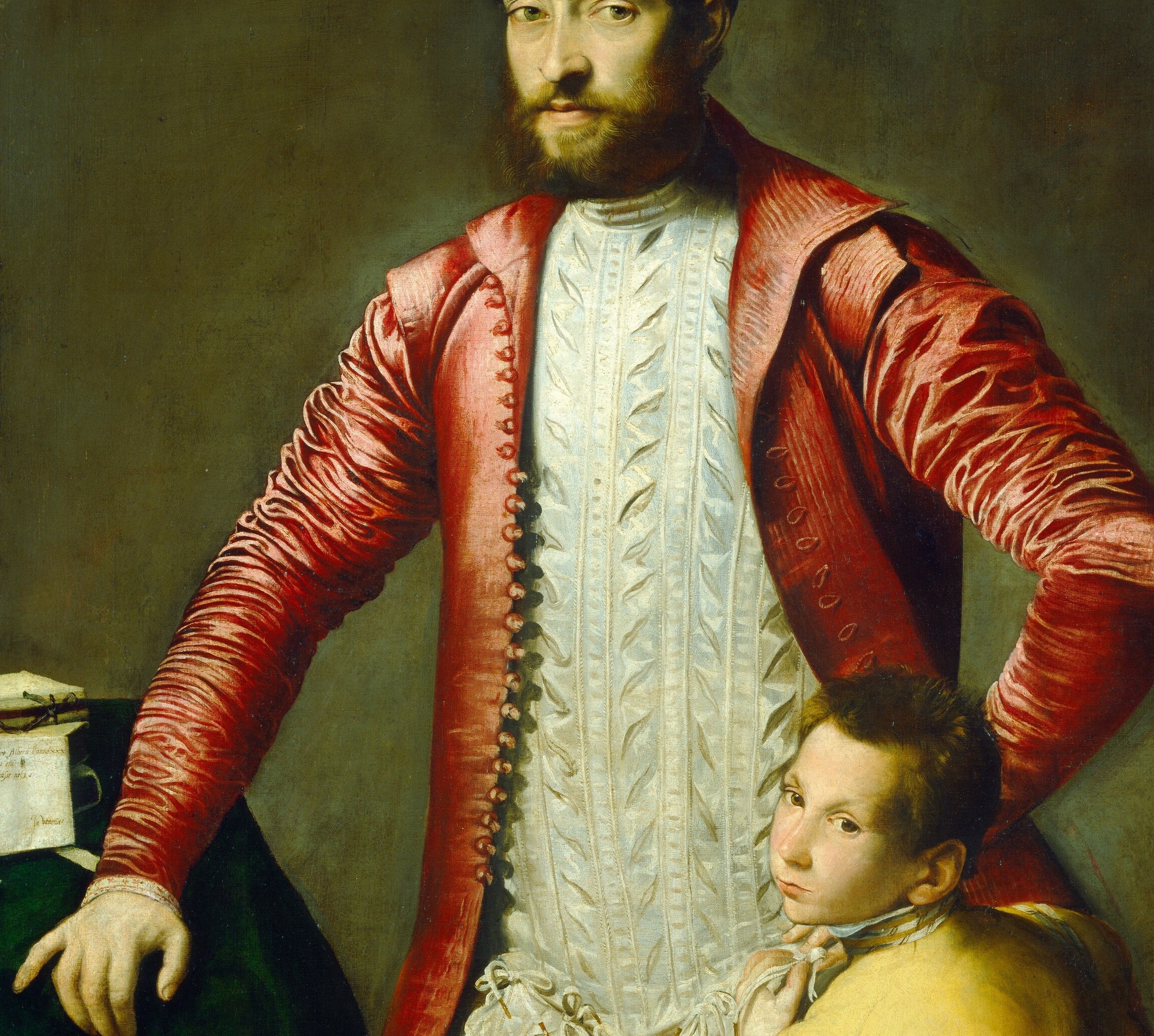
Alessandro Alberti with a Page by North Italian 16th Century
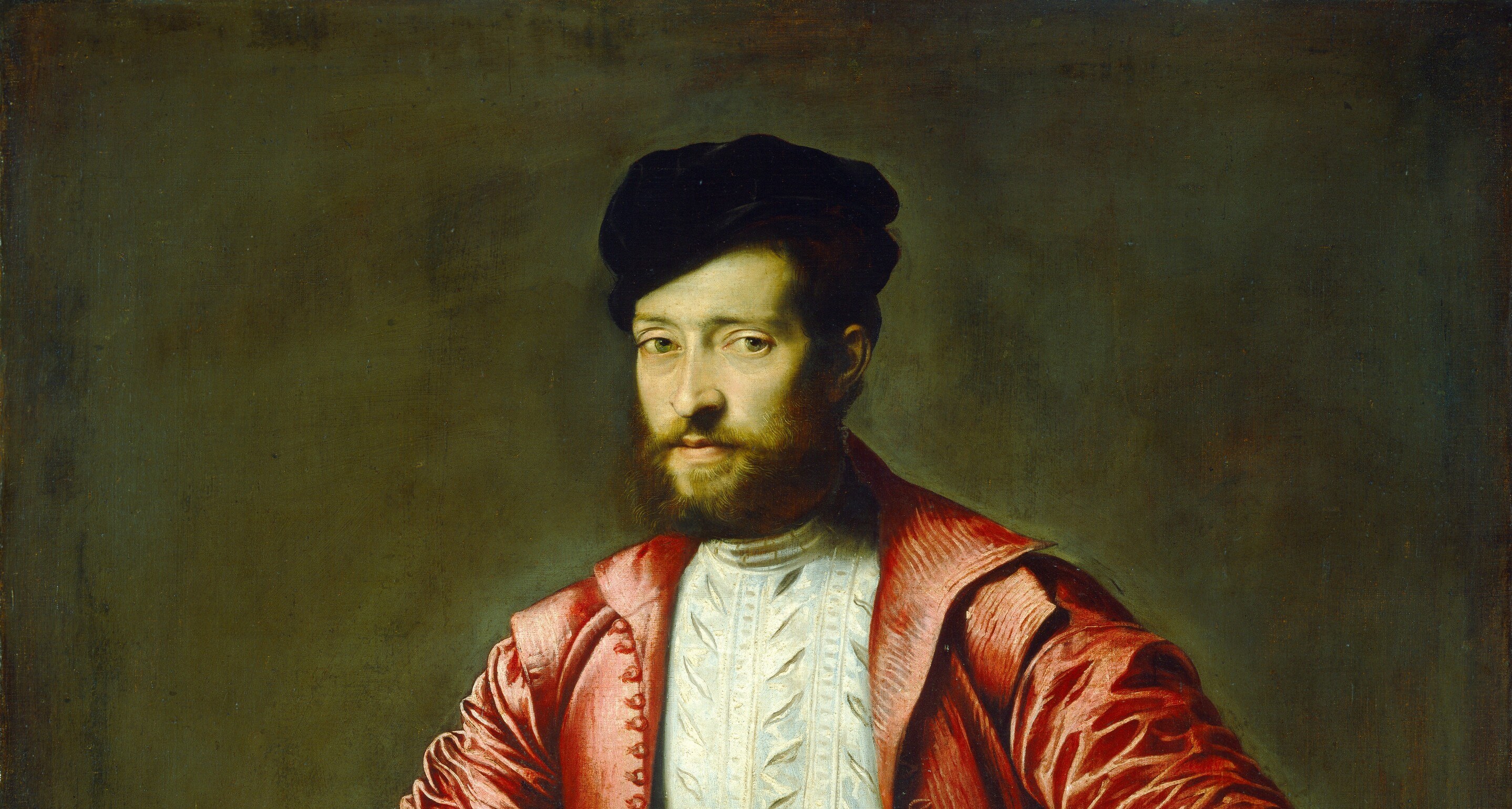
The painting is called 'Alessandro Alberti with a Page,' and the artist is officially unknown. It is catalogued simply as North Italian, 16th century, likely painted around 1544. The work is an orphaned masterpiece: a completely persuasive display of aristocratic power that arrived in the modern era with no signature, no continuous provenance, and a name attached only by educated guesswork.
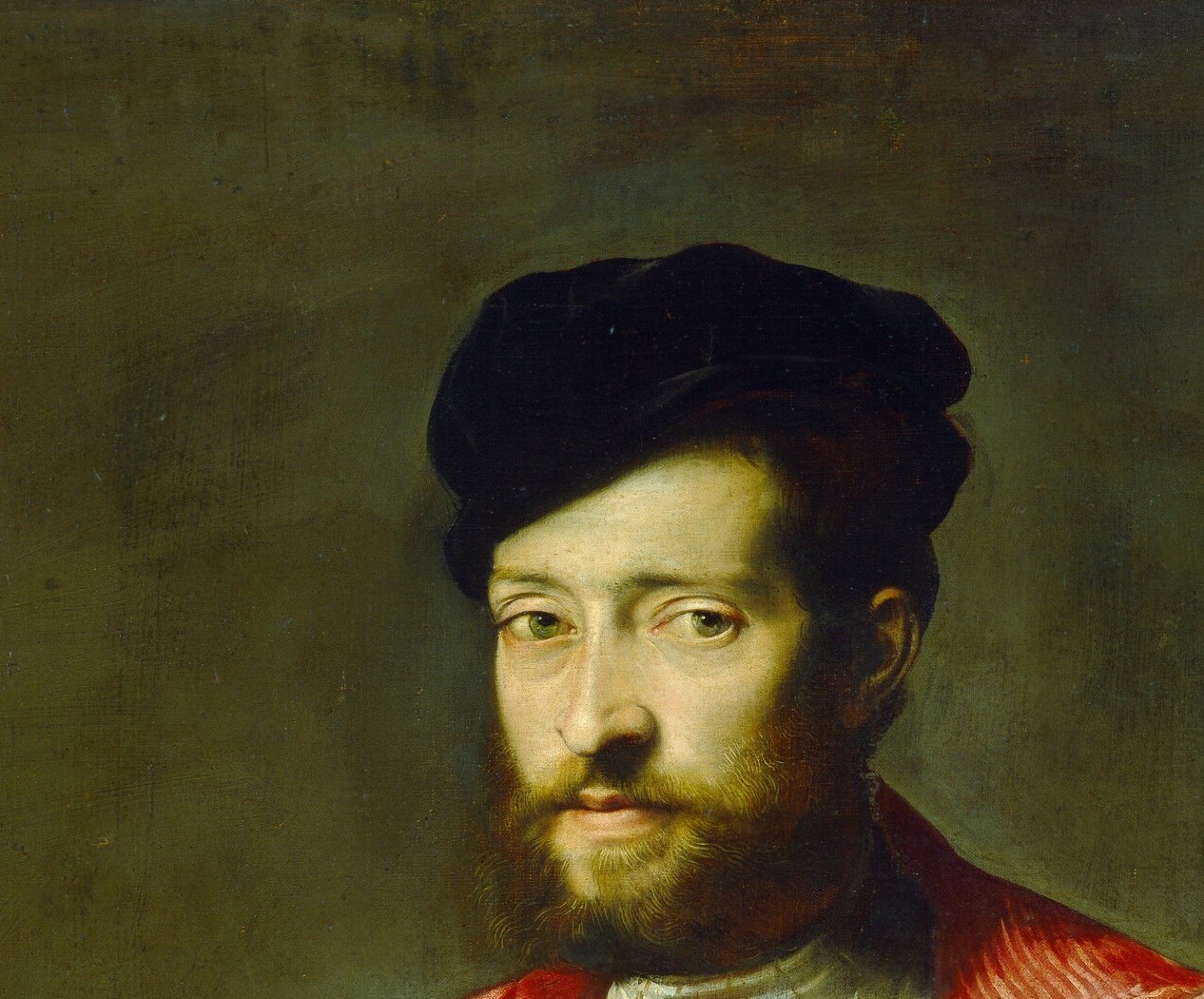
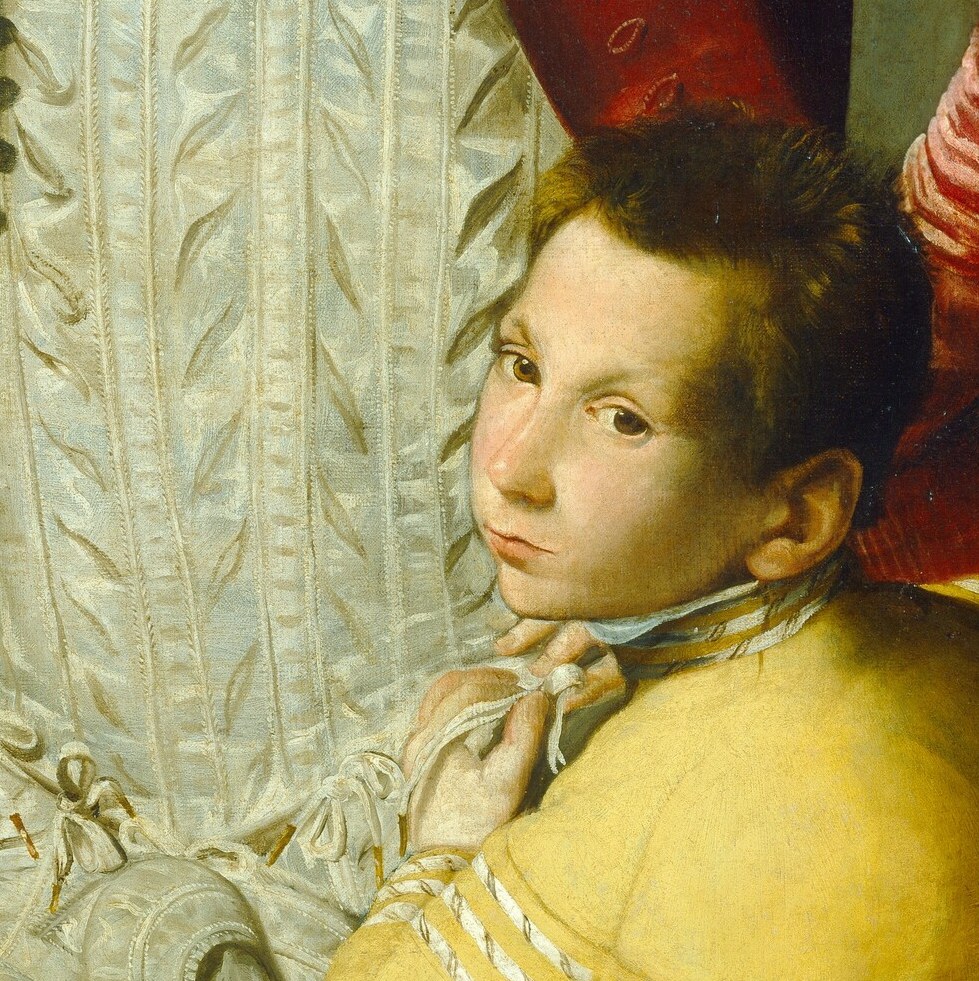
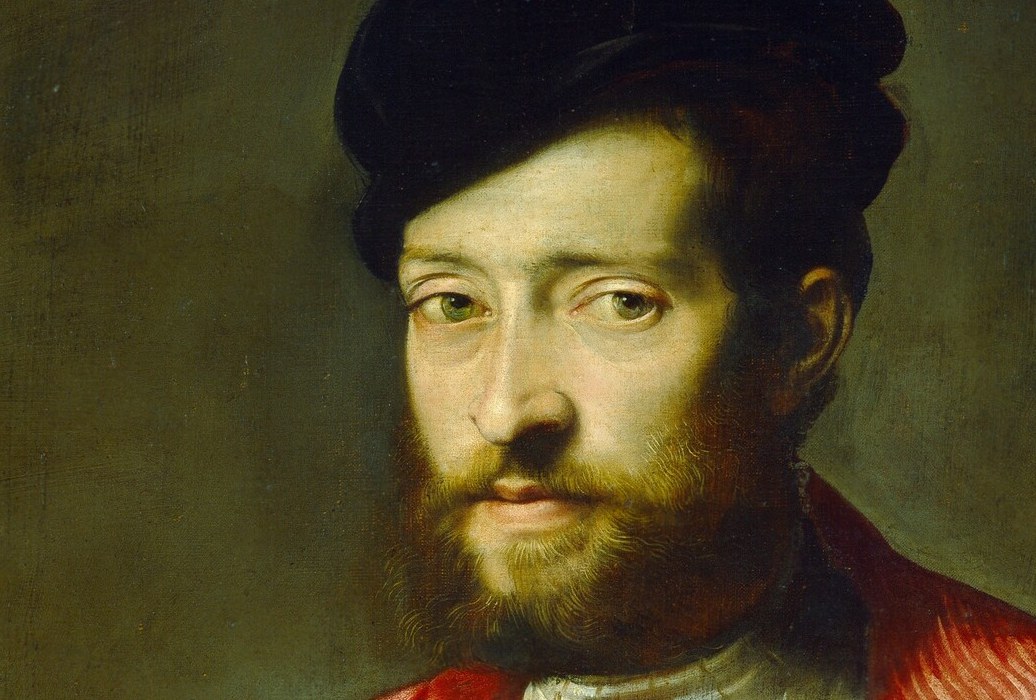
Look at the sitter's face. His direct, unblinking gaze is a patrician tool, designed to level the viewer. Then notice the virtuoso rendering of the white chemise puffing through the slashes of his crimson doublet. Each tiny pull of fabric is individually modeled. The page boy in yellow reinforces the social equation: his upturned face and still hands are pure deference, a vivid demonstration of the main figure's rank.
The identity of 'Alessandro Alberti' remains a proposal, not a confirmation. The closely trimmed beard helps date the work to the mid-1540s, but the painter remains an unclaimed hand. The strong facial modeling and the dark, featureless background suggest an artist who knew the work of Moretto da Brescia and the Lombard school, where the absence of a setting is itself a statement of timeless status.
Art history is full of these open cases. A painting shows up, fully in command of its effects, and the best experts in the room can only say: 'We're still working on it.' That this portrait retains its authority across four centuries, even without a famous name attached, is the real scandal of survival.
Details
Transcript
A portrait can vanish for four hundred years. This one resurfaced, and the questions began immediately. The sitter commands the room in slashed crimson. His direct stare is the iron core of the painting. A young page looks up, waiting for an order. Scholars argued the date for decades. The beard says 1544. But the artist's name is a ghost. We still don't know who painted him.