Lord Algernon Percy by Millar, James
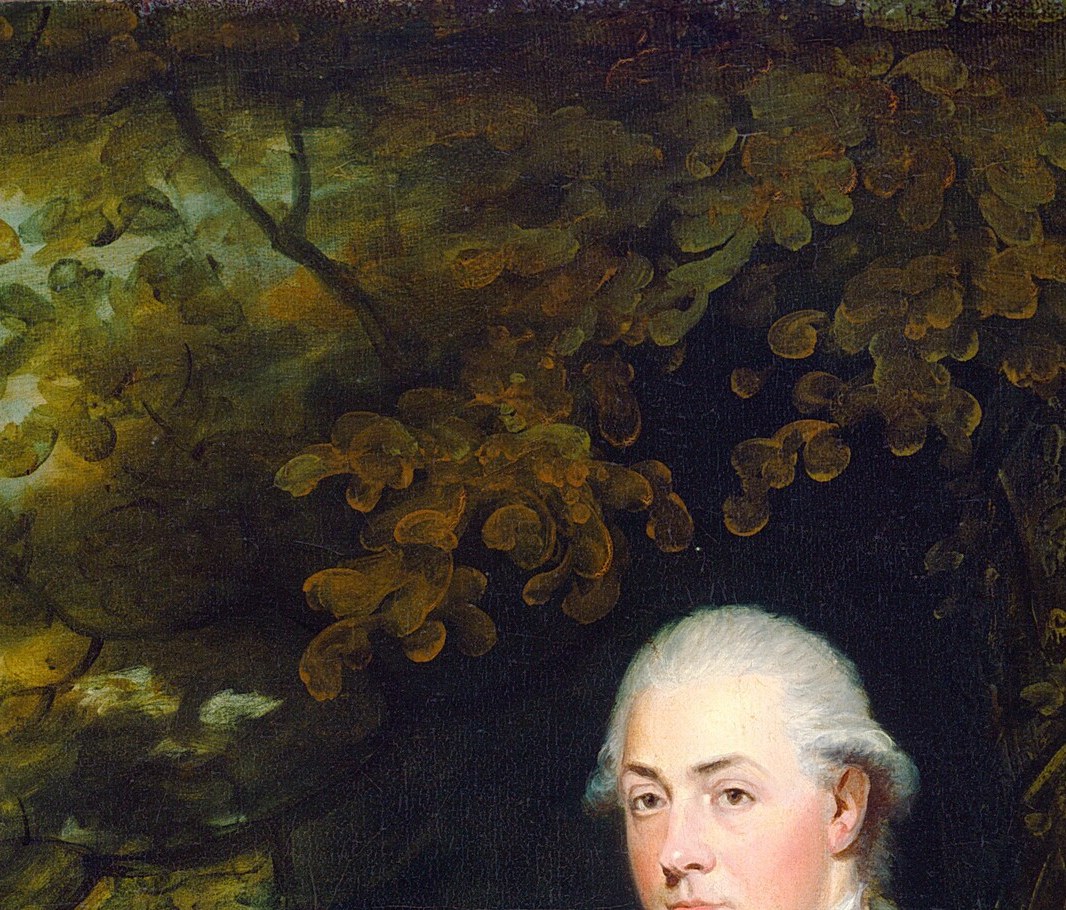
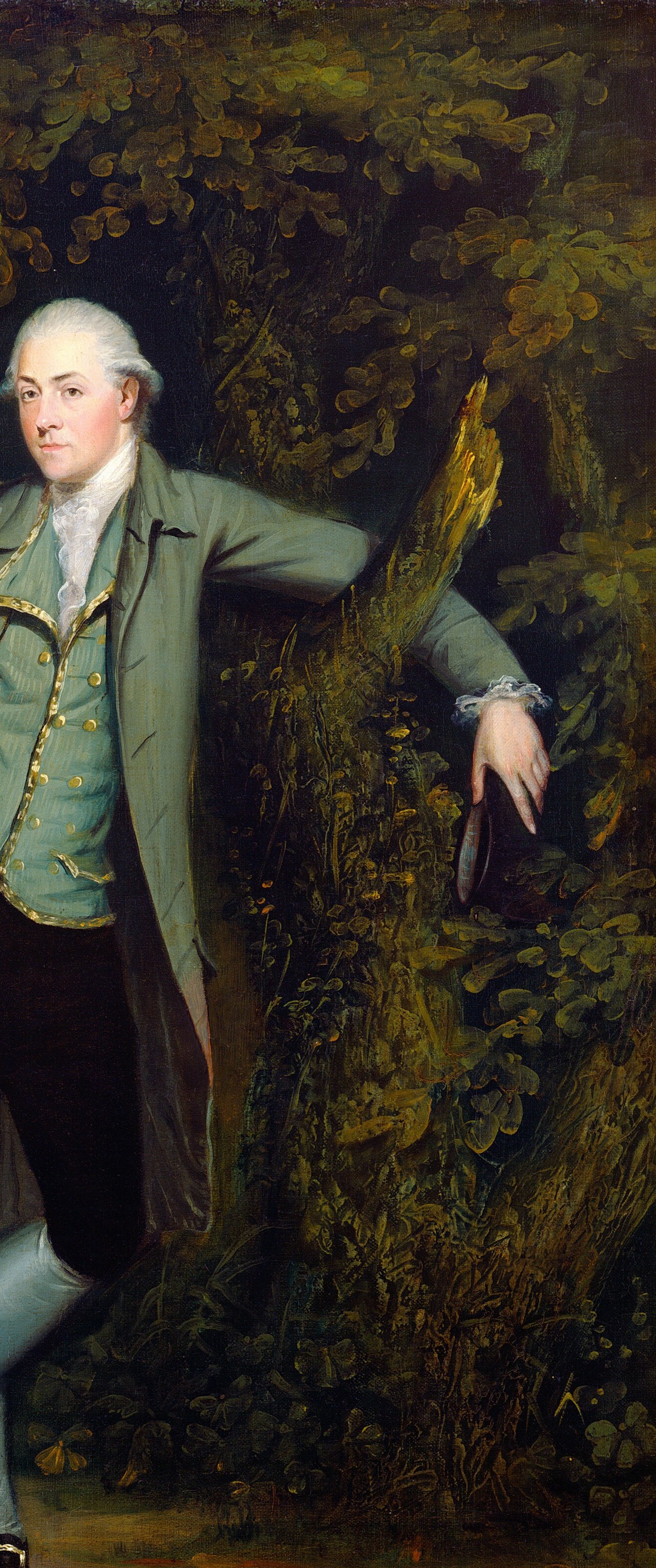
This is *Lord Algernon Percy*, painted around 1778 by James Millar, the leading portrait painter in Birmingham during the late 18th century. The sitter, Algernon Percy, would become the 1st Earl of Beverley, and the painting now belongs to a British public collection.
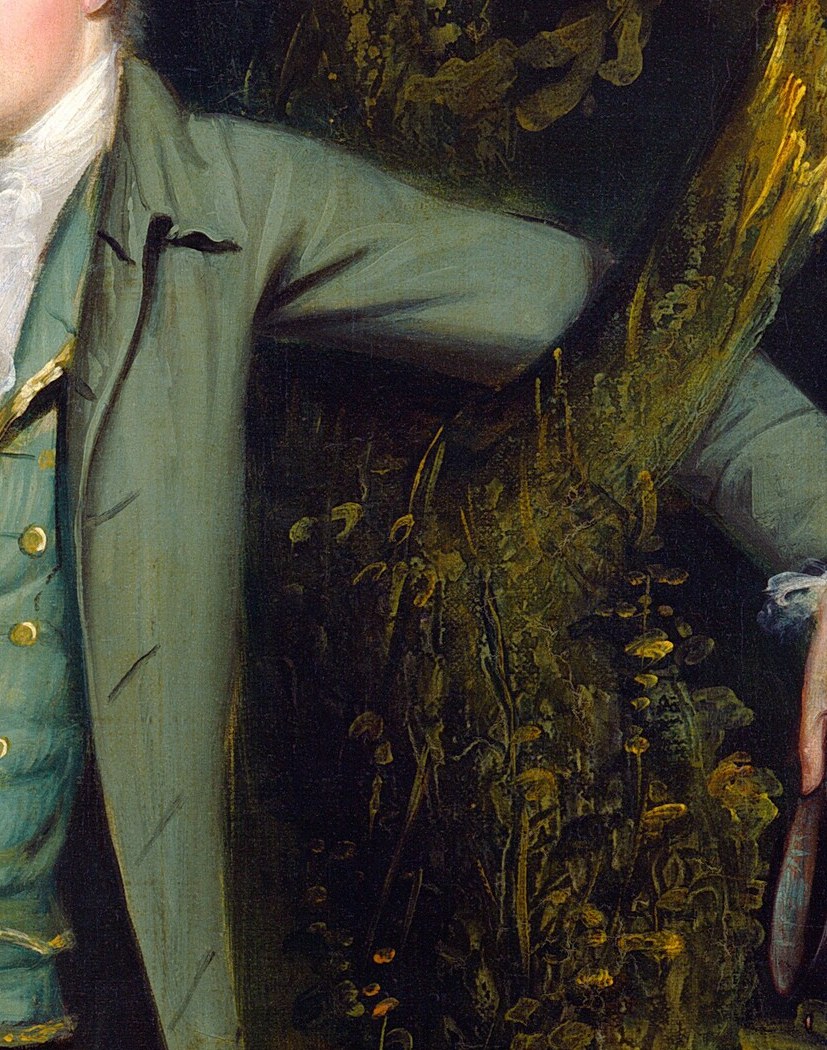
At first glance it is a standard Rococo aristocratic portrait: a confident man in a powdered wig, a falconry bird held aloft, a landscape behind him. The raised arm, the casual hand at the waist, and the direct gaze all speak the language of noble ease that Van Dyck had made standard over a century earlier.
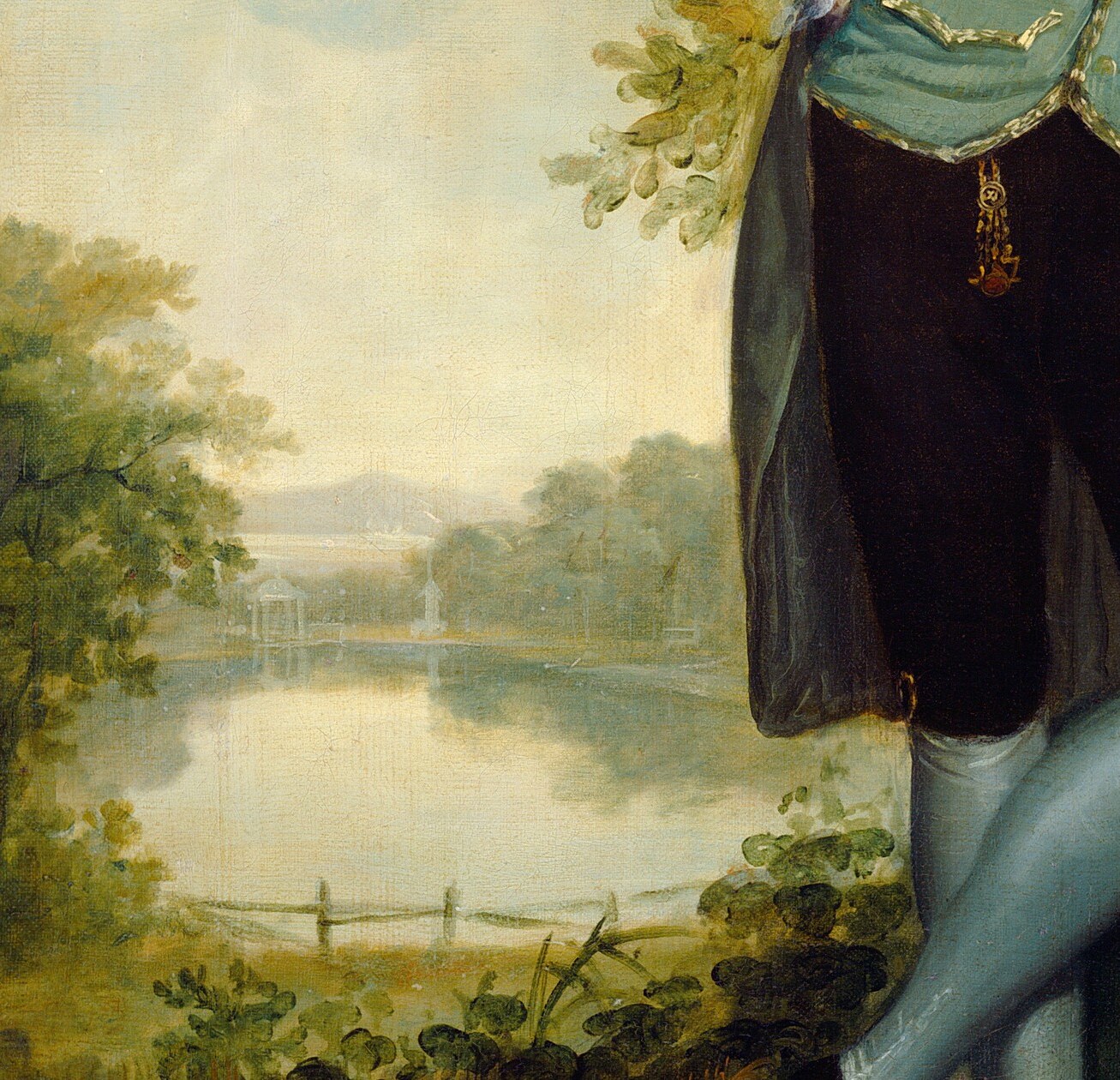
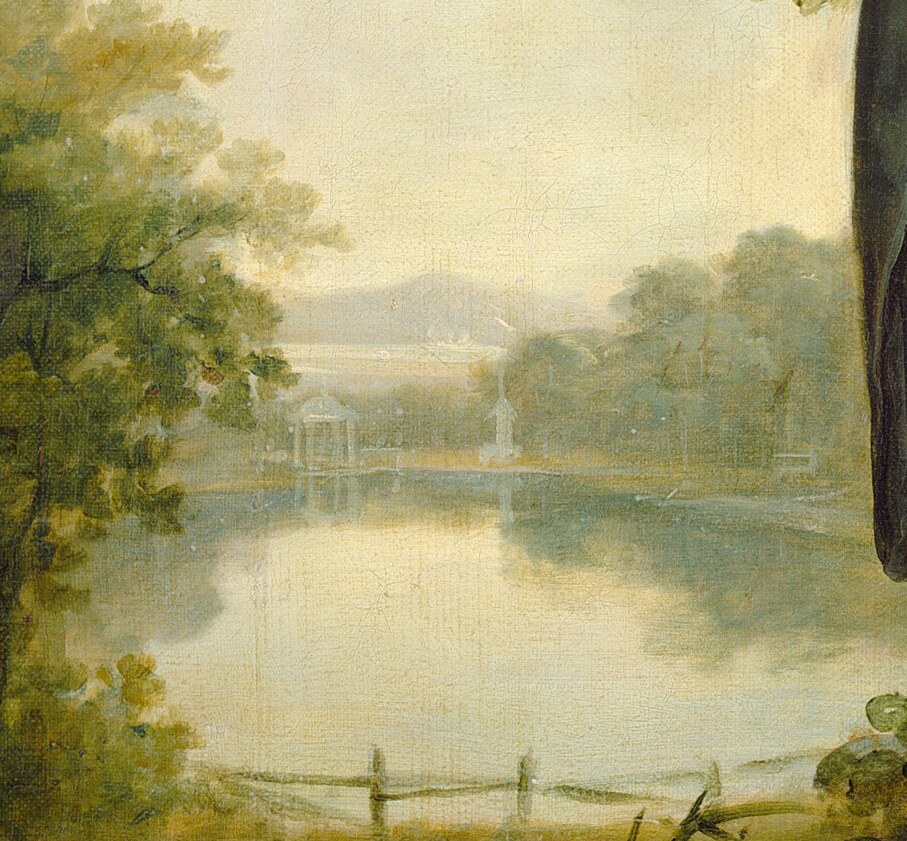
But the background does something unusual. Millar has painted not just a decorative pastoral backdrop but a specific, working landscape. On the far shore of the lake, two tiny figures are visible, barely brushstrokes, going about their labour. They are not shepherds in a classical idyll. They are people working a real English estate. The portrait widens from a likeness of one man into a document of land, ownership, and the lives that sustained it.
The Midlands Enlightenment shaped Millar's circle in Birmingham. He painted inventors, scientists, and the members of the Lunar Society. Perhaps that habit of honest observation explains why, even in a commissioned portrait of a future Earl, he quietly included the estate's other inhabitants.
Details
Transcript
A lord, a bird, an easy confidence. James Millar made him the leading portrait painter in Birmingham. This is Algernon Percy, soon to be the 1st Earl of Beverley. He holds a falconry bird high, a nobleman's ancient claim to dominion. Now follow the water to the far shore. Two tiny figures are working on his land. The portrait is not just of a man. It is of an entire estate, and everyone on it.