Portrait of a Woman by Jacopo Zucchi
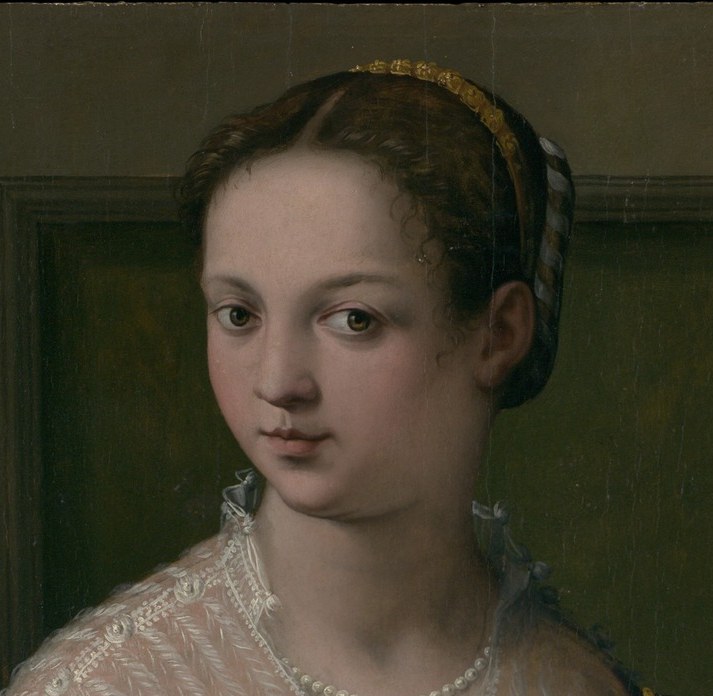
Around 1600, Jacopo Zucchi painted this portrait of a woman whose identity has been lost to time. The painting now hangs in The Metropolitan Museum of Art. We do not know her name, but we know exactly what she wanted us to see: money, taste, and the cool confidence not to smile about either.
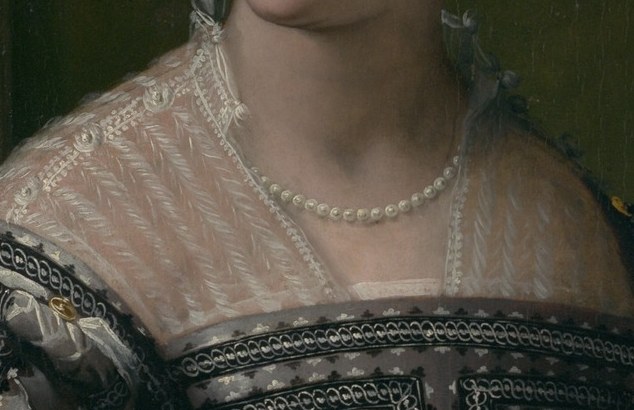
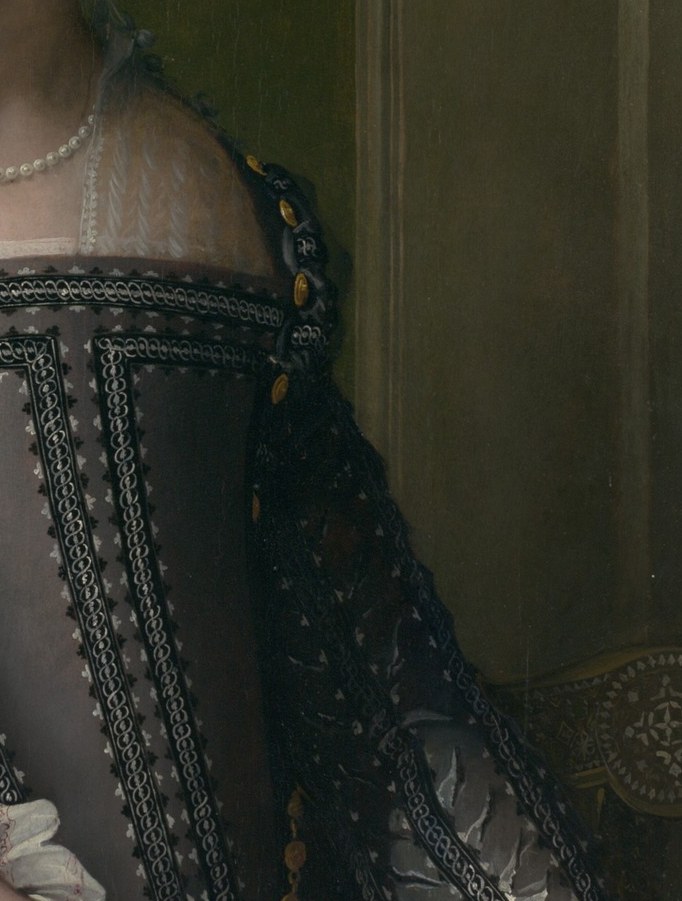
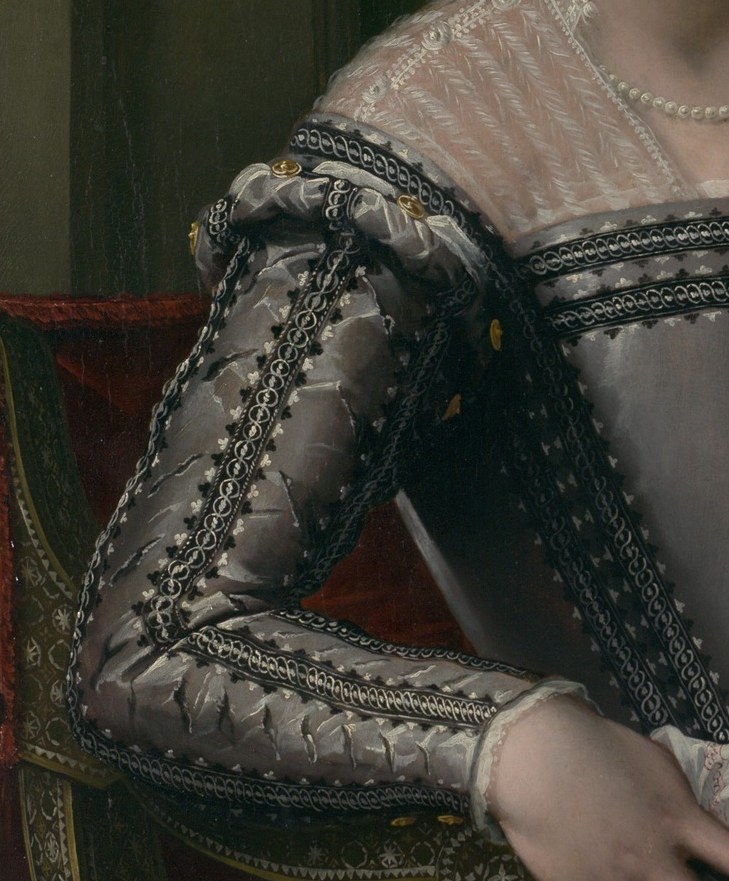
Let your eye land on the sleeve. Zucchi, trained under Giorgio Vasari, painted the slashed Florentine silk with virtuosic precision. Each cut reveals a different contrasting underlayer. It is a late-Mannerist tour de force of textile illusionism, designed to signal that the sitter could afford the most labor-intensive fashion in the room. The three-strand pearl necklace makes the same claim, louder.
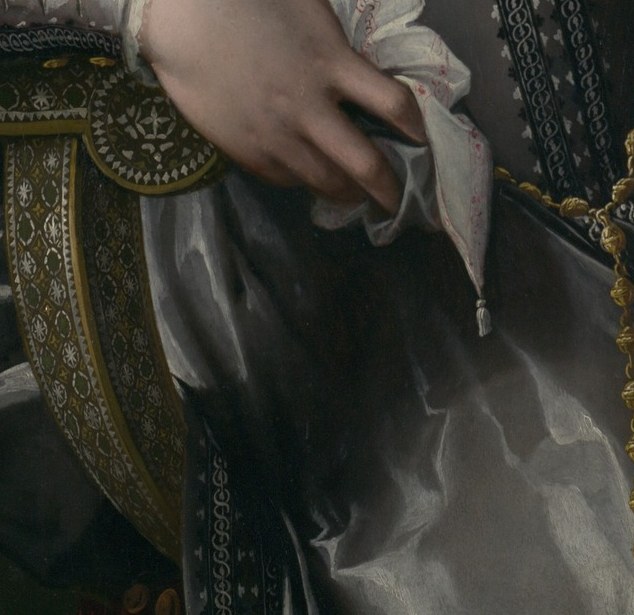
Her hands hold gloves, not wear them. In Medici court portraiture circa 1600, this was a clear signal: the sitter expects to be seen, not to work. The carved chair arm and the architectural pilaster behind her place her in a formal palazzo interior, a space of power, not domestic intimacy.
Zucchi trained under Vasari in Florence and later worked for Cardinal Ferdinando de' Medici in Rome. He knew exactly how to paint power. This woman’s level, direct stare creates a psychological tension that still works on us, four centuries later. What do you think her name might have been?
Details
Transcript
Around 1600, Medici courtiers could read this dress like a bank statement. Three strands of pearls at the throat alone cost a small estate. Gloves held, not worn. She has never lifted anything heavier than a goblet. This sleeve is a Mannerist magic trick. Each slash reveals a different silk beneath. The artist trained under Vasari and later worked for a Medici cardinal. This woman commanded the best painter money could buy. We still do not know her name.