Virgin and Child by http://www.wikidata.org/.well-known/genid/92c0119d60049e0b2656c79cde68271e
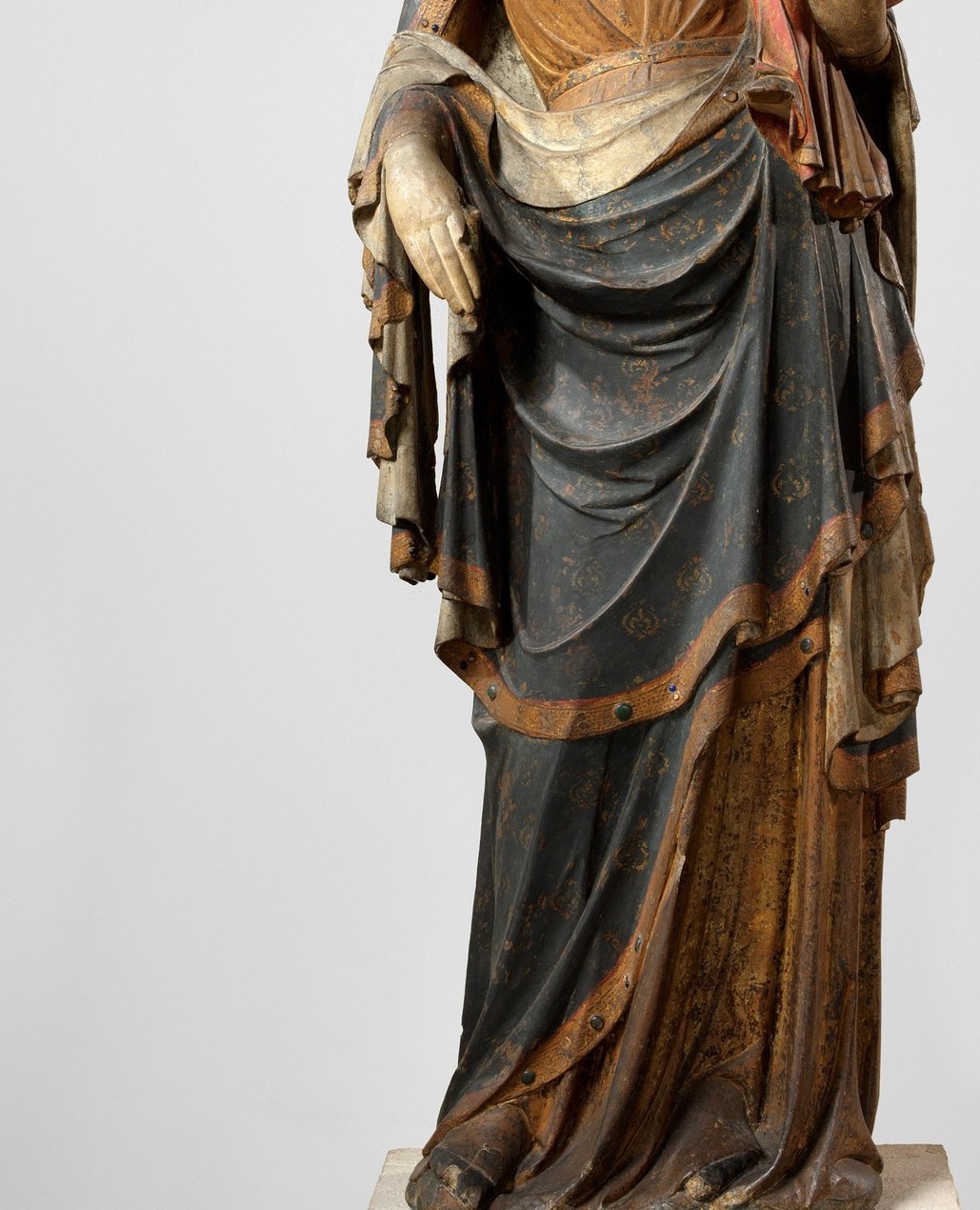
This is Virgin and Child, painted around 1340 by a Gothic master whose name we have lost. It hangs today in the Metropolitan Museum of Art, and its most powerful story isn't in the faces, it's in the blue.
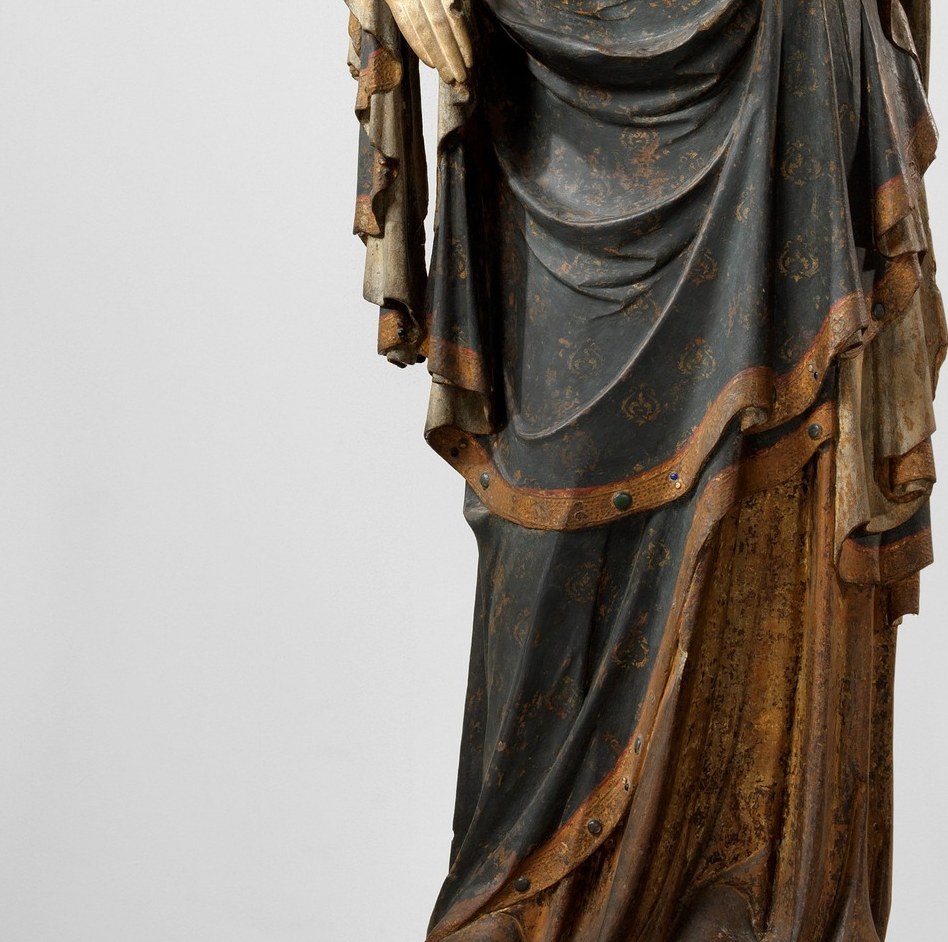
Ultramarine blue was ground from lapis lazuli, a stone that came from a single region in Afghanistan and crossed the medieval world at staggering cost. In 14th-century contracts, patrons often paid for it as a separate line item, a direct donation to the work's holiness. The painter was forbidden from substituting a cheaper blue; the contract demanded heaven's actual color.
Look at the wear. The paint is not cracking from age alone, it is worn selectively, rubbed thin where hands touched Mary's robe and lips pressed the Child's feet. These erosion maps are archaeological records of exactly where the most devout contact fell most often. The gold chest brooch still gleams because fewer hands reached that high.
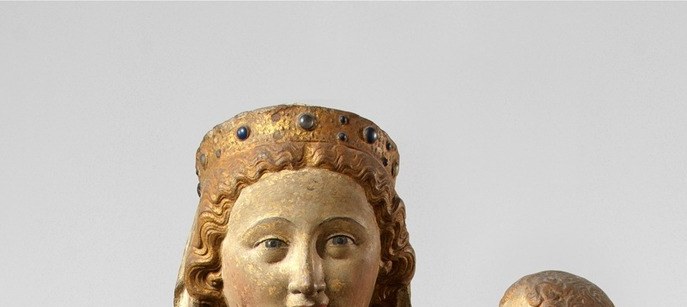
The artist is unknown, but the iconography is deliberate: the Child stands upright, an active judge even in infancy. Mary's face is emptied of emotion, a signal of divine transcendence, not a lack of skill. This object was meant to feel like a window, not a woman, and for six hundred years people have reached toward it with their bodies.
Quiet question: if you could trace the wear patterns on just one medieval object to its source, what would you ask it?
Details


Transcript
In the 1340s, one color cost more than gold. Ultramarine. Ground from lapis lazuli mined in Afghanistan. The contract for this Virgin specified it, line by line. Patrons paid for the pigment separately, as an act of devotion. Her face is still. That stillness is theological. But look where the paint has worn away. Centuries of hands, lips, and incense mapped onto this surface.