Benjamin Franklin (1706–1790) by http://www.wikidata.org/.well-known/genid/a5c331056a15d6cd8207a7be6a80c9dd
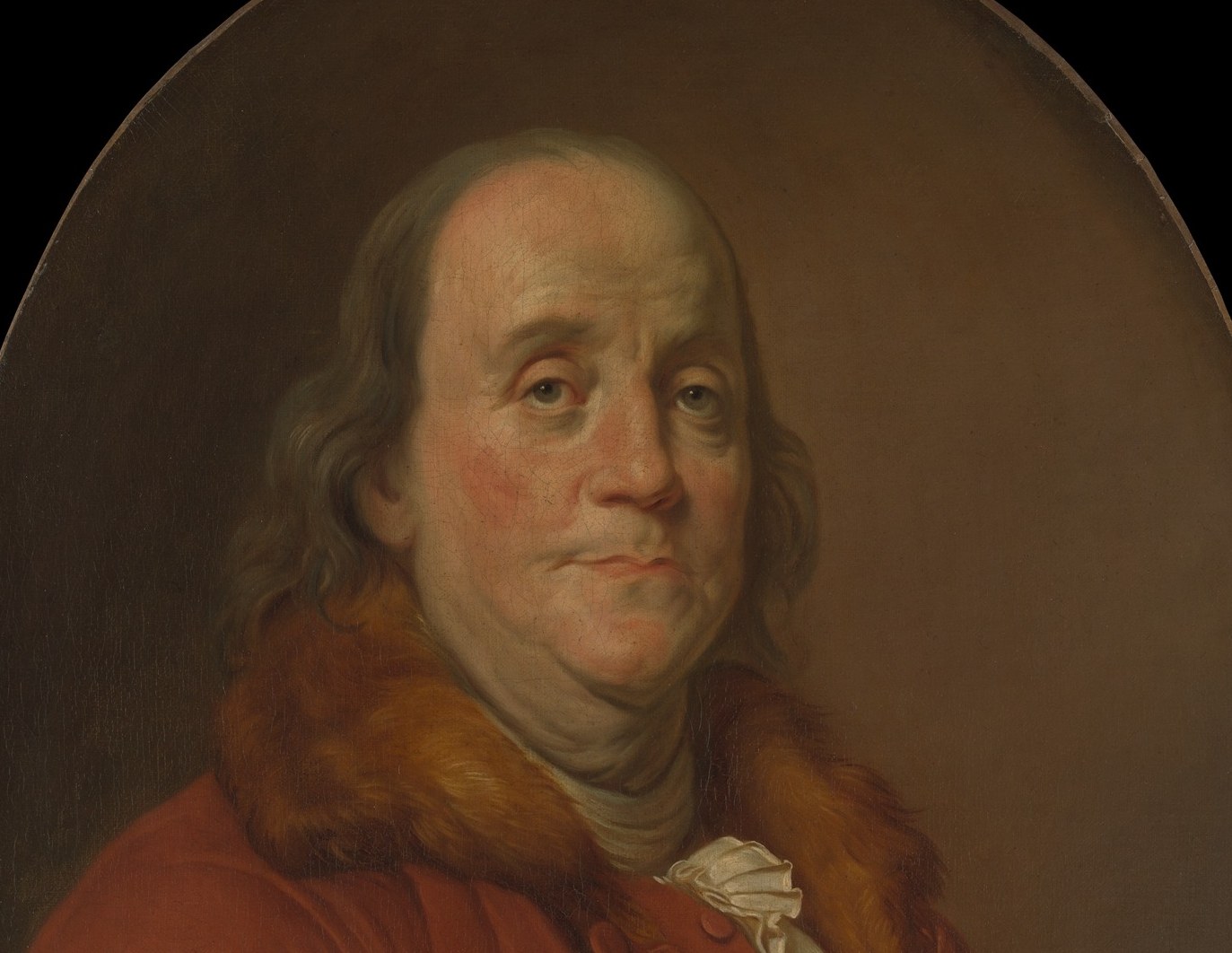
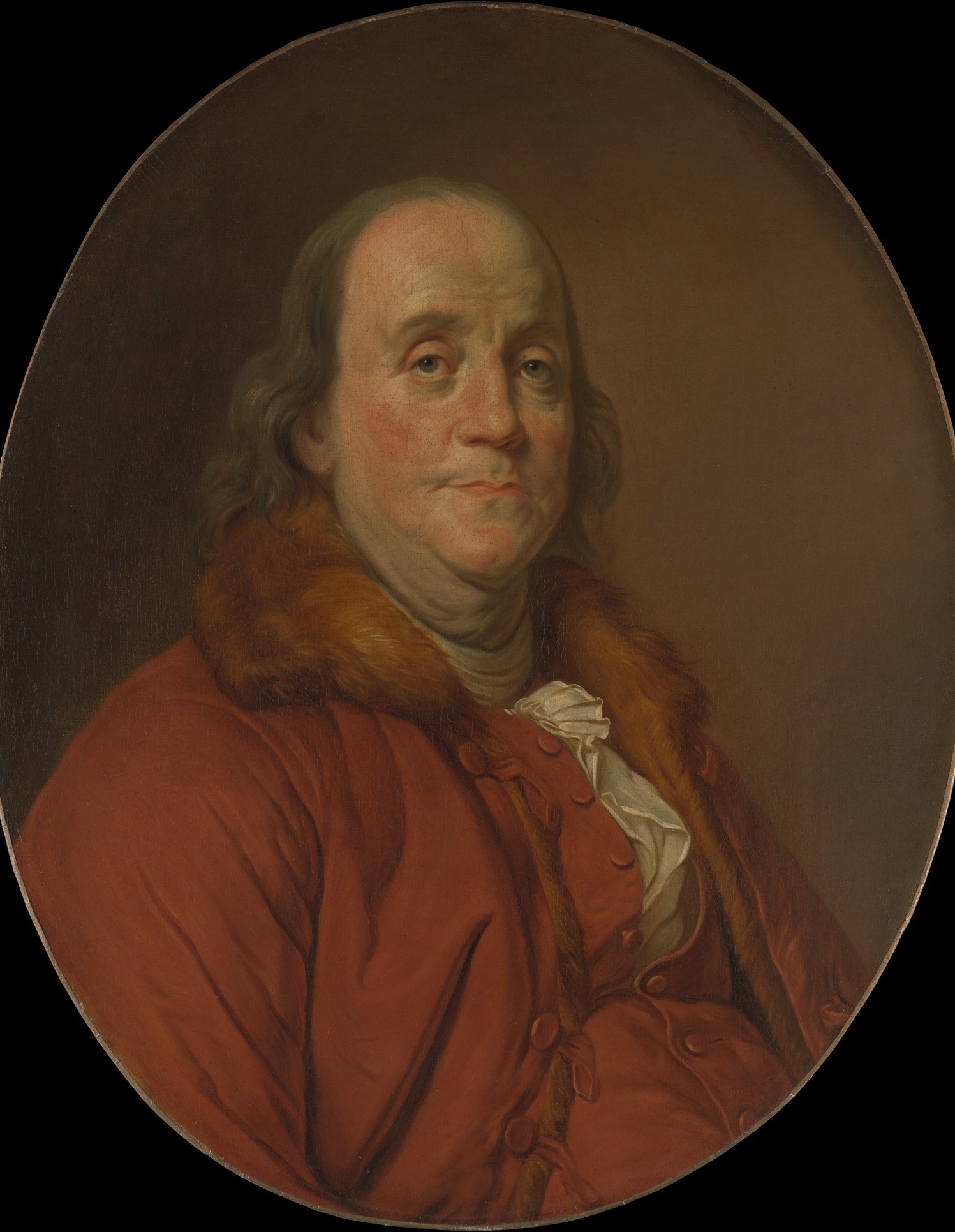
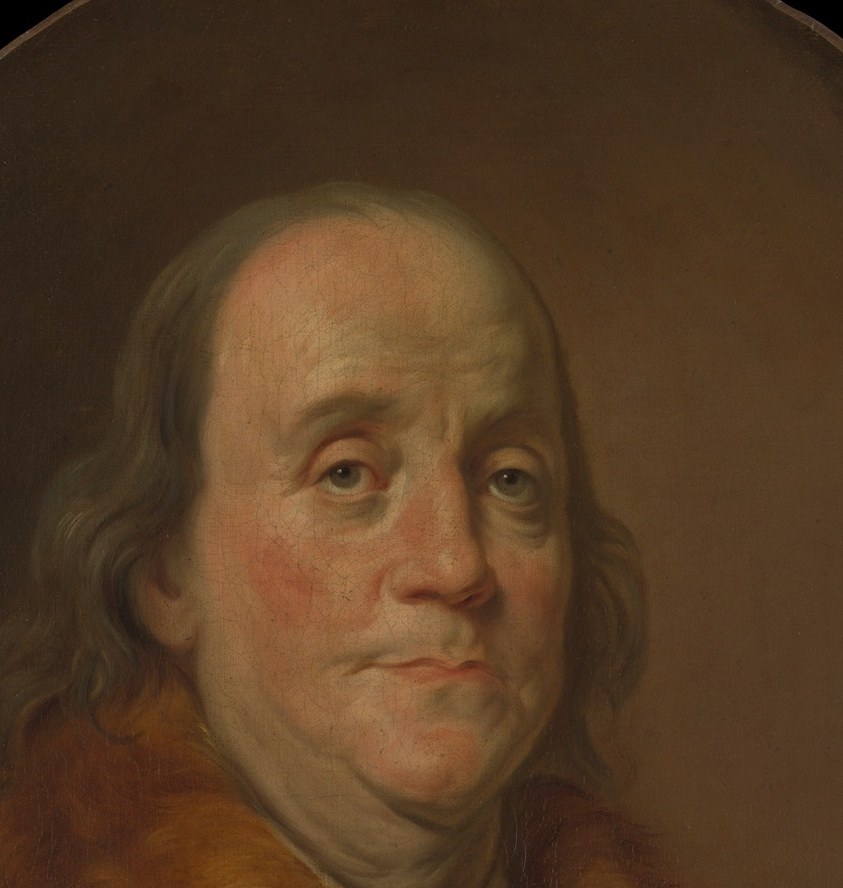
This is Joseph Duplessis's portrait of Benjamin Franklin, painted in Paris around 1785. It is the face that still appears on the hundred-dollar bill, but the original oil painting is far warmer and more human than the engraved copy most people know.
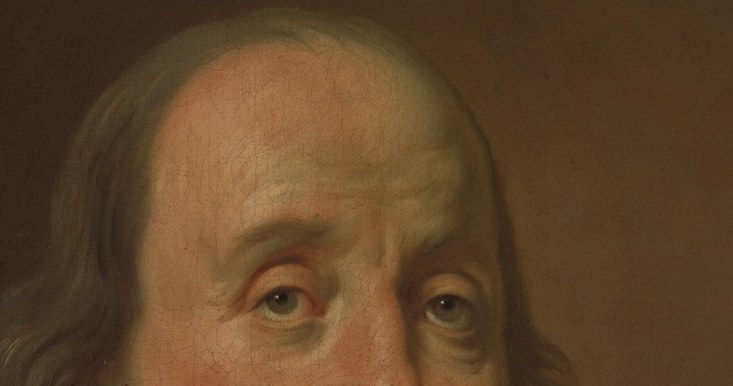
The first thing to notice is the hair. Franklin refused the powdered wig that was mandatory for men of his station. His long, natural gray hair was a calculated choice, and it became a sensation. French aristocrats bought wigs made to look like Franklin's real hair, paying high prices for a copy of the thing he refused to wear.
Duplessis painted this when Franklin was in his late seventies, serving as the American minister to France. He had already signed the Declaration of Independence and the Treaty of Paris. The portrait was an immediate success; Franklin sat for it several times, and the artist produced multiple versions, but this one is considered the primary life portrait.
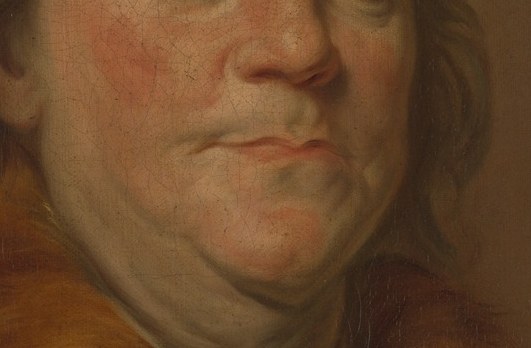
The mouth is the part to watch closely. It is not a smile, not quite a frown, a deliberate withholding. Franklin understood that a portrait was not a true likeness, it was a tool. This face was meant to be reproduced, to travel, to stand for a nation that had not yet proved it would survive. And it still does.
Details
Transcript
He wrote his own autobiography. But he never finished it. Look at the hair. In Paris, aristocrats paid to have hair like this. He refused the wig. He gave Europe the American they wanted to see.