Charles IV of Spain as Huntsman by Spanish 18th Century
This portrait, "Charles IV of Spain as Huntsman" by a Spanish 18th-century artist (c. 1799/1800), captures the monarch in his royal leisure. The painting uses a dramatic contrast of light and shadow to emphasize the king's figure against a darker background.
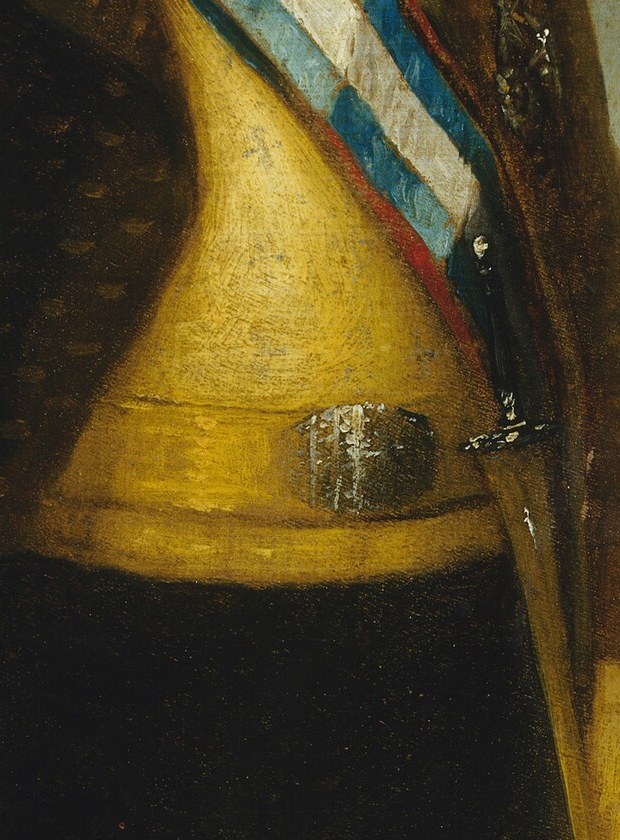
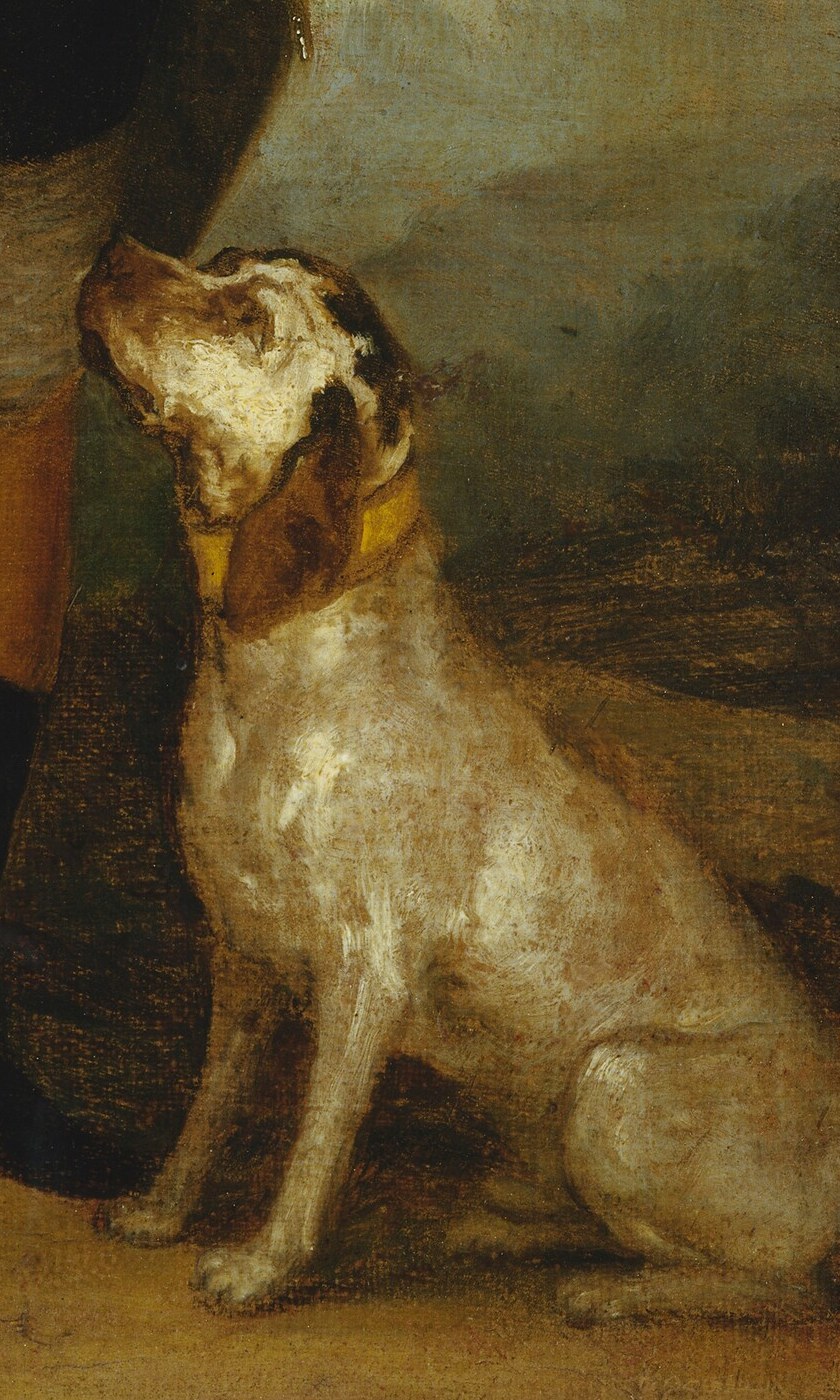
Notice the vibrant yellow waistcoat and the striking blue, white, and red sash, which signify his high status. The king's face, though highlighted, carries a somewhat weary expression, adding a layer of humanity to the royal depiction. His hunting dog looks up at him with clear loyalty.
The artist employed chiaroscuro, a technique that uses strong contrasts between light and dark, to create a dramatic effect. This stylistic choice draws the viewer's focus directly to Charles IV, presenting him as an active outdoorsman, strong and connected to nature.
How do you think this portrayal of a monarch in a relaxed, yet powerful, stance reflects the expectations of royalty at the time?
Details
Transcript
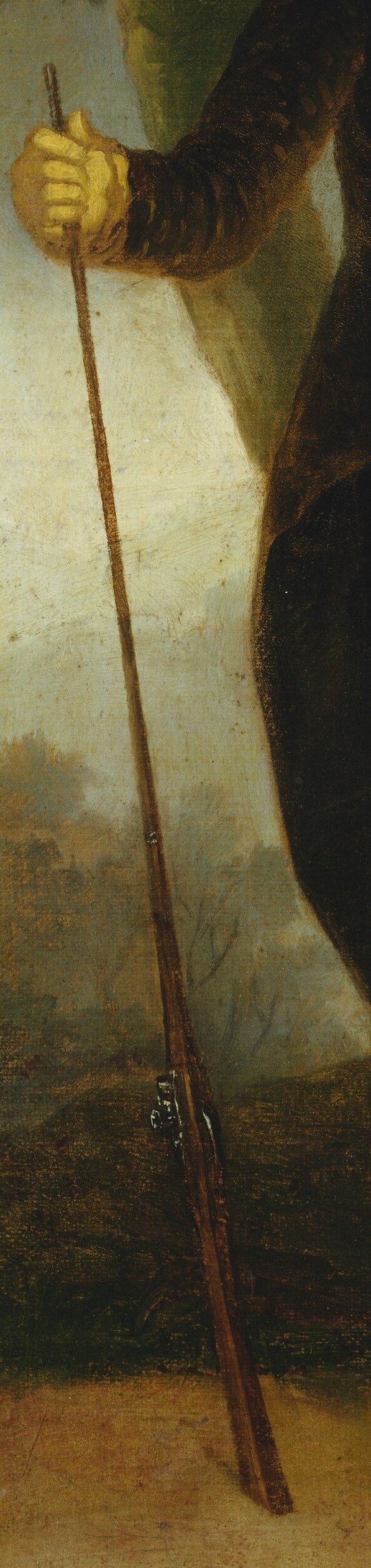
King Charles IV was often painted as an outdoorsman. His bright yellow waistcoat draws the eye. The artist used stark light and shadow to highlight him. This technique, chiaroscuro, focuses your attention. See how the hunting dog looks up, a loyal companion. He is presented as strong, traditional, and connected to nature.