The Crucifixion by Andrea di Bartolo
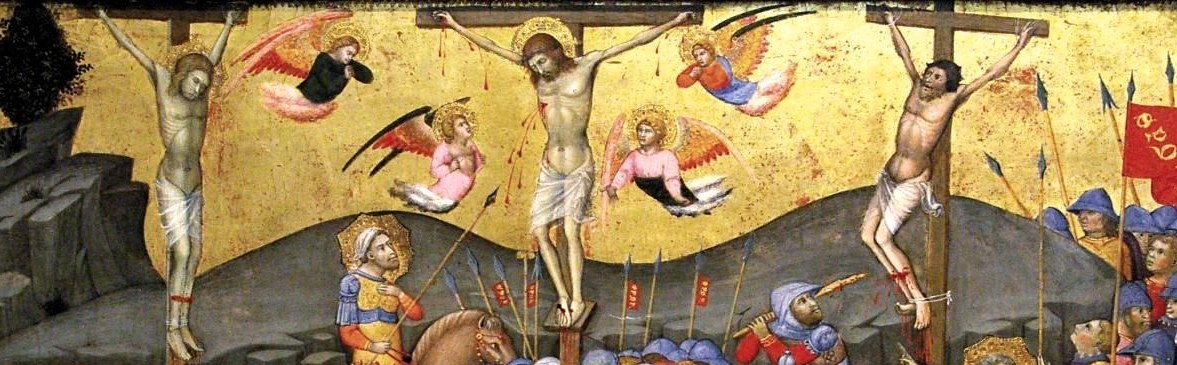
At the center of Andrea di Bartolo's 'The Crucifixion,' painted around 1400, a woman kneels alone at the foot of the cross. She is barely visible in the compressed, chaotic scene, but she holds the painting's quietest, most intimate moment.
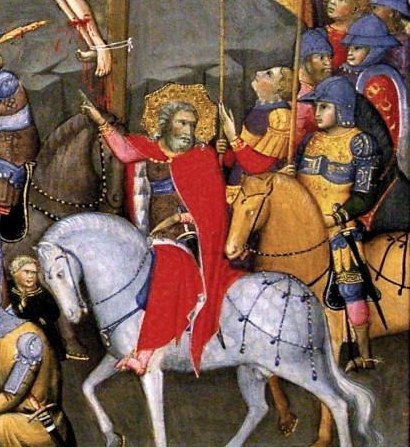
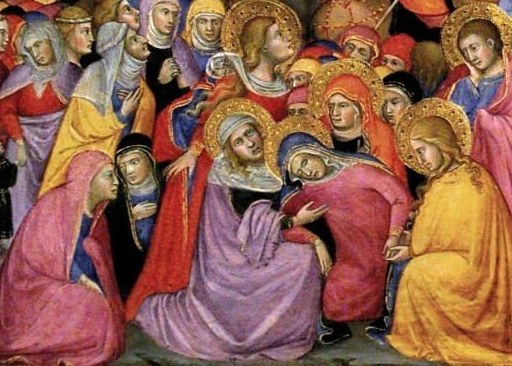
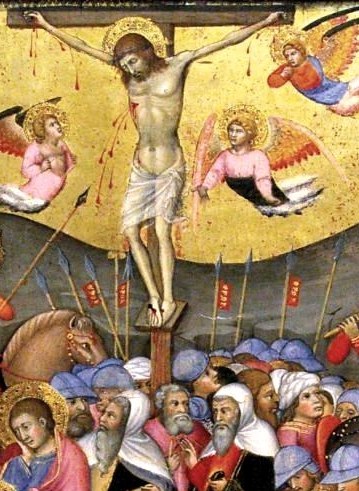
The painting, now at The Metropolitan Museum of Art, is built like a triptych in miniature. On the left, the Virgin Mary collapses into a knot of holy women. On the right, mounted soldiers in vivid red and blue armor push forward. Your eye naturally rises to Christ on the central cross, and to the gold-leaf sky where angels hover.
But the figure you might scroll past is Mary Magdalene, crouched at the base of the cross. In the iconographic tradition, she is the one who stays. Andrea di Bartolo painted her small, but he gave her the most direct physical contact with Christ: her hands pressed against the very wood of the cross.
A detail hidden in plain sight. What else do you find yourself returning to?
Details

Transcript
First, you see the chaos: a crowded crucifixion. Mounted soldiers in red and blue push in from the right. The Virgin Mary collapses into the arms of the holy women. Your eye settles on the center: Christ on the cross. But now look down, into the shadow of the cross itself. A lone woman clings to the wood. This is likely Mary Magdalene, in the closest physical contact with Christ in the entire scene. Andrea di Bartolo painted her small, but gave her the most intimate grief.