Buffalo Chase in the Snow Drifts - Ojibbeway by Catlin, George
George Catlin's 'Buffalo Chase in the Snow Drifts - Ojibbeway,' painted in 1865, is a ghost of a memory committed to card. The American lawyer-turned-painter first witnessed a buffalo chase among Great Lakes tribes in 1832, yet this oil work did not leave his hand until decades later, when the frontier he saw had already begun to disappear.
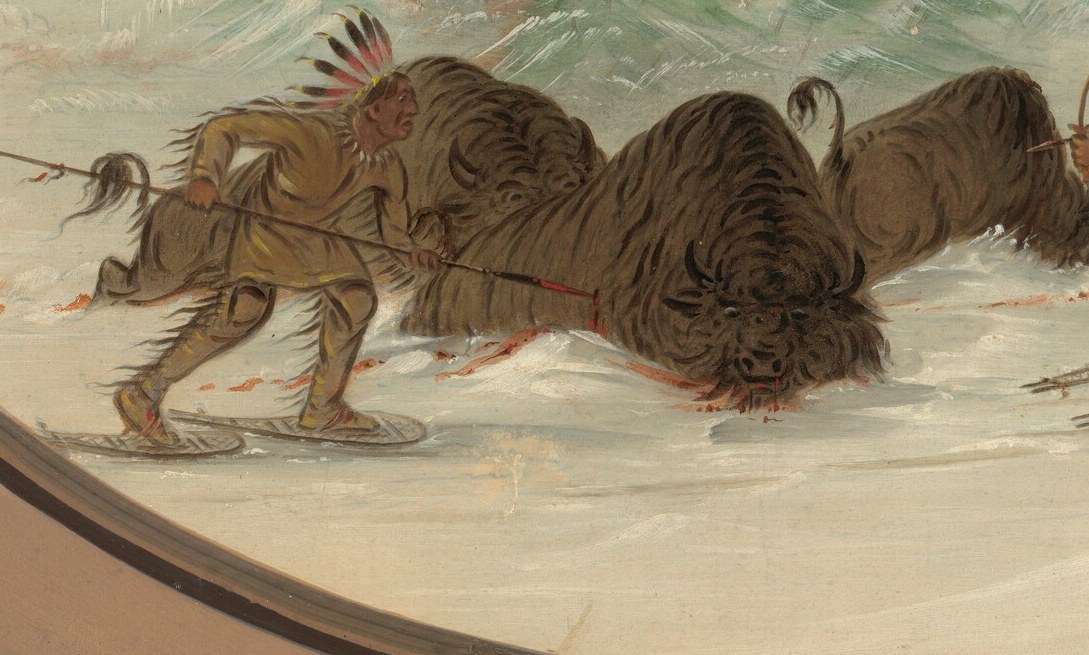
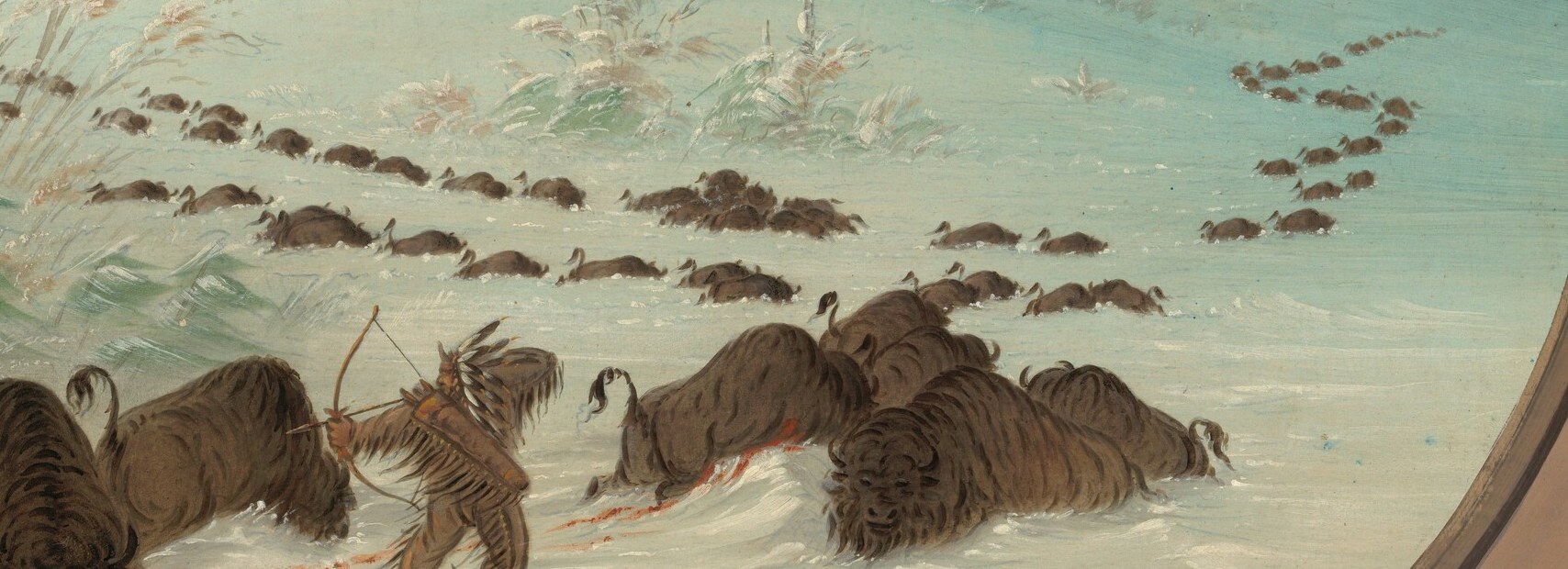
The painting is almost entirely snow and sky, a vast landscape of white undulations broken only by the dark, blocky forms of stampeding bison. Find the lone rider on horseback, a tiny figure almost swallowed by the expanse. His presence is minimal, but it changes the entire image from a nature scene into a human story of winter survival.
Catlin traveled west five times in the 1830s to document the lives and ceremonies of Native American tribes, creating a visual archive of what he feared was a vanishing world. This small card, mounted on paperboard, was part of that urgent project, painted during the era of forced relocation and westward expansion.
The scene is harsh and quiet at once. The real power is in what is barely visible, the delicate snow-laden bushes, the lone rider, and the story held inside a painting made in mourning for a moment already gone.
Details
Transcript
You could scroll right past the whole story. Dark shapes surge through a sea of snow. Look closely at the distant hill. A solitary Ojibwe hunter follows the stampede. Catlin painted this in the 1860s, decades after he saw it. He feared these scenes would vanish forever.