Tradition by Kenyon Cox (American, 1856–1919)
Kenyon Cox's 'Tradition,' painted in 1916, is an allegorical oil painting that visualizes the transmission of cultural and intellectual heritage, now held at The Cleveland Museum of Art.
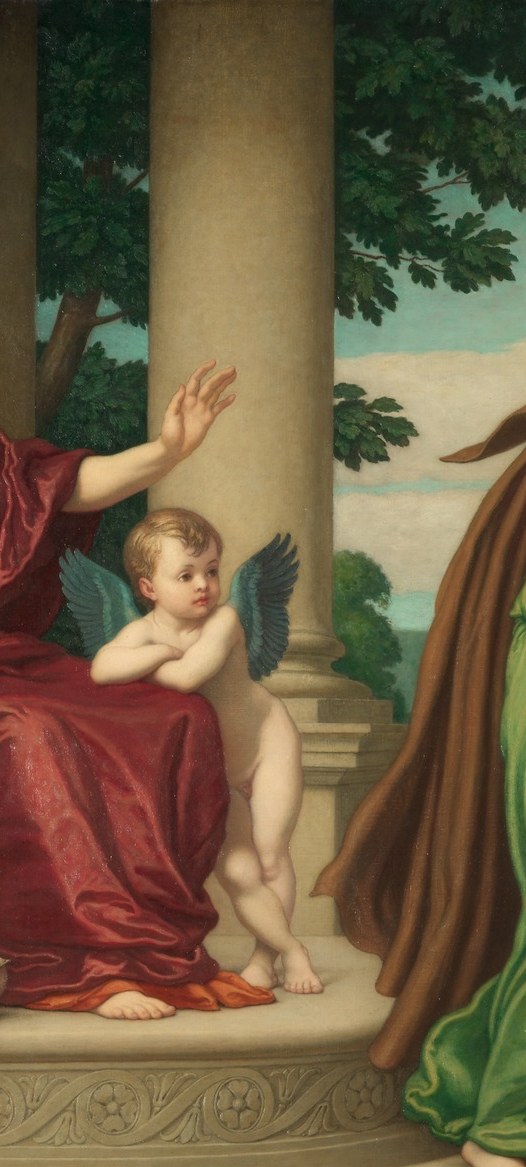
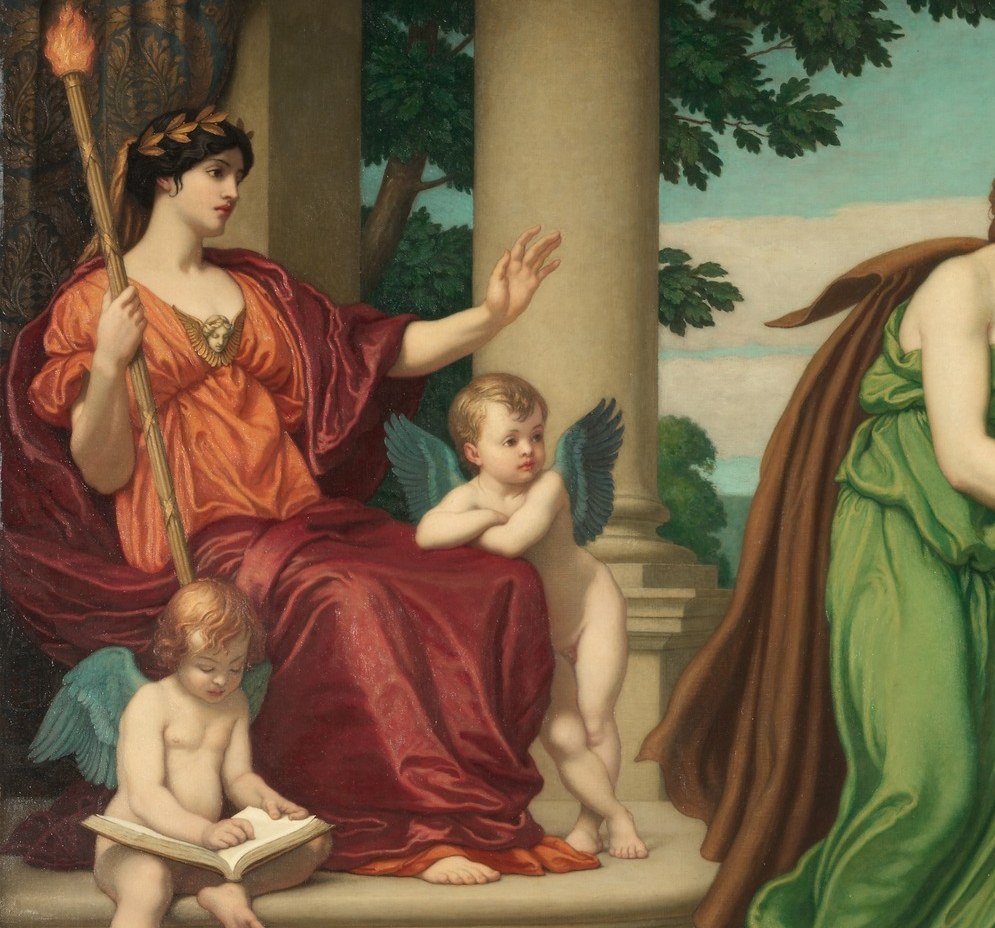
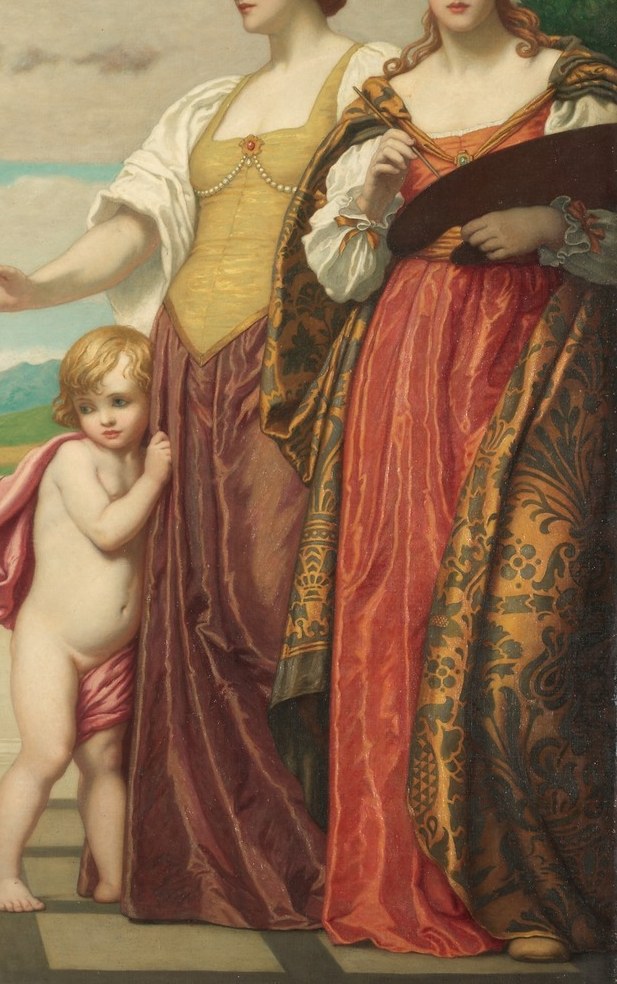
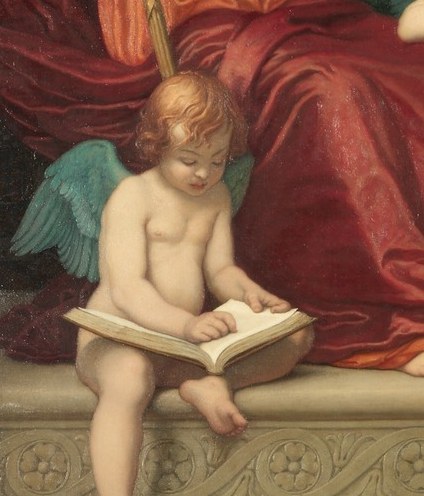
Observe the central figures: one woman with a torch, symbolizing enlightenment, and another with an open book, representing the preservation of history. In the foreground, cherubs engage with these figures, suggesting the active reception of knowledge by the younger generation. The classical setting and flowing robes emphasize timelessness and dignity.
Created during World War I, the painting reflects Cox's commitment to academic realism and his role as a proponent of the American Renaissance style. Cox, an influential instructor and muralist, often explored themes of cultural continuity and moral instruction.
The artwork stands as a didactic statement on the enduring power of civilization and education. How do you see the past influencing the present in this piece?
Details
Transcript
This painting from 1916 is called "Tradition." It shows how knowledge and art pass between generations. This woman holds a flaming torch, a symbol of enlightenment. Next to her, another woman holds an open book, preserving history. The young cherubs actively receive this legacy of wisdom. This allegorical work by Kenyon Cox came during World War I.