Water Lilies by Claude Monet
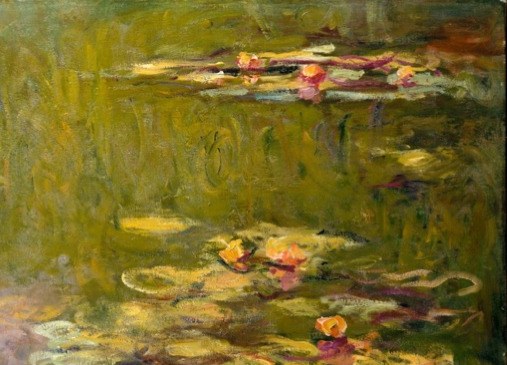
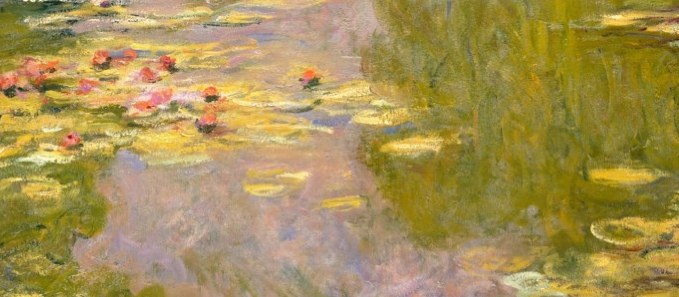
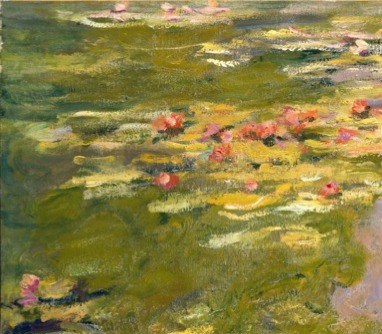
Claude Monet's "Water Lilies," painted in 1919, is part of his legendary series capturing the beauty of his pond in Giverny, France. This particular canvas, held at The Metropolitan Museum of Art, is a masterclass in seeing the unseen.
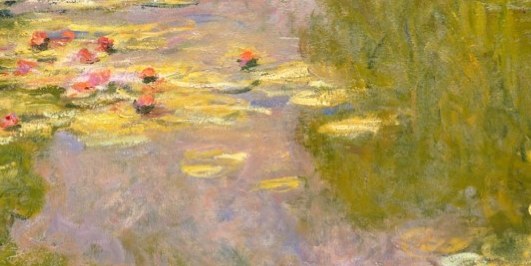
Monet's genius lies in his ability to make you look past the obvious. While the floating lily pads, like the vibrant chartreuse ones in the upper right, are captivating, the true magic is in the reflections. Notice the central sky reflection with its delicate lavender and rose-pink hues, implying a glorious, cloud-filled sky just beyond the canvas.
But the real hidden detail is along the upper margin of the canvas. Here, subtle, hazy greens blur into the reflection. These are not clouds, but the reflection of distant reeds or willow foliage on the far bank, a shoreline hidden from direct view, yet revealed by the water. Monet invites you to piece together the world beyond the frame, solely through what the water shows you.
What other hidden reflections do you see in Monet's world?
Details

Transcript
This is one of Claude Monet's famous Water Lilies. He painted hundreds of these, always focused on the water's surface. Look closely at the luminous sky reflected in the water's center. Its lavender and rose-pink tones imply a sky unseen, above the frame. But at the very top, hazy green blurs hint at something else. It’s the reflection of unseen reeds or willow branches, just out of view.