Chalice of Saint John the Evangelist [reverse] by Memling, Hans
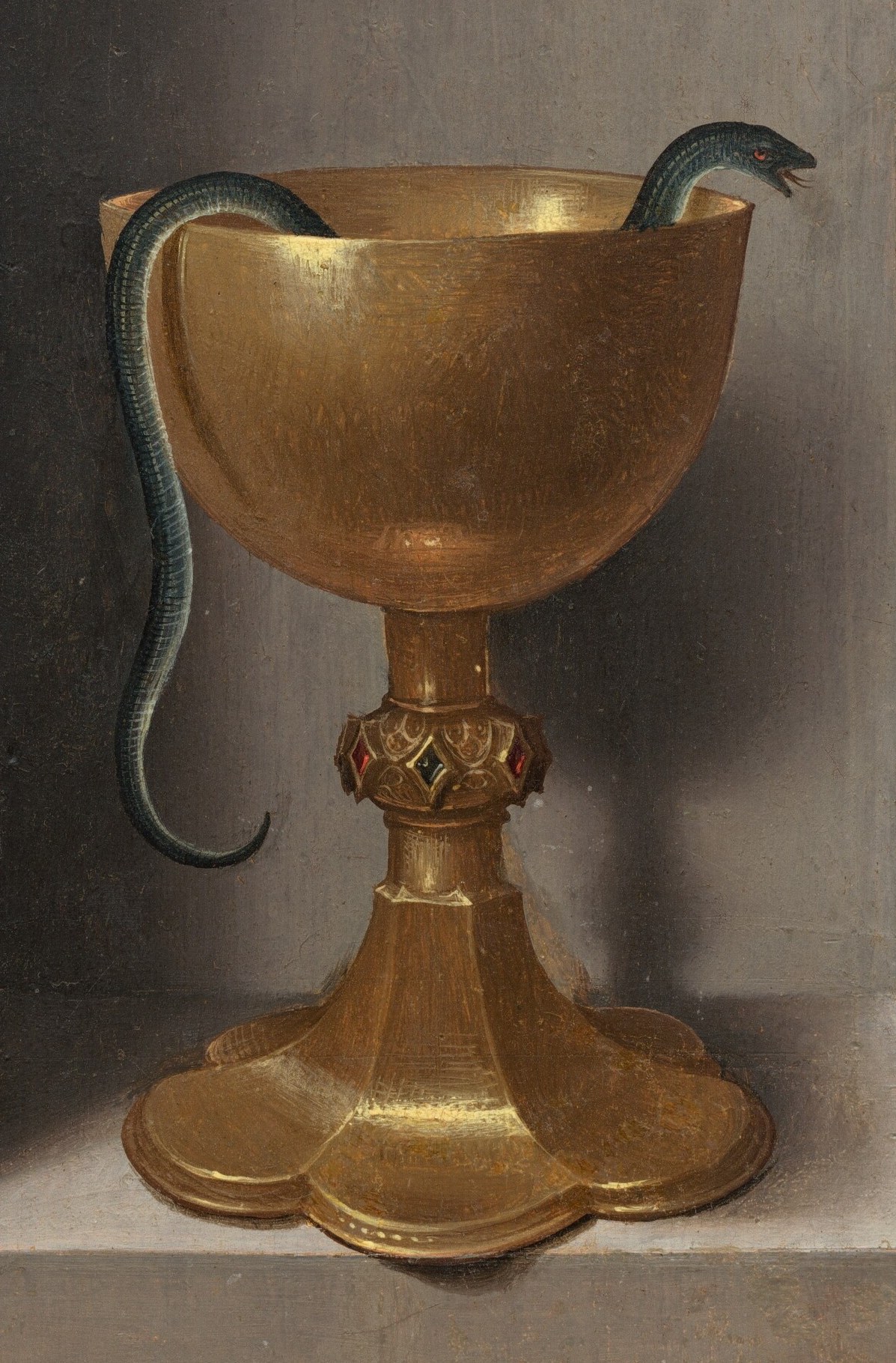
In Hans Memling's "Chalice of Saint John the Evangelist," painted around 1470-1475, a golden chalice gleams with symbolic meaning. This oil-on-panel work, housed in a prominent museum collection, showcases the detailed religious imagery characteristic of the Northern Renaissance.
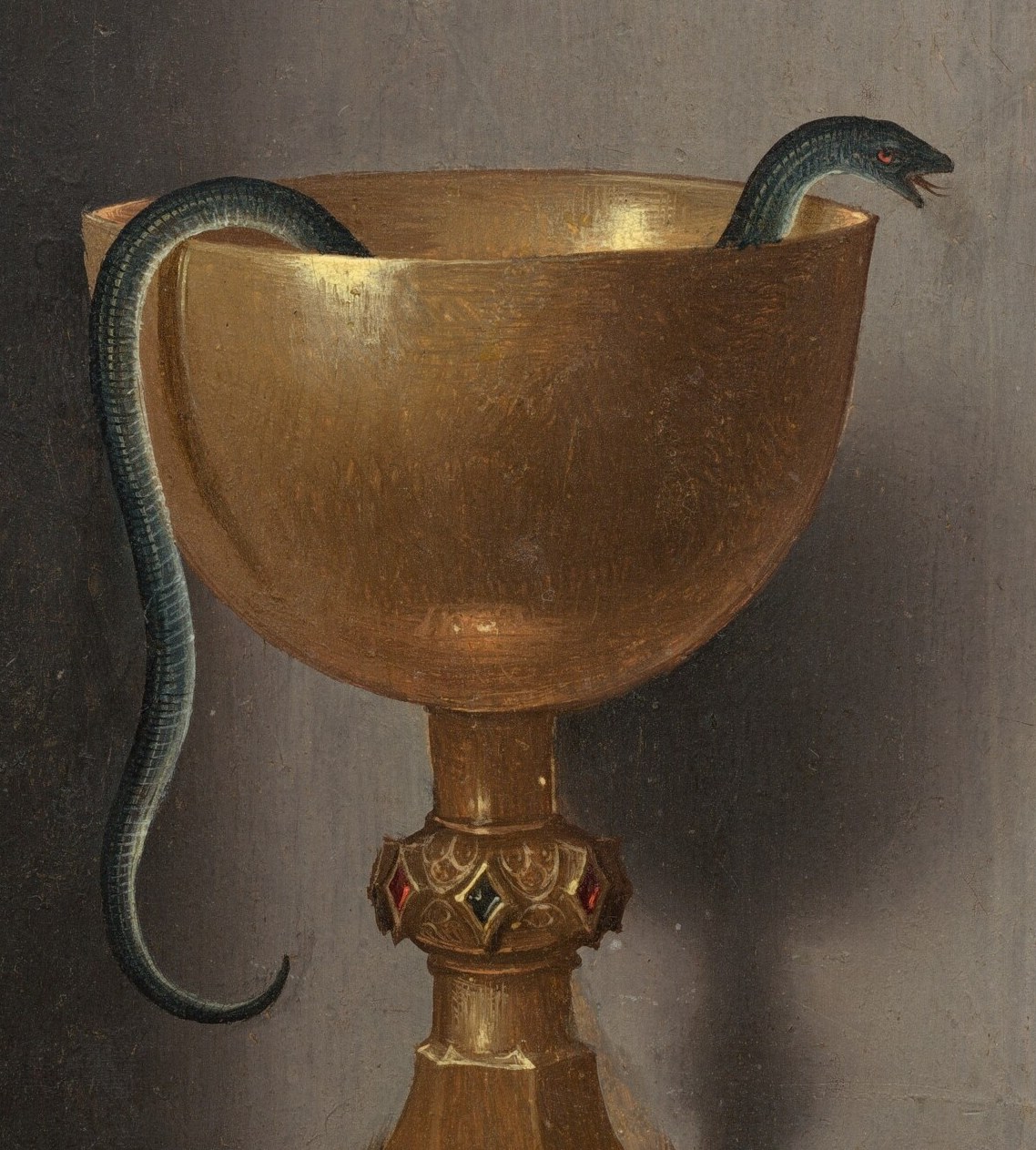
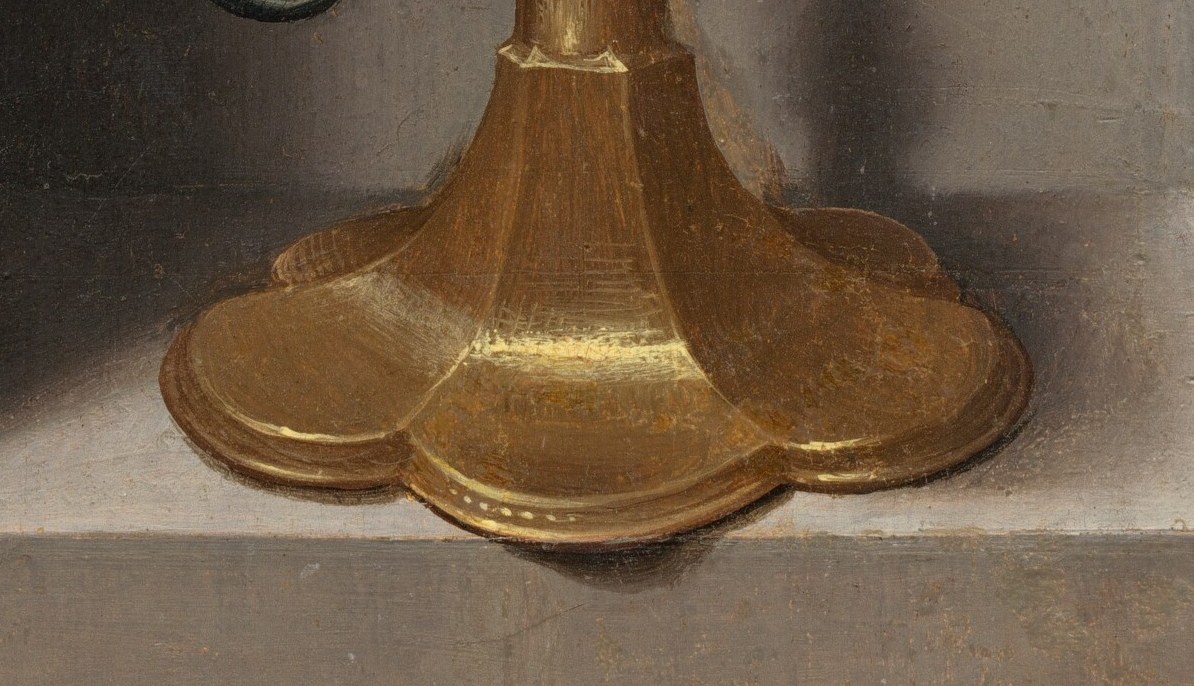
Look closely at the luminous surface of the chalice, which Memling rendered with multiple, translucent layers of oil paint. This technique gives the gold an almost ethereal glow, drawing the viewer into its sacred presence. Yet, an intriguing detail emerges: a coiled serpent rests within the cup.
This serpent is not merely decorative; it's a powerful symbol. It alludes to the story of Saint John the Evangelist, who, according to legend, drank from a poisoned chalice but was miraculously unharmed, thus overcoming temptation or evil. Memling, a German-Flemish painter who became one of Bruges' wealthiest citizens, excelled at infusing his meticulously rendered objects with such profound narratives.
What other hidden meanings might be found in this masterfully painted chalice?
Details
Transcript
This golden chalice shines with devotion. It symbolizes Saint John the Evangelist. The painter used thin layers of oil paint. This made the gold seem to glow from within. But look closer, a serpent coils inside. Its presence represents temptation overcome. The artist, Hans Memling, was one of Bruges' wealthiest citizens.