From My Studio Window by John Kane
John Kane painted his city from a fifth-floor window on the North Side of Pittsburgh in 1932. "From My Studio Window" hangs today in a major American museum, but the man who painted it was never supposed to get there.
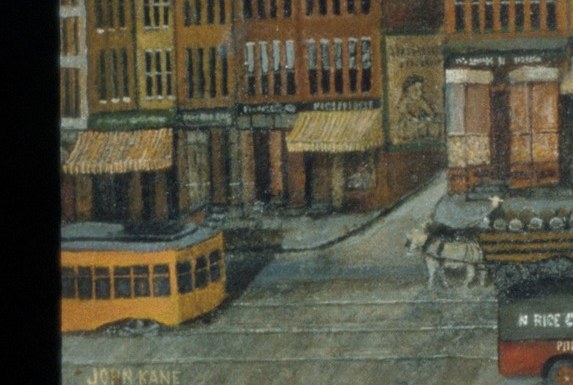
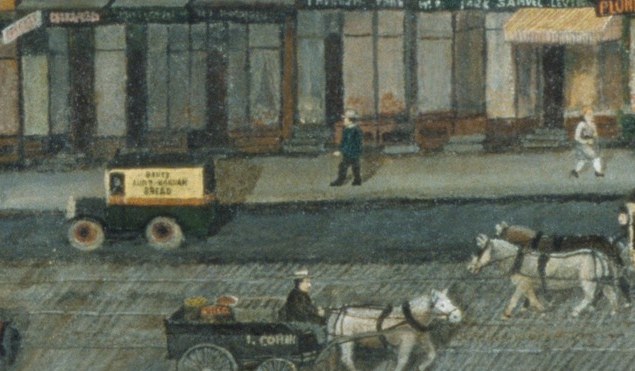
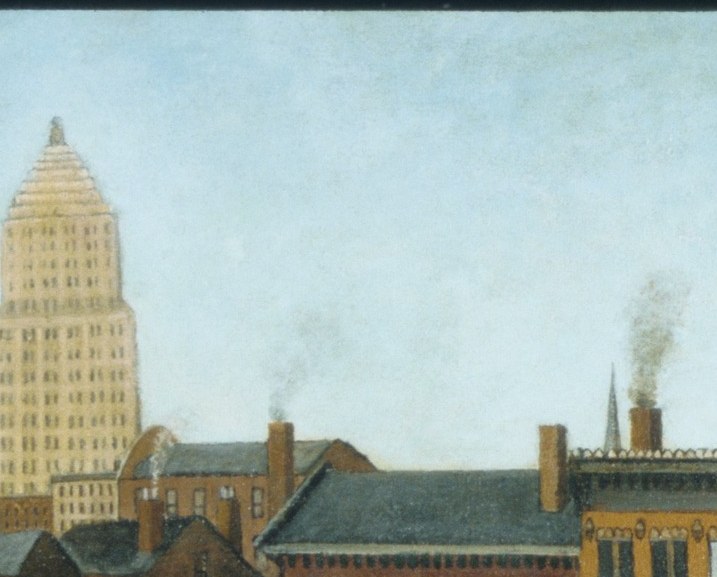
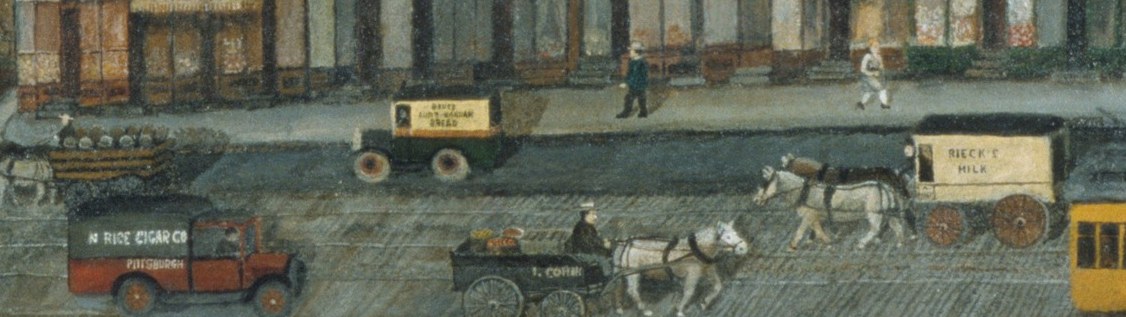
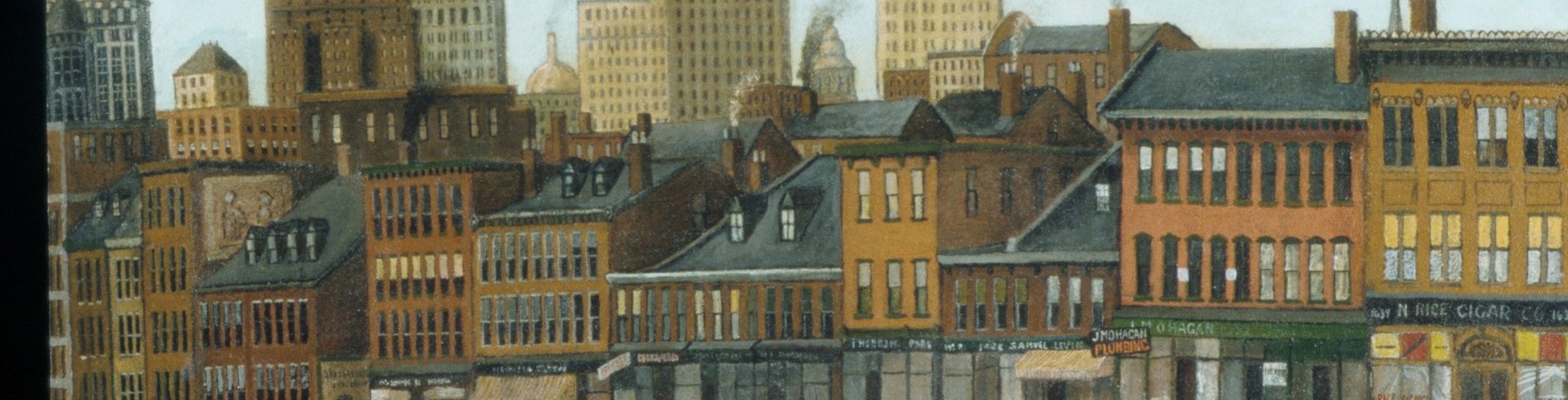
Look closely at the street: a horse-drawn carriage shares the lane with a red motor truck. Above them, factory chimneys pump smoke into an already dark sky. Tiny, doll-like pedestrians move along the sidewalks beneath a row of brick commercial buildings, the scale of the city swallows them whole. Kane's flat, almost folk-art style turns the street into a stage set, with two yellow streetcars framing the scene like curtains.
Kane was a Scottish immigrant who spent decades laying track, mining coal, and working Pittsburgh's steel mills before he ever picked up a brush. In 1927 the jury of the Carnegie International rejected his entry and tried to bar him from competing. Andrew Carnegie's own museum director saw the painting in a local drugstore window and overruled them. The establishment was incensed, but Kane was in.
He was sixty-seven. Five years later he painted this view from his own studio, a city built by hands like his, seen from above.
Details
Transcript
This is the view from John Kane's studio window in 1932. Yellow streetcars bracket the street like theater curtains. A horse-cart and a red truck share the same asphalt. The city's lungs exhale factory smoke into a dark sky. Kane was a Scottish immigrant, a former miner and steelworker. In 1927 a jury rejected him as unworthy of a major exhibition. But the Carnegie International overruled its own jury and hung his work. Five years later he painted this, a working-class city from above.