Portrait of a Young Horsewoman by David, Charles
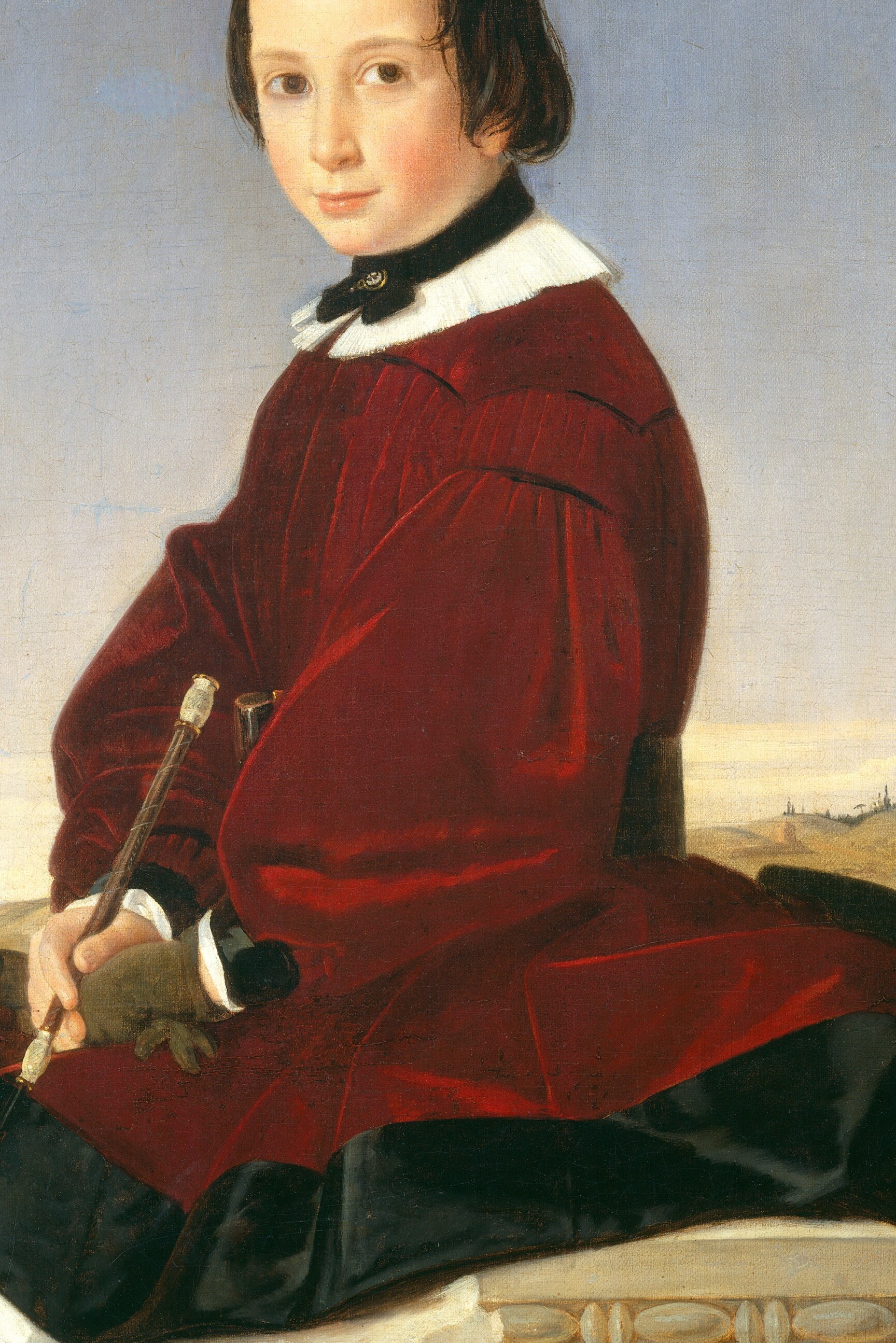
This is Portrait of a Young Horsewoman, painted by Charles David in 1839. It hangs quietly in a museum collection, but the jacket alone rewards a long look.
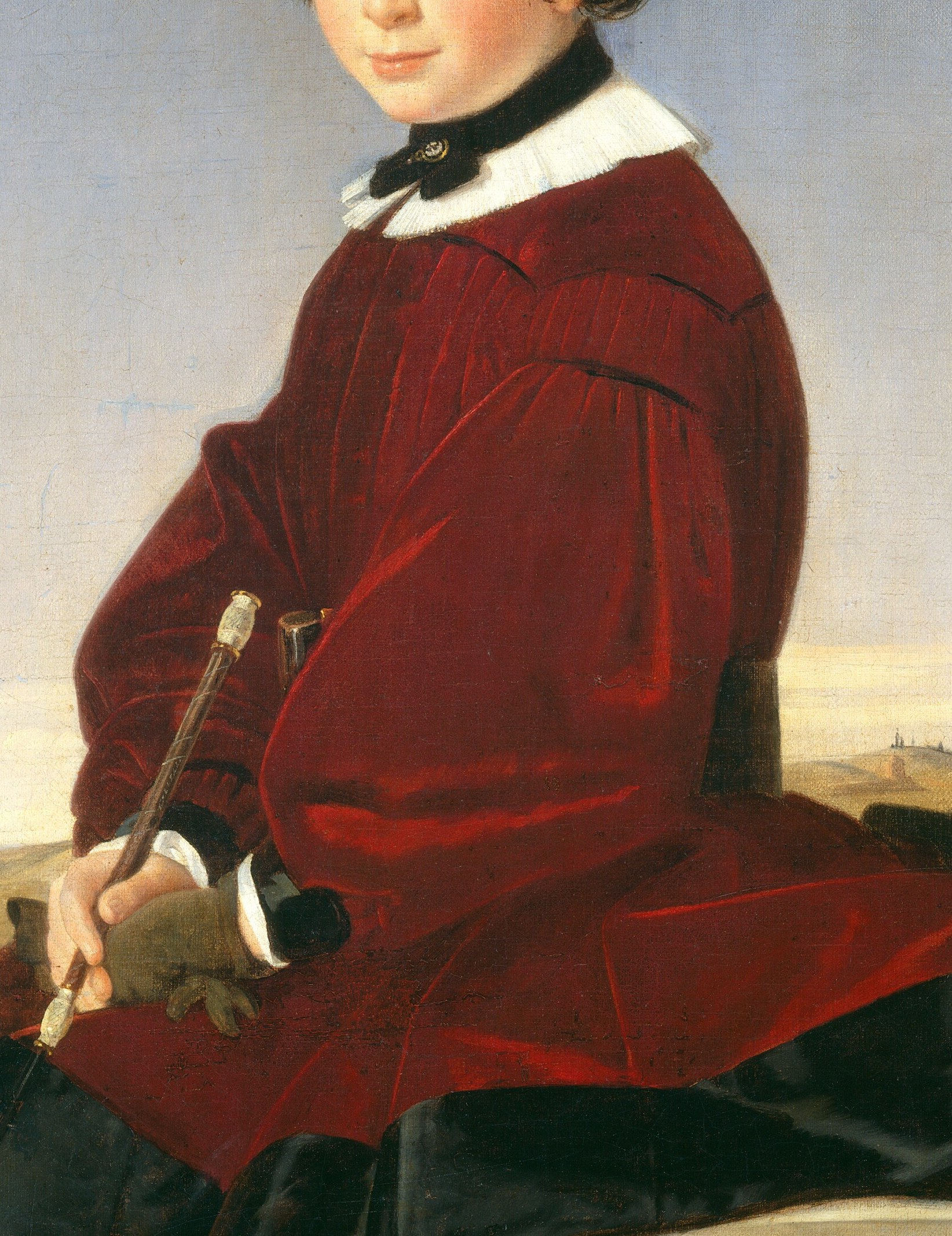
Watch the red velvet. Velvet is a light-eater: it glows softly but never throws a hard highlight. David understood this completely. He gave the fabric volume not with bright spots of white, but by graduating red into deep, almost black shadows. The form emerges from absence.
The starched white collar plays the perfect counterpoint, thin, sharp, catching what little light there is and pushing the velvet deeper by contrast. Together, they build the whole figure.
Charles David worked in the Romantic period, when portraiture was as much about capturing inner character as outer likeness. Here, the direct gaze and the quiet confidence of the rider do half the work, but the paint itself, the way light falls and dies on velvet, does the rest.
Next time you see a red coat in a painting, look for the highlights. If you can't find them, the painter probably knew exactly what they were doing.
Details
Transcript
She looks straight at you, perfectly still. Her red jacket catches the light. But notice where. Velvet absorbs light. It doesn't shine. So the painter built the whole form with shadows. Look at the sleeve. Deep red sinking into near-black. And the collar lifts off it, crisp, white, impossibly thin. Every fold is a decision about where light simply stops.