Fort Pierre by Catlin, George
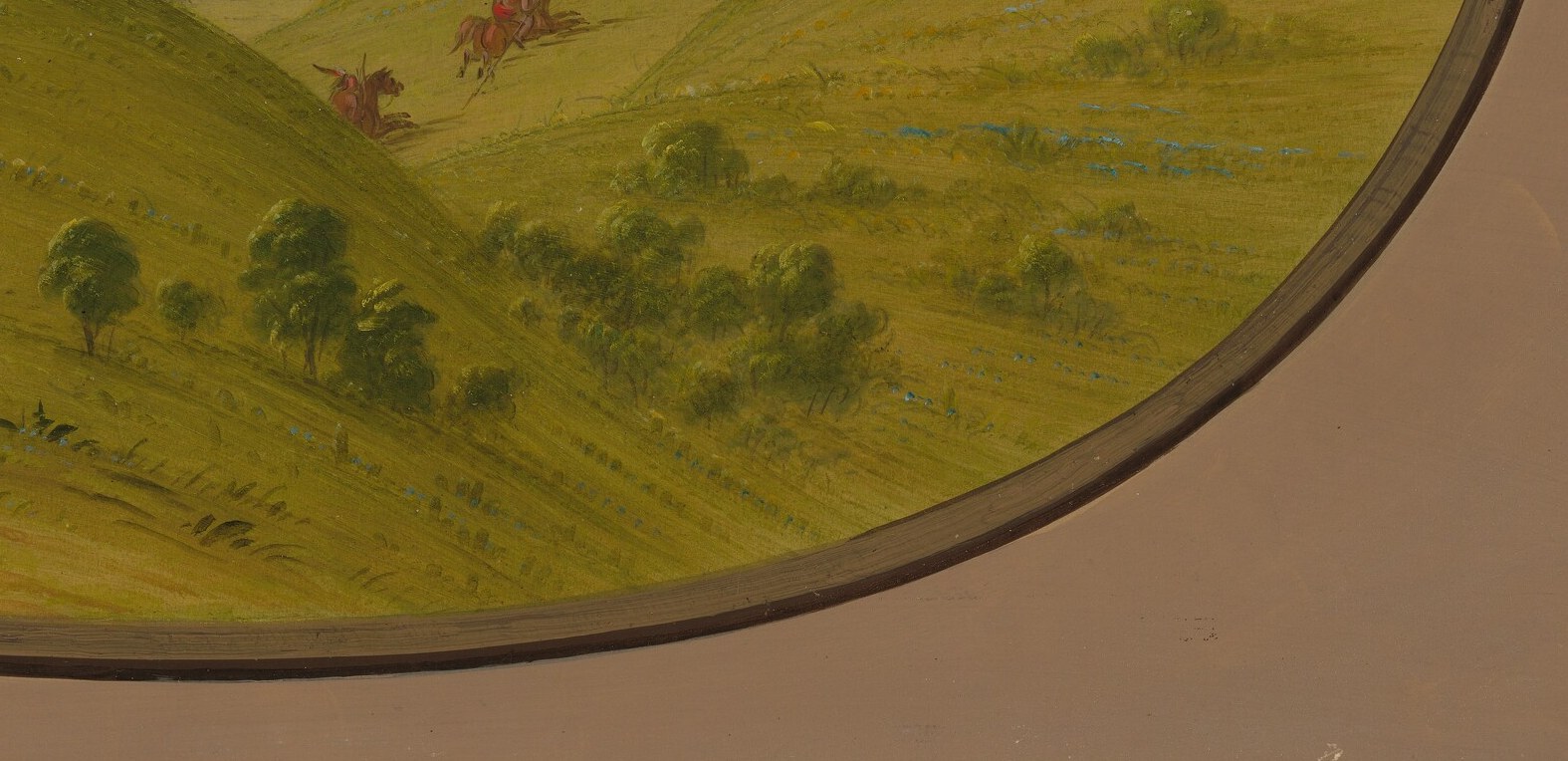
George Catlin's *Fort Pierre*, painted in 1865, captures a seemingly tranquil moment on the American frontier. While known for his portraits of Native Americans, this oil-on-card landscape reveals another facet of his work: documenting the changing face of the West.
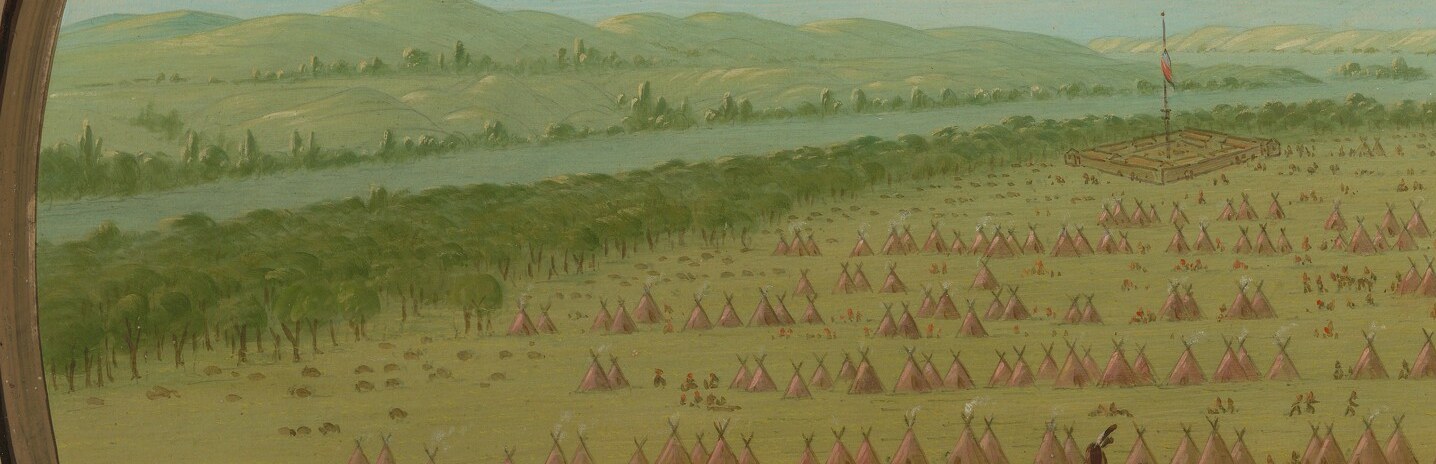
Look at the distant village of tipis and the fortified structure in the far distance. These elements, though subtle, suggest the encroachment of new settlements on indigenous lands. Catlin, an American lawyer turned painter, dedicated his career to chronicling this evolving landscape.
He traveled the American West five times in the 1830s, creating detailed works that recorded the lives of Plains Indians. *Fort Pierre* is from his later years, a period when he continued to observe and document the natural environment and human presence on the frontier.
This painting is more than a landscape; it's a quiet record of a world in transition.
Details

Transcript
This tranquil landscape shows the American frontier in 1865. Look closely at the distant village of tipis. And then, far in the distance, a fortified structure. This painter, George Catlin, specialized in documenting Native American life. He was recording a changing frontier, not just painting it.