Landscape Album in Various Styles: The Stream of Wuling by Zha Shibiao
Zha Shibiao never intended to be remembered by a bustling world. His "The Stream of Wuling," part of a larger album from 1684 now held in a museum collection, is an argument for a quiet life.
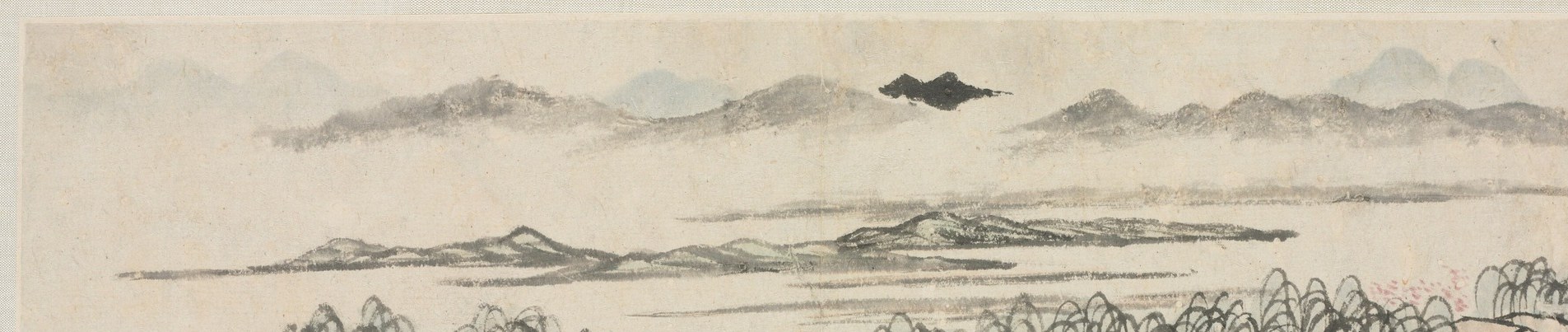
Look at the emptiness. The vast pale sky and the calm foreground water are not unfinished areas but the most active parts of the composition. In Daoist thought, the void is where things come from; Zha Shibiao makes the unpainted paper the primary source of the scene's tranquility.
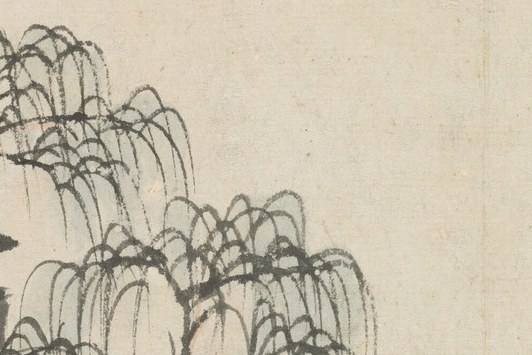
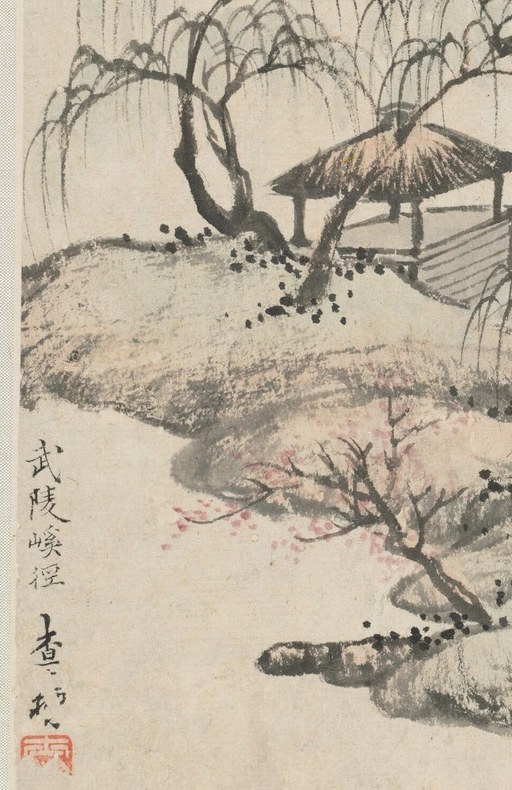
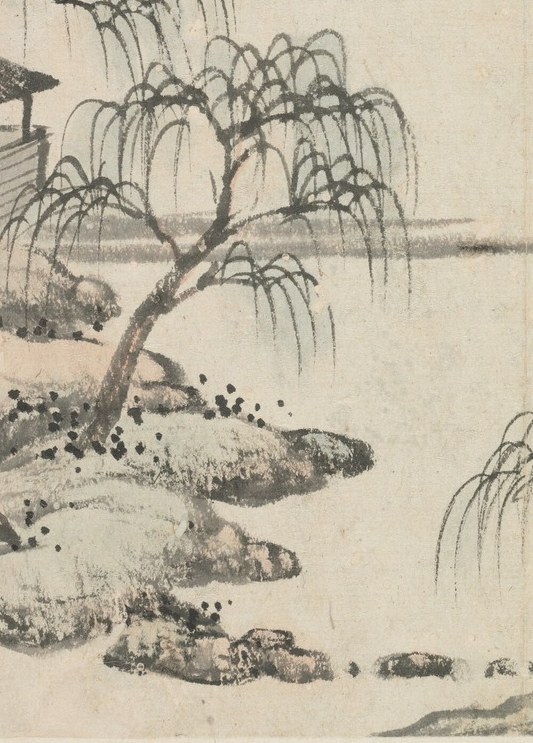
This was painted after the fall of the Ming dynasty, a time when many scholars chose reclusion over serving a foreign Qing court. Zha Shibiao became a leftover subject of a fallen dynasty, making withdrawal a political and moral statement. The hut, the lone bird, the weeping willows, and the hazy mountains barely interrupting the empty sky are a complete coded vocabulary of that retreat.
He finished the scene with his sole splash of color: a small red seal in the bottom left. Your eye goes there last, finding the artist in exile, quietly signing his name.
Details
Transcript
A stream winds through an empty, silent world. That deliberate emptiness is not a void. It is a generative space. A hut clings to the rocks. For the literati, withdrawal from society was the highest ideal. The willow weeps. In Chinese painting, it signals impermanence. A single bird crosses the vast sky. The only sign of life. The code adds up: true peace is found in being forgotten.