Winter in the Country by Durrie, George Henry
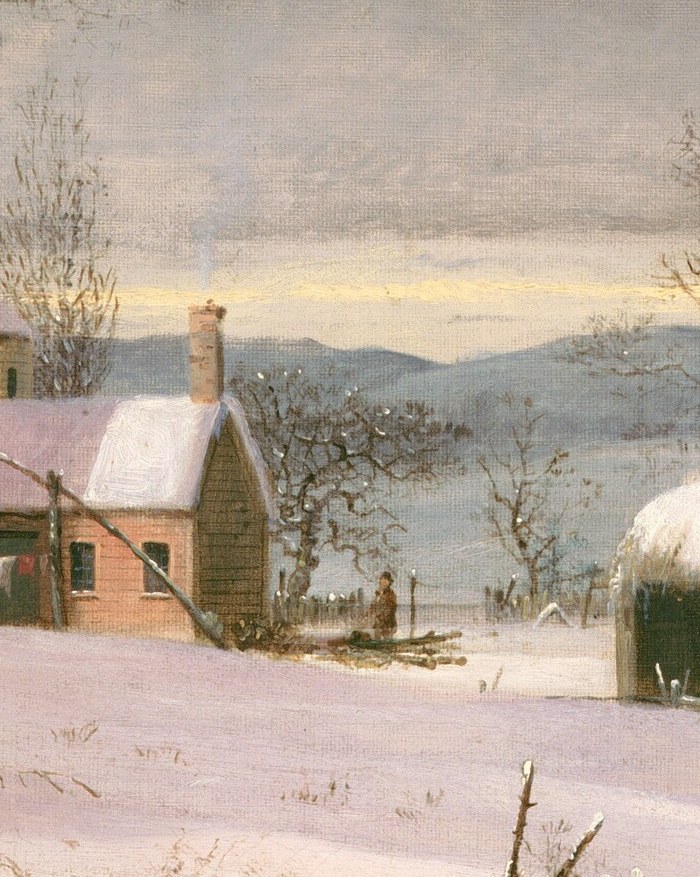
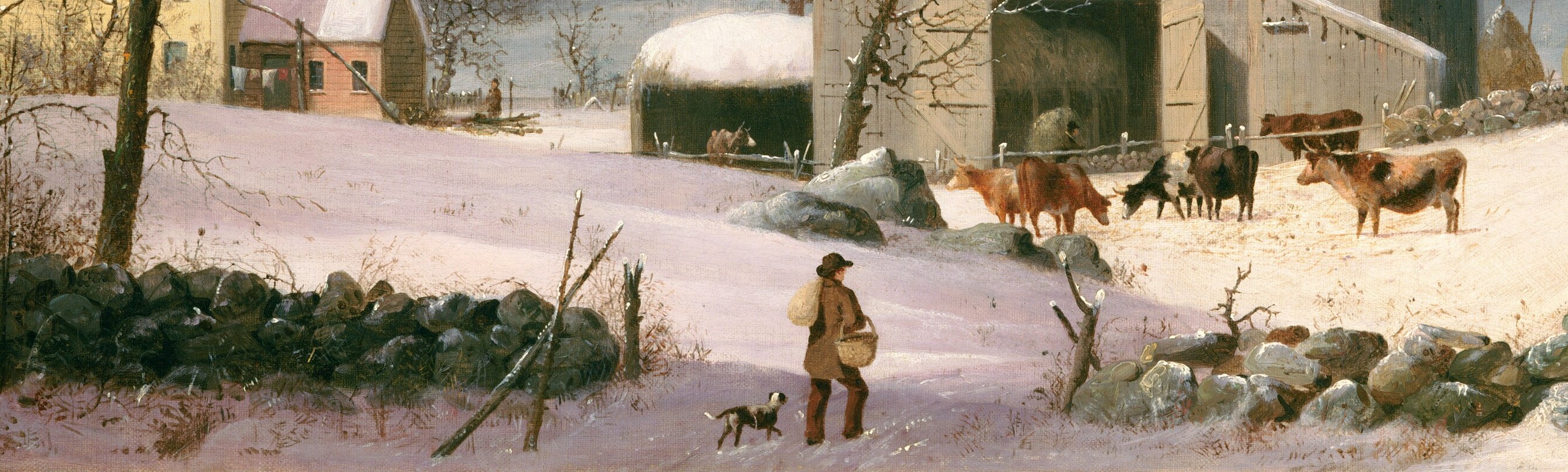
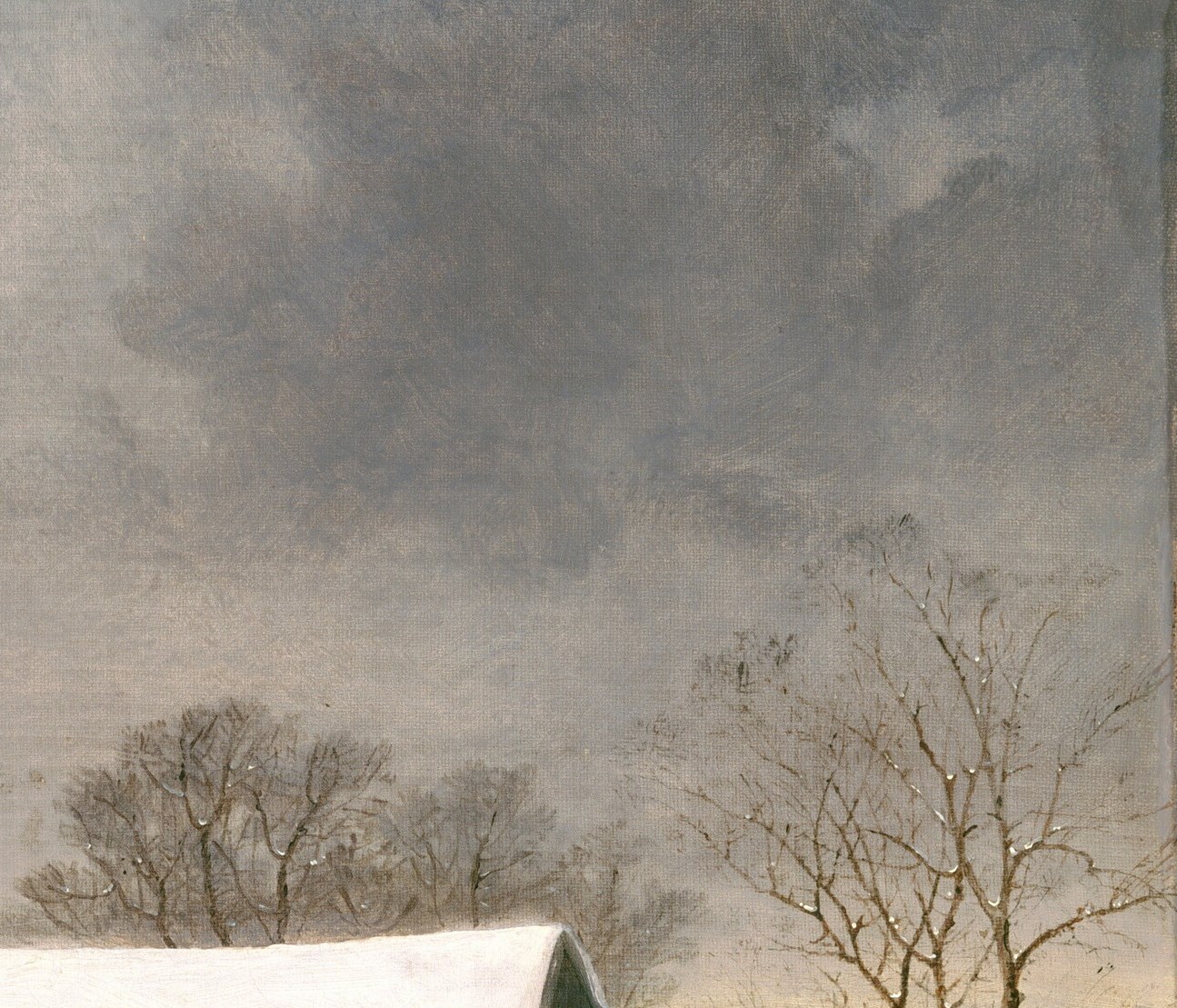
George Henry Durrie's 'Winter in the Country,' painted around 1858, captures the tranquil beauty of a New England winter. While famous for his serene snowscapes, Durrie often included subtle details that reveal the quiet life of the American countryside.
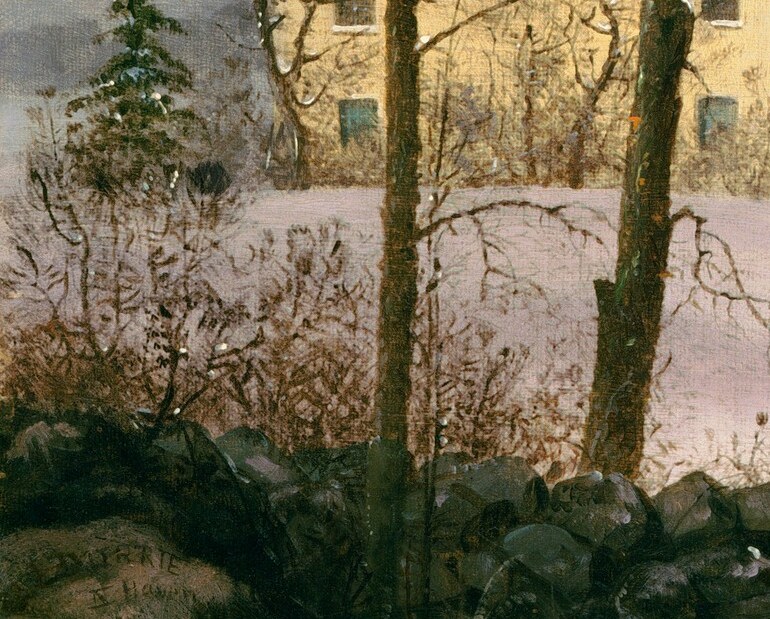
Take a moment to look again at the foreground: a barely visible stone wall, a common boundary marker for farms, grounds the scene in its specific geography. Then, scan the far right margin for small, often-overlooked figures. These small forms transform the landscape from a simple scene into a working farm, alive with activity beyond the main figures.
Durrie, an American artist from New Haven, Connecticut, frequently explored winter subjects, developing a distinctive style that resonated with audiences. His authentic portrayal of rural life in the snowy season has made his work enduringly popular, inviting viewers to slow down and discover the hidden stories within his canvases.
What other small details do you notice in this quiet winter scene?
Details
Transcript
This painter was famous for his quiet winter scenes. A lone farmer walks home through the snow at dusk. His dog trots beside him, a faithful companion. But look closely at the left foreground, by the road. Barely visible: a low stone wall, a sign of New England farms. And far off to the right, another detail often missed. Small forms, confirming this is a working farm, not an empty one.