Madonna and Child in a Landscape by Italian 15th Century
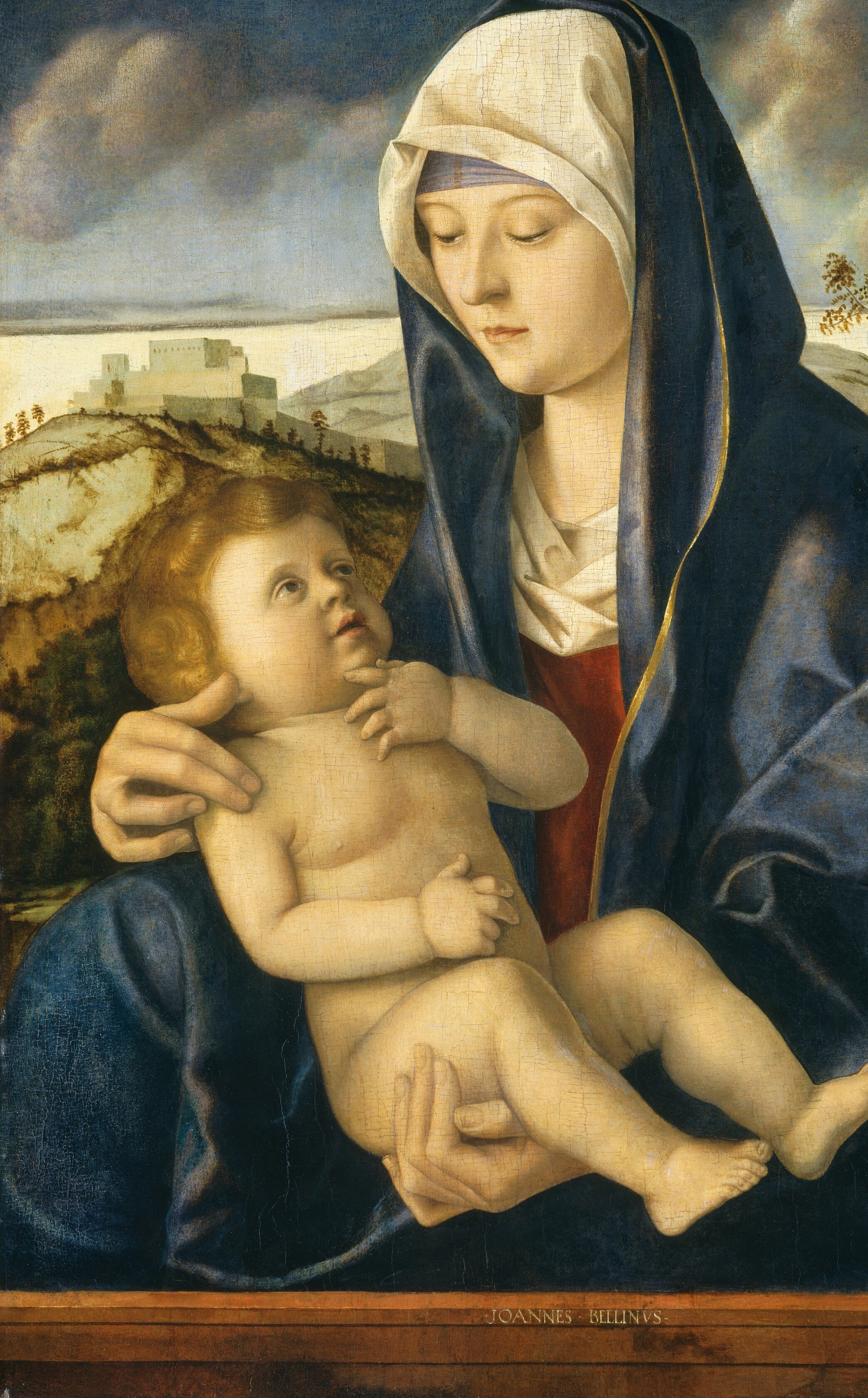
This is "Madonna and Child in a Landscape," painted around 1490 to 1500 by an unknown Italian artist working in the Veneto. The painter was among the first generation in the region to adopt the Northern technique of oil painting, and this panel shows exactly why the medium took hold so quickly.
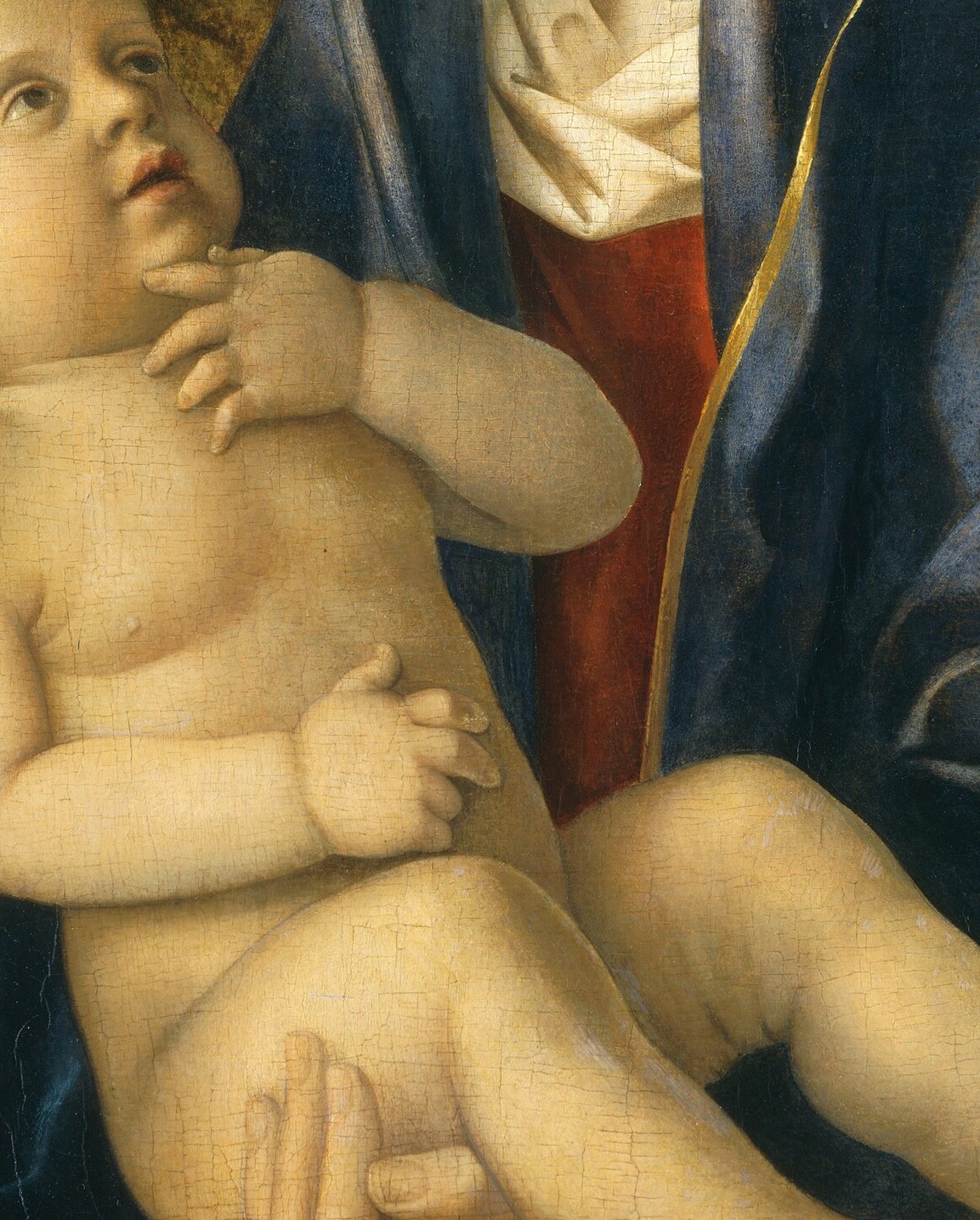
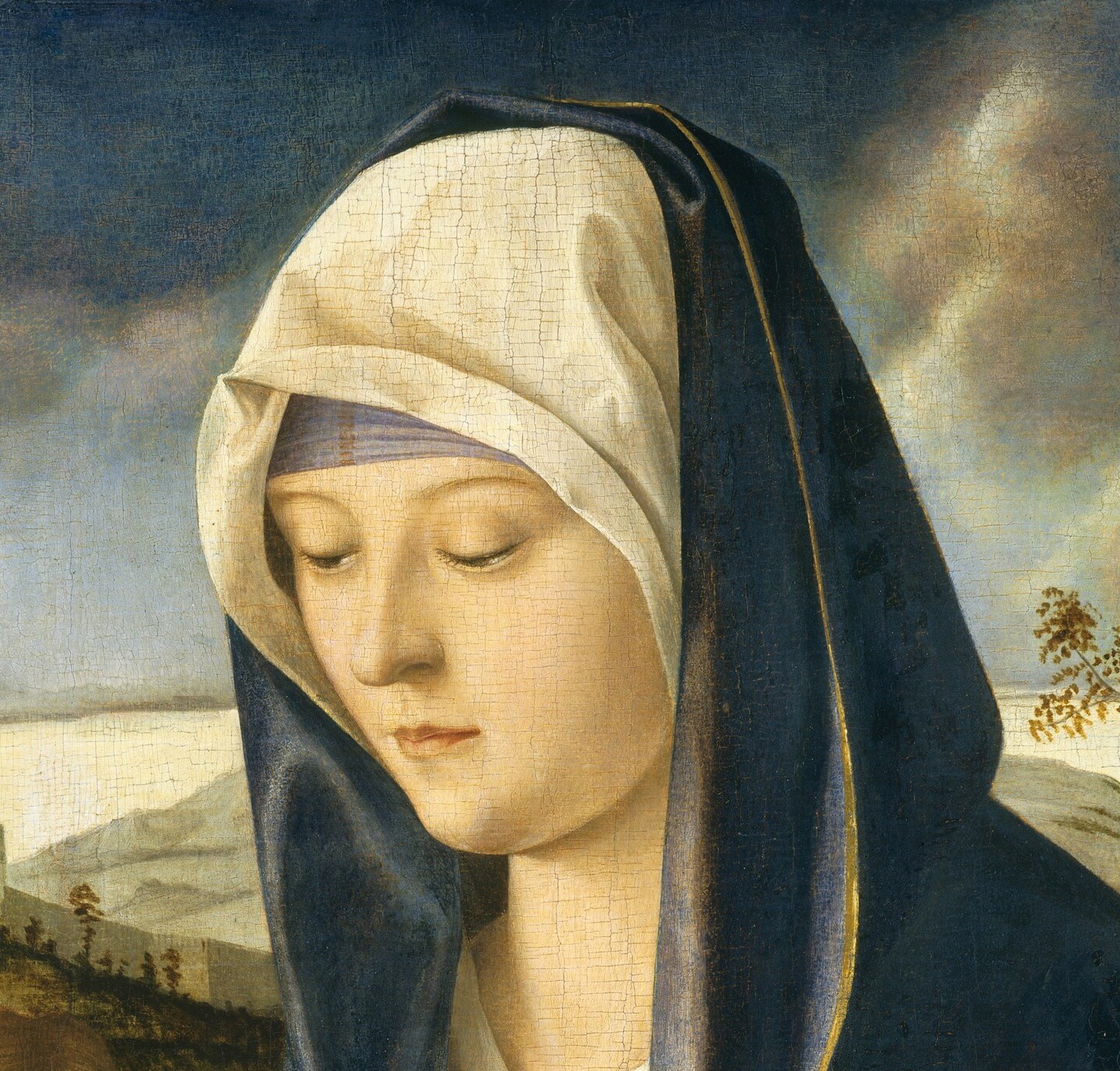
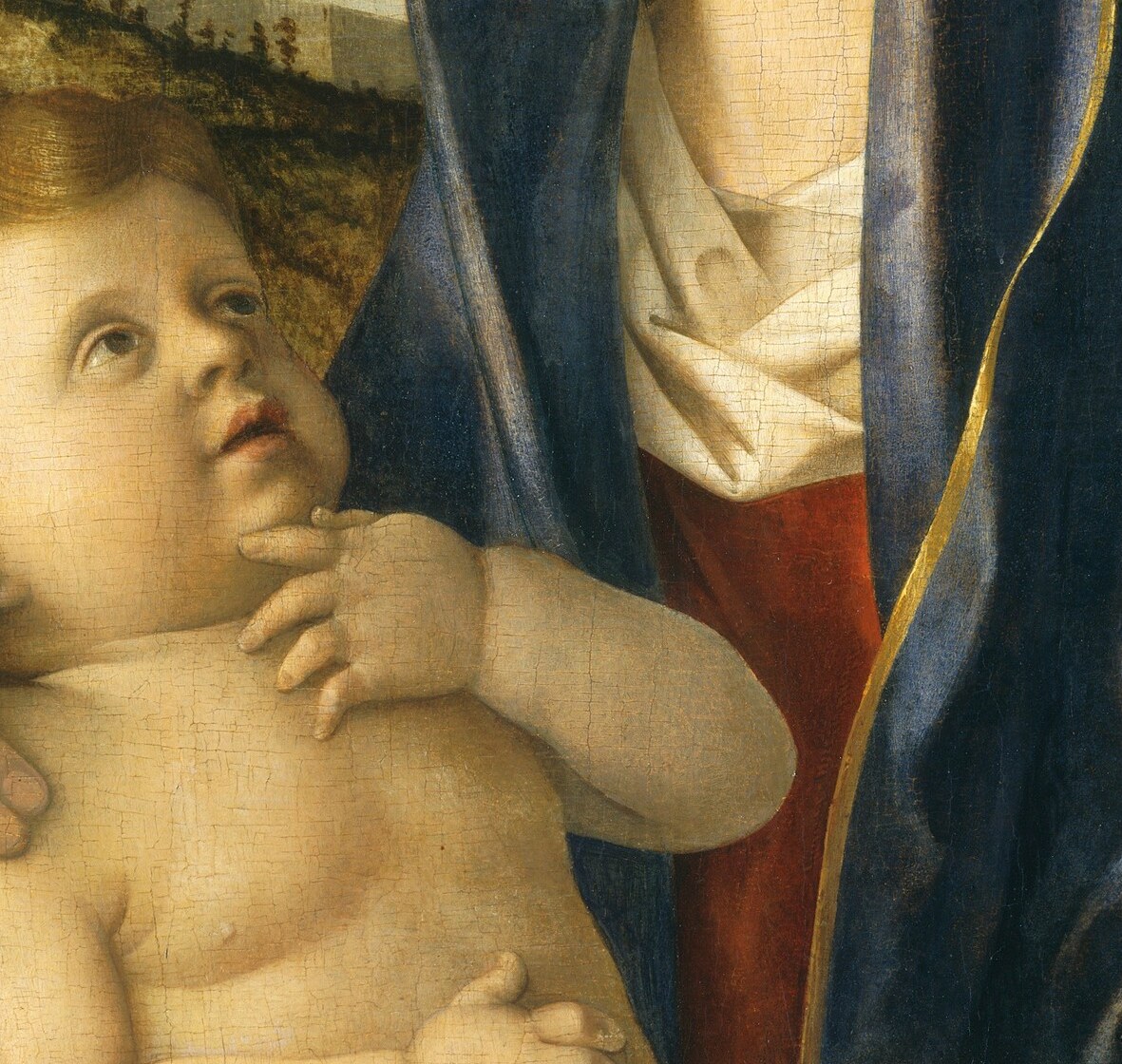
The real showpiece is the infant's bare chest and belly. The artist applied translucent glazes of oil paint over a reflective white ground. Light travels through the layers, hits the ground, and returns, which is why the skin seems to emit a soft interior warmth rather than lying inert on the wood. The deep ultramarine mantle works on the same principle: lapis lazuli pigment suspended in oil, built up in thin, glowing strata.
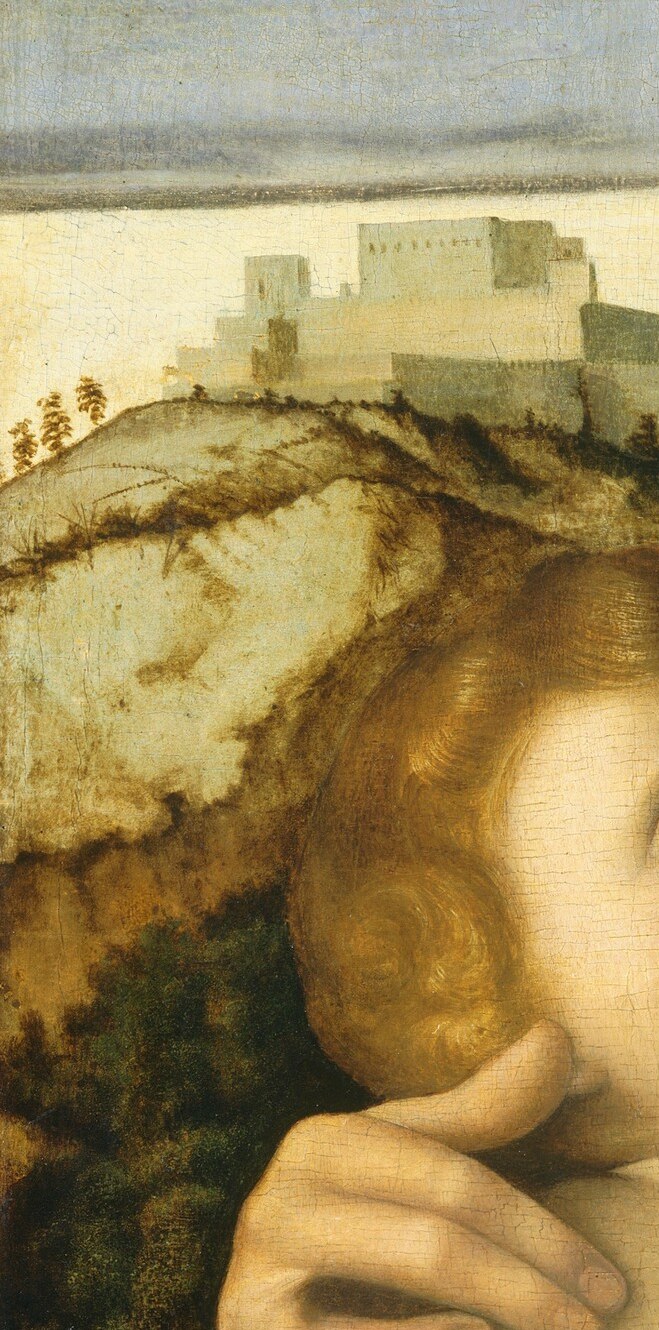
The landscape behind the figures borrows directly from Flemish models, the hills fade into a blue-gray atmospheric haze, and a walled town sits on the right horizon like a real place observed rather than a gold-ground abstraction. The tree at left casts a genuine shadow across Mary's cloak, another piece of evidence that the painter was thinking about unified natural light.
An unknown artist, a borrowed technique, and a subject painted a thousand times, and yet the child's flesh still glows 500 years later. What is the last painting you saw that made you stop because of something the paint itself was doing?
Details
Transcript
Around 1490, something new arrived in Venice from the North. Oil paint. It could do what tempera never could. Look at the infant's bare chest. Thin glaze over thin glaze. Light passes through, hits the white ground, and bounces back. That is why the skin glows, rather than sitting flat on the surface. Now look at the deep blue of her mantle. Ultramarine, from lapis lazuli, more expensive than gold. Built up in luminous semi-transparent layers. The painter knew the new medium could hold light inside the color itself.