Portrait of a Woman by William Beechey
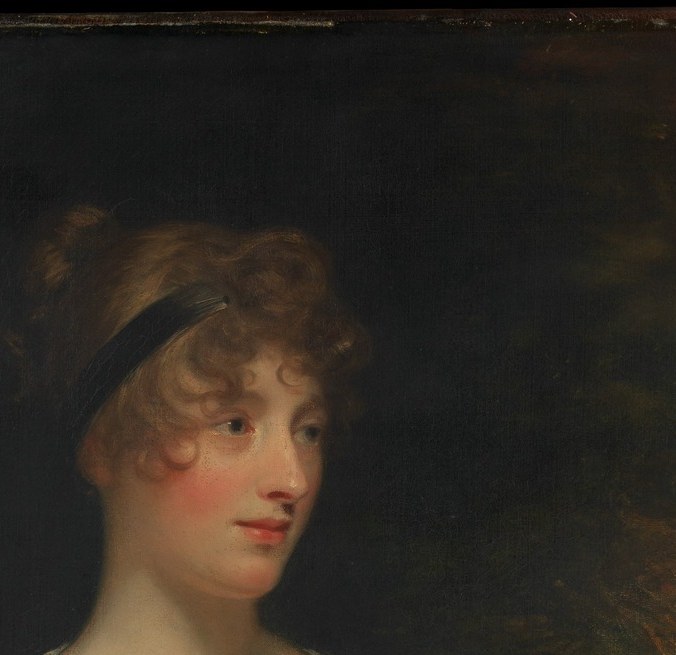
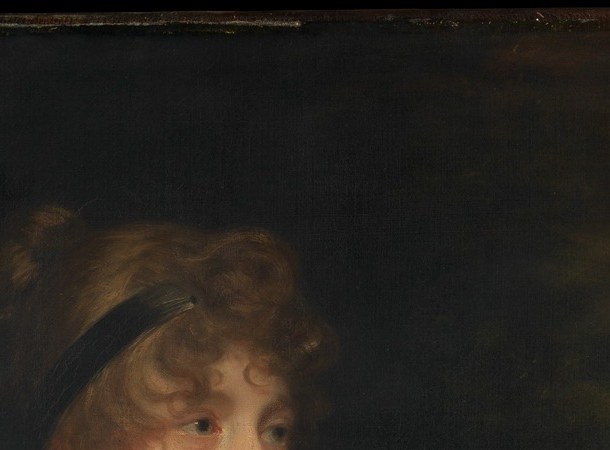
This is William Beechey's 'Portrait of a Woman,' painted in 1805 and a perfect example of why Regency portraiture was a luxury commodity as much as an art. Beechey was a favorite of Queen Charlotte and the British aristocracy, and by the time he painted this unknown sitter, his going rate for a half-length portrait put him firmly in the upper tier of London's portrait market. The painting is currently held by the Yale Center for British Art.
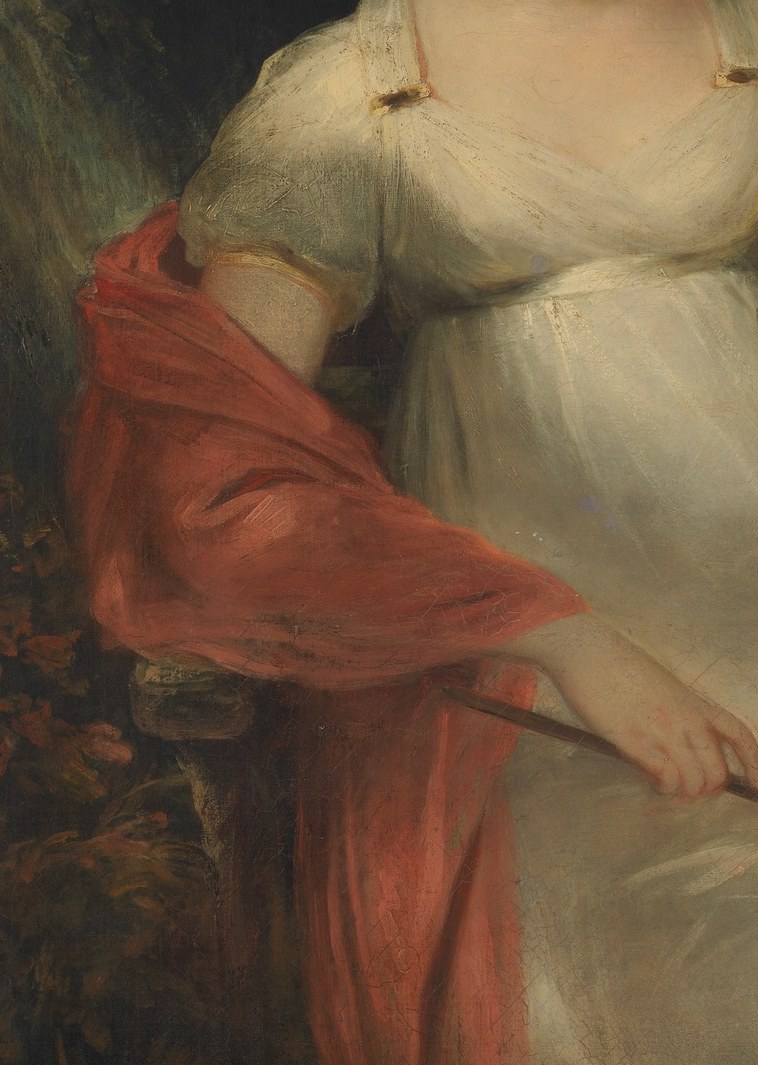
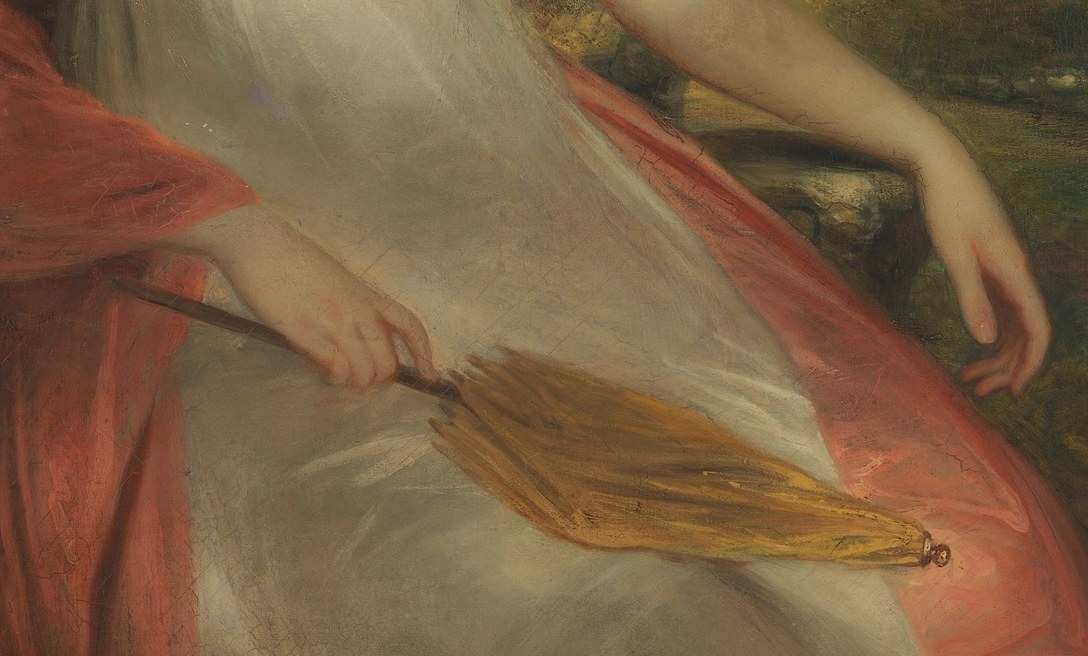
Look first at the crimson shawl draped across her lap. That is not a studio prop. It is a genuine Kashmir shawl, an import so precious that a single piece could cost a hundred guineas or more at the time. The pattern and the way it catches the light are Beechey's quiet advertisement of her wealth.
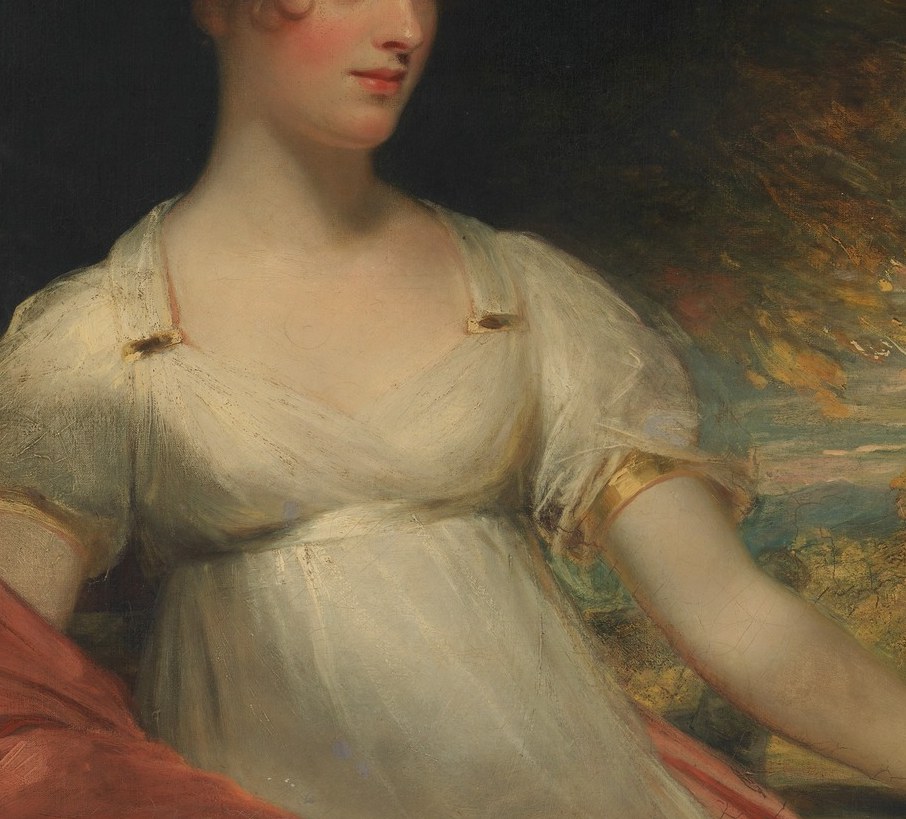
The parasol is another status signal. Folded but prominently displayed, it marks her as a woman of outdoor leisure. The neoclassical white muslin dress, the simple Grecian headband, the parkland suggestion behind her, all place her firmly in the landed gentry. She is not royalty, but she moves in circles that can afford a royal painter.
Here is the mystery: we do not know who she is. The painting's title has always been generic. She gazes out at us, perfectly documented in silk and oil, but her name has vanished. She is a ghost with an impeccable credit line, and that tension, between permanence and anonymity, is what makes a portrait like this a genuine historical object.
Details
Transcript
London, 1805. A court painter charges 40 guineas for a head. She came to Sir William Beechey at the height of his fame. Her red shawl alone cost more than the frame. A Kashmir weave, hand-embroidered. A year's income for a clerk. Her name was never recorded. The title is simply 'Portrait of a Woman.'