The House with the Cracked Walls by Paul Cézanne
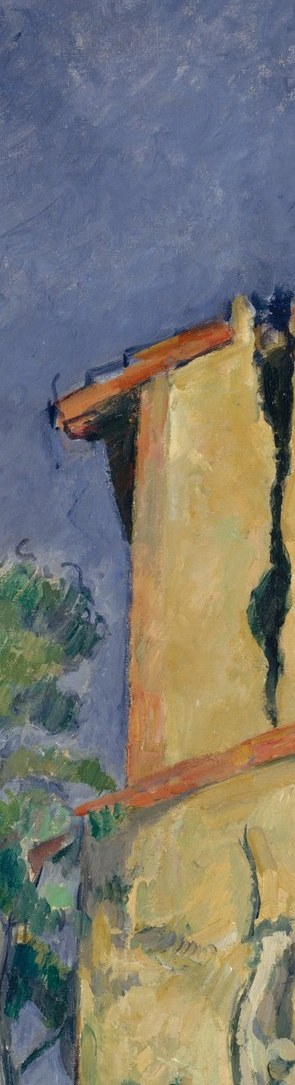
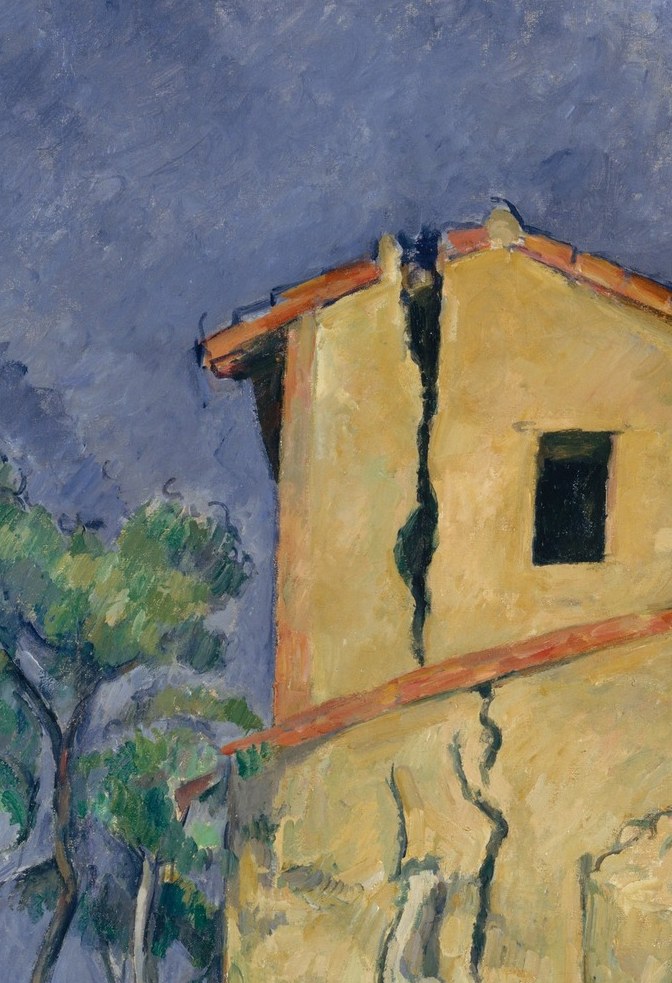
The most extraordinary thing about this 1896 painting, held at the Metropolitan Museum of Art, is that Cézanne is not recording a real crack he found. He is building one, deliberately, from short parallel brushstrokes, to make an argument about form itself.
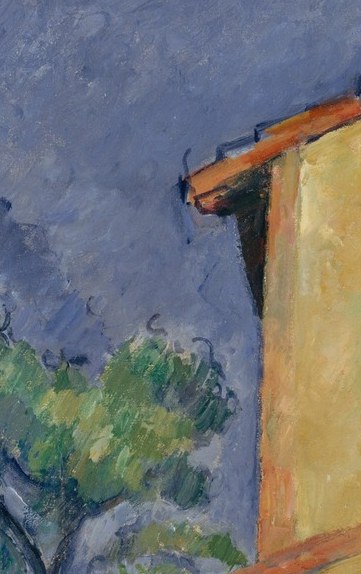
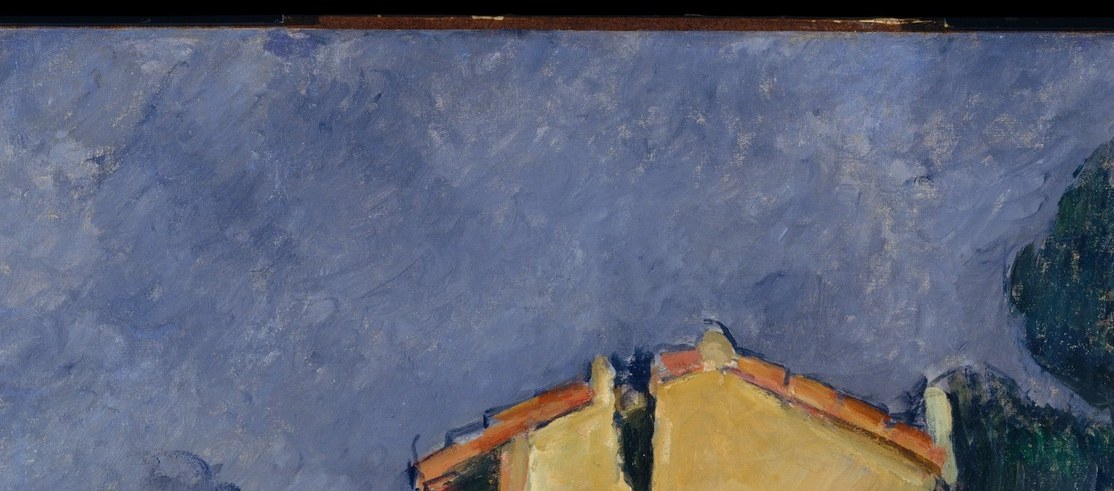
Look at the yellow facade. Up close, the wall is not a solid surface but a mosaic of directional dabs, ochre and gray laid in planes. The crack is the centerline of this argument, a literal split in the built world, echoed by the bare tree trunks on the left. The shuttered window is a void, not a window, and the sky is not sky but an active field of agitated blue-gray strokes pressing down on the roof.
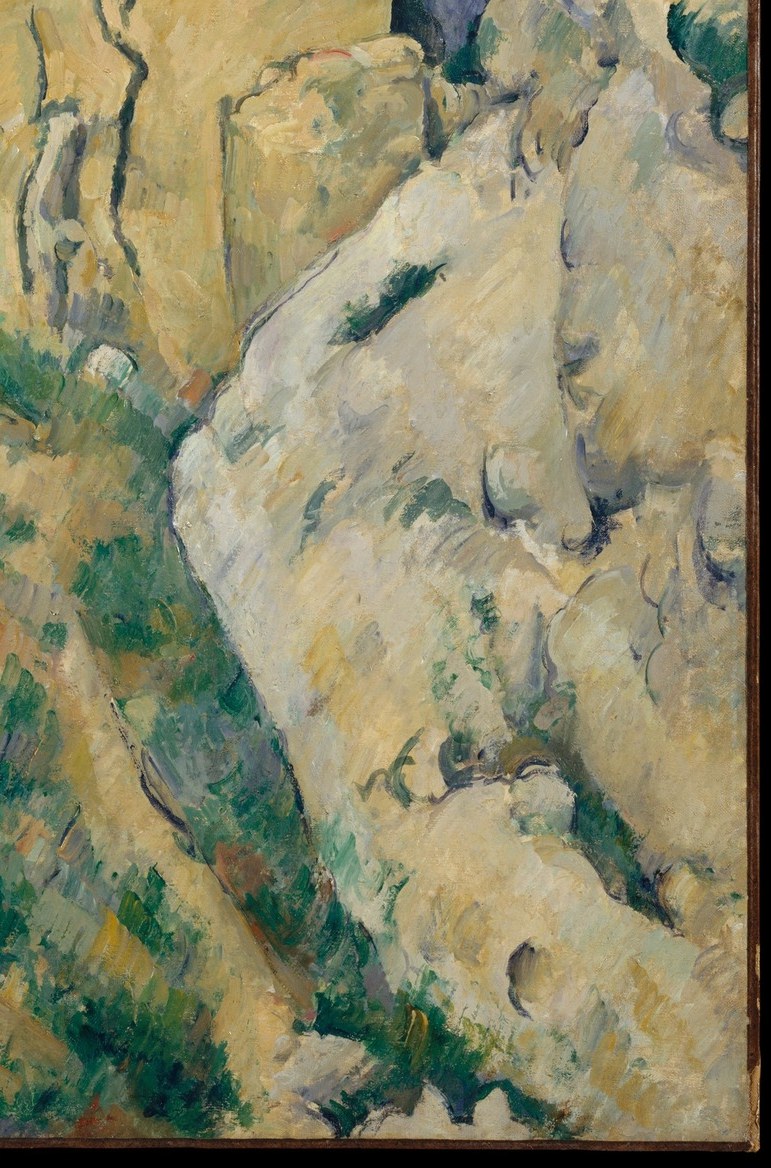
Cézanne painted this in the 1890s, the decade when his methodical deconstruction of vision was laying the groundwork for Cubism. He was not interested in the fleeting light of the Impressionists. He wanted the underlying geometry, the cone, the cylinder, the sphere, that persists when light changes. Here, even the rocks in the lower right are faceted like a geological argument, built from planes of blue, ochre, and gray.
The code is not hidden. It is right on the surface: a house, a crack, a storm, a void. Together they say that solid things are not as solid as we think. The world, in Cézanne's hands, is always coming apart.
Details
Transcript
An ordinary house in Provence, painted in 1896. But Cézanne has embedded a message in its structure. A fissure splits the wall from roof to base. A void where a window should be: the house is uninhabited. The sky is not calm. It's a turbulence of blue-gray strokes. The rocks press in from the right, built from faceted planes of color. Nature and architecture are both reduced to geometric instability. The code adds up: a world of solid things is quietly dissolving.