Christ and the Woman of Samaria by American 18th Century
This is 'Christ and the Woman of Samaria,' painted by an unknown American hand around 1720 to 1740. It hangs today as a quiet, anonymous masterpiece, but it holds a secret most viewers scroll right past.
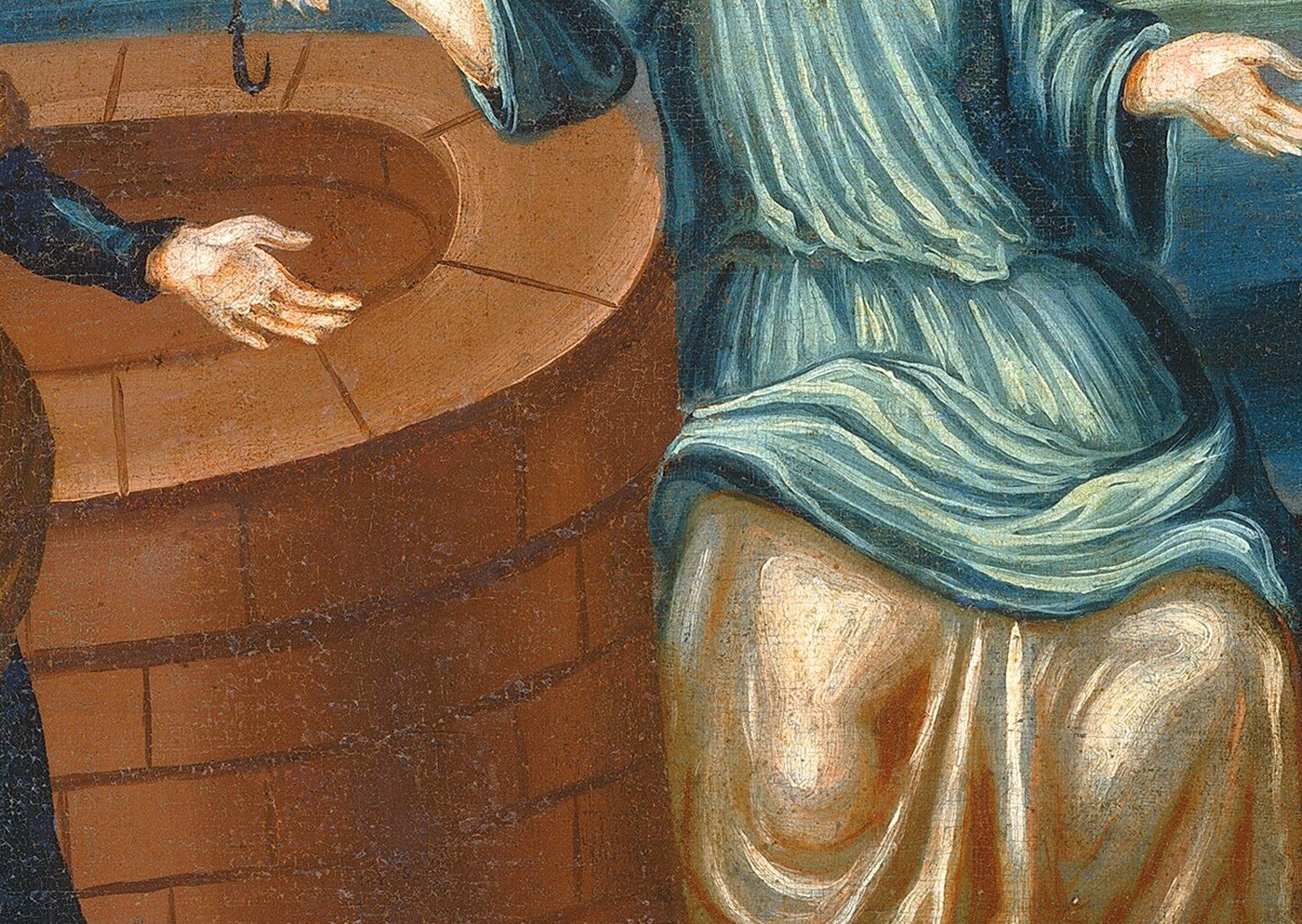
Look first at the central exchange. Jesus points toward the woman, who holds a silver jug. Her yellow tunic catches the light, anchoring the earthly half of the story. The well is Jacob's well, where the Gospel of John says she came to draw water and left with a different kind of thirst quenched.
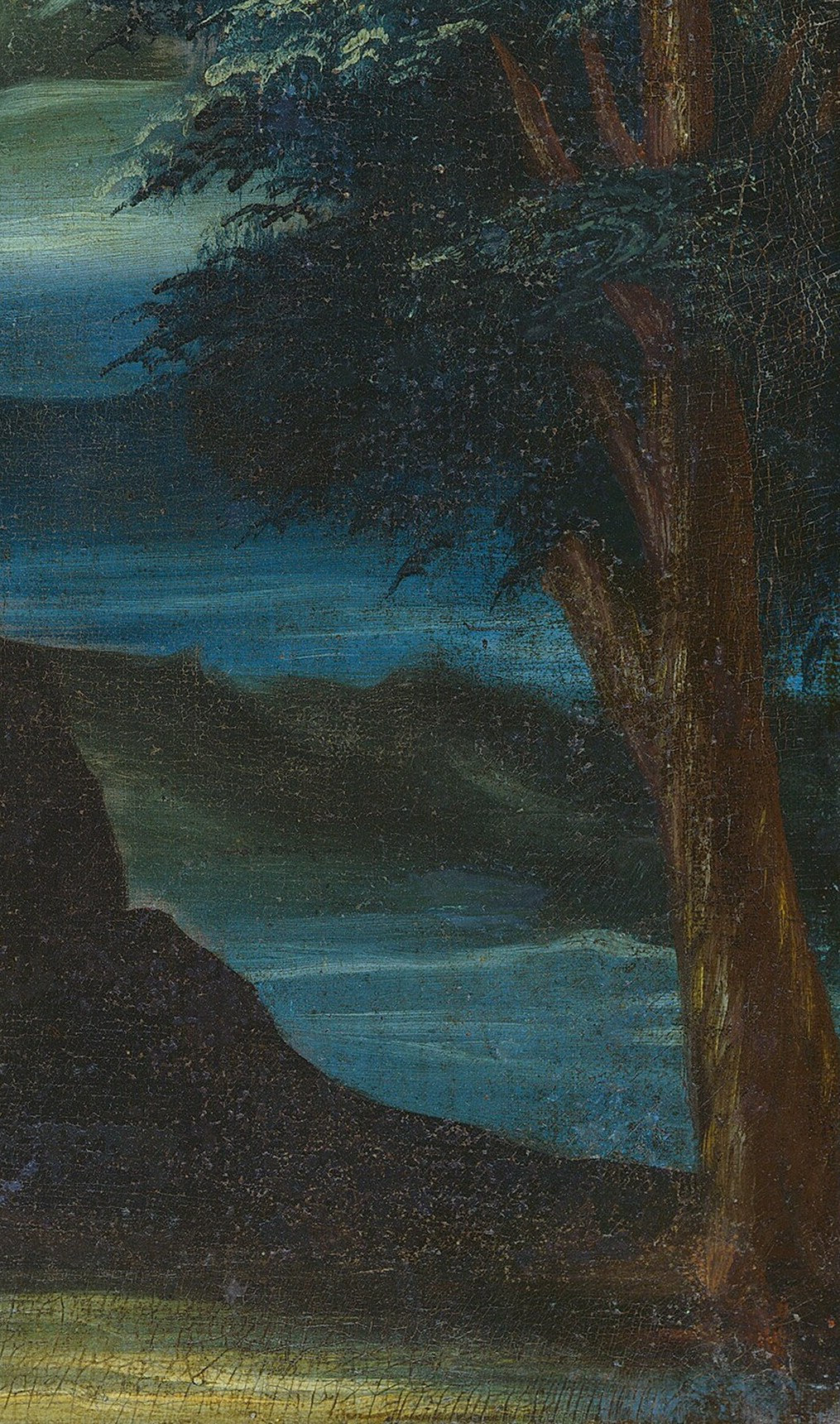
Now look into the dark tree on the right. Tucked deep in the foliage is a tiny figure, a witness the artist added without comment. He stands half-hidden, watching the conversation unfold. The presence changes the painting: we are no longer alone with the two figures. Someone else is already watching, and now so are you.
The painting belongs to a period when American artists rendered biblical scenes as intimate, almost domestic encounters. The unknown painter gave this one a secret audience. Why include him? Perhaps to stand for the disciples returning from town, perhaps for the viewer, perhaps simply because a good story deserves a witness hidden in the trees.
Details
Transcript
A conversation by a well. A woman and a traveler. He points, asking her for something only she can give. The jug is silver. This is a woman of means. Her story is in the Gospel of John, chapter 4. Now look past the well, into the shadow of the tree. Someone else is there. A small figure, watching. The artist hid a witness in the landscape.