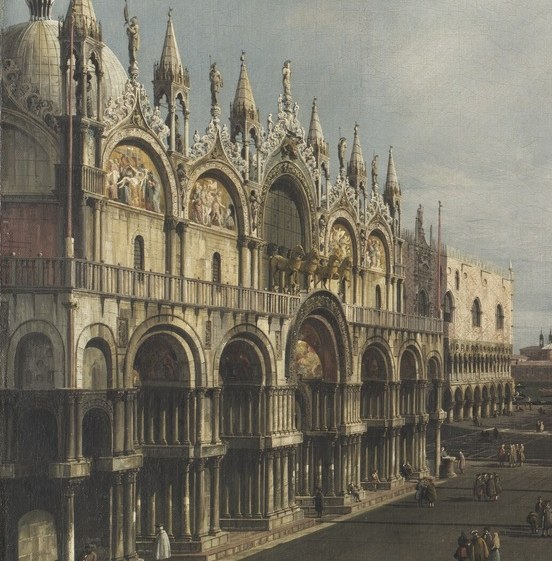
Piazza San Marco, Venice by Bernardo Bellotto
Bernardo Bellotto, the nephew of the famous Canaletto, meticulously captured the grandeur of 18th-century Venice in his 1740 oil painting, "Piazza San Marco, Venice." This masterpiece, held at The Cleveland Museum of Art, is more than just a cityscape; it's a historical record.
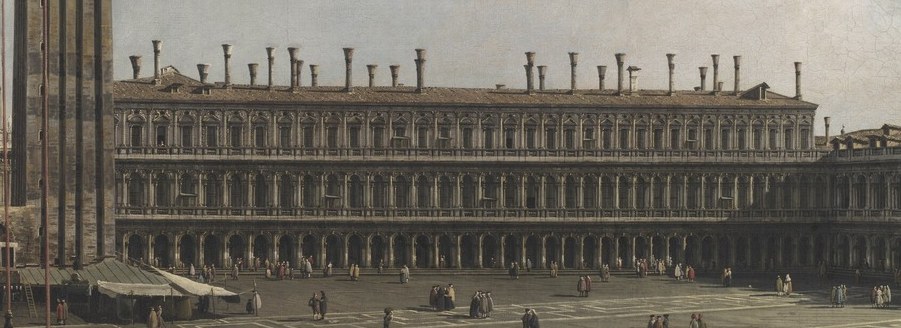
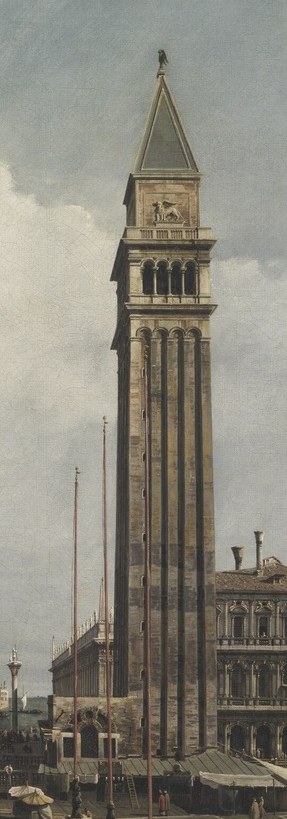
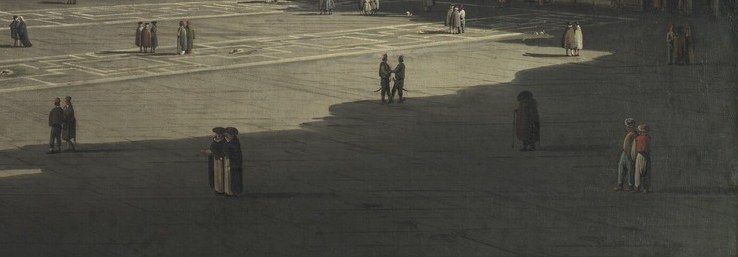
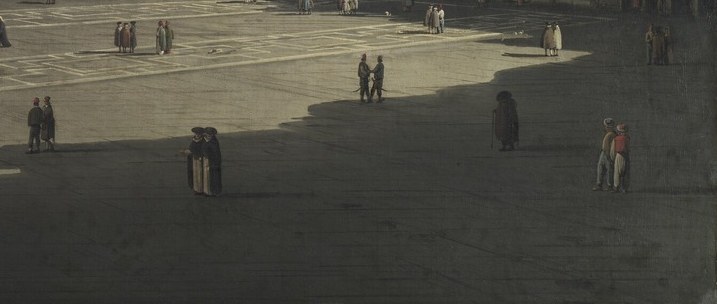
Bellotto's skill in rendering architectural detail is evident in every brushstroke, from the ornate facade of St. Mark's Basilica to the imposing Campanile tower and the rhythmic arches of the Doge's Palace. Notice the long shadows stretching across the pavement and the numerous small figures, each a glimpse into daily life in one of Europe's most iconic squares.
As a practitioner of 'vedute' or detailed cityscape paintings, Bellotto often adopted his uncle's renowned name, 'Canaletto,' leading to some historical confusion. However, his work is distinct for its more somber colors and atmospheric depictions of clouds and shadows, qualities that draw comparisons to Dutch painting traditions. "Piazza San Marco, Venice" stands as a testament to his unique artistic vision and the enduring allure of the city.
What details do you find most captivating in this detailed Venetian scene?
Details
Transcript
This isn't just a city square, it's a stage. The Doge's Palace, with its long arches, symbolized Venice's power. The Campanile tower, visible for miles, was a beacon of the Republic. Bellotto painted this in 1740, capturing the Grand Tour era. He was Canaletto's nephew, also known as 'Bernardo Canaletto'. Look closely at the tiny figures, going about their daily life. Their shadows stretch, marking the passage of time. Bellotto's careful details bring 18th-century Venice to life.