The Triumph of Mordecai by Jean-François de Troy
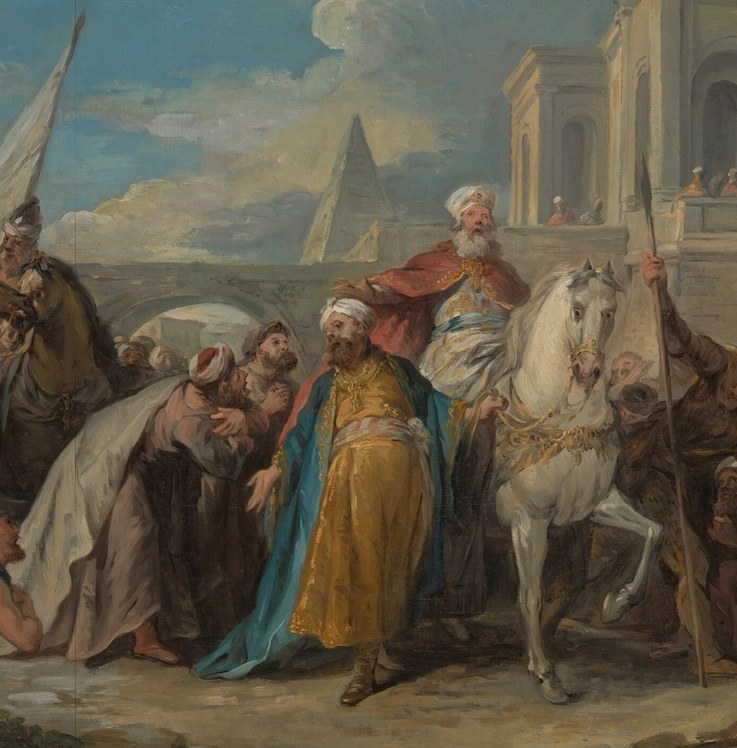
The Triumph of Mordecai by Jean-François de Troy is an 18th-century French history painting that stages a biblical reversal of fortune as a piece of public theater. Painted in 1736, it now hangs in a museum context that lets us read it as both a sacred story and a reflection of the Parisian society de Troy knew so well.
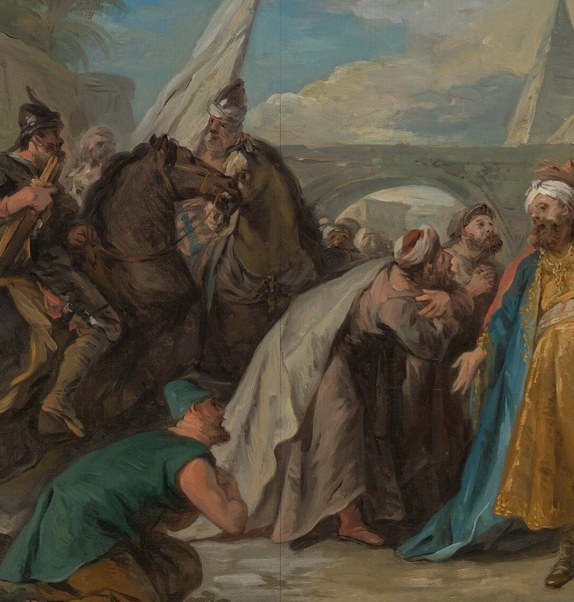
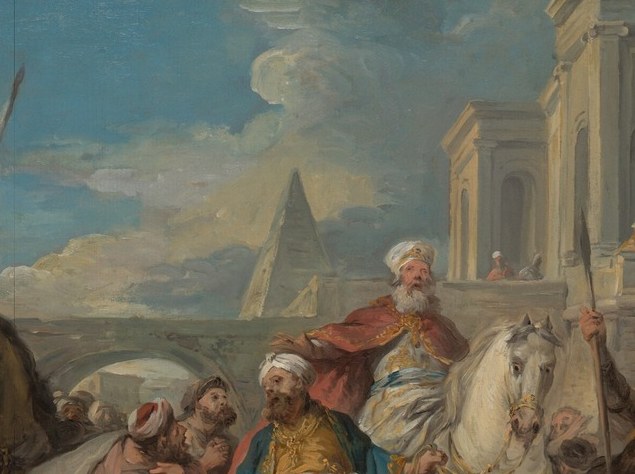
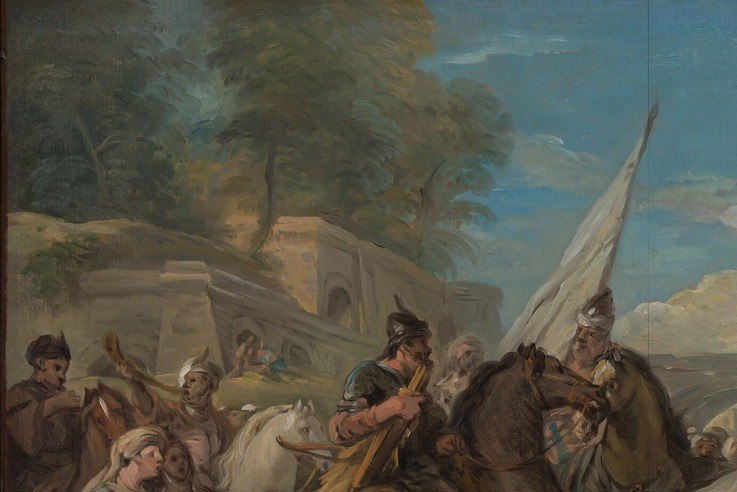
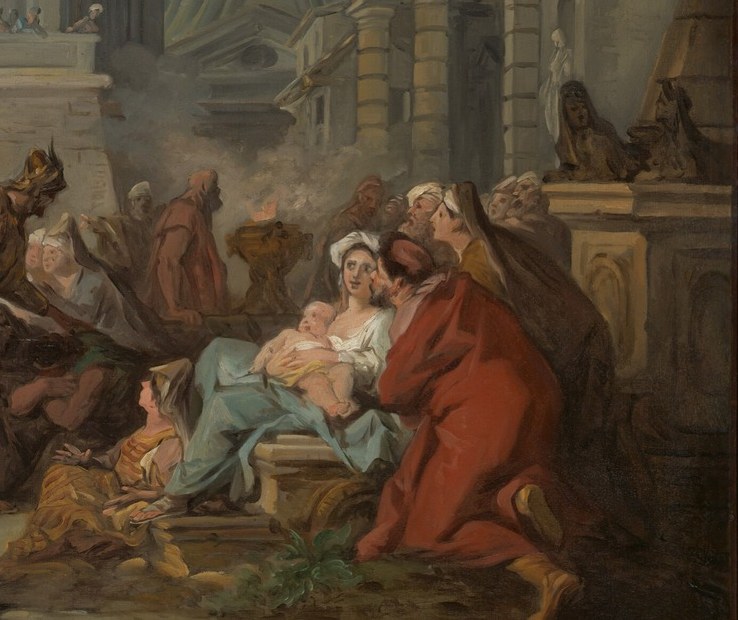
The composition is built around the blazing white horse at center, an almost impossible light source in oil paint. Your eye can follow the diagonal of kneeling figures on the left up through the yellow-robed Haman to Mordecai himself, seated upright in red. The Roman colonnade and the deep crowd stretching into a pale sky turn a Persian story into a civic spectacle that de Troy's audience would recognize immediately.
Jean-François de Troy led the French Academy in Rome and invented tableaux de modes, paintings of contemporary fashion and manners. He knew exactly what a Parisian crowd wanted to see: drama, luxury, and a story they already knew, told with enough visual invention to feel new. This painting was made for the Salon, the public exhibition that drew huge crowds and launched careers.
It is a painting about public honor, and it was painted for a public that understood exactly what it meant to be seen in triumph.
Details
Transcript
This scene is from the Book of Esther. The villain is now forced to honor his own enemy. De Troy painted this in 1736 for a public exhibition. He put ancient Persia in a modern Roman square. He was a master of what sold in Paris. Look how the white coat floods the crowd with light.