Procession in the Courtyard of the Ducal Palace, Venice by Joli, Antonio
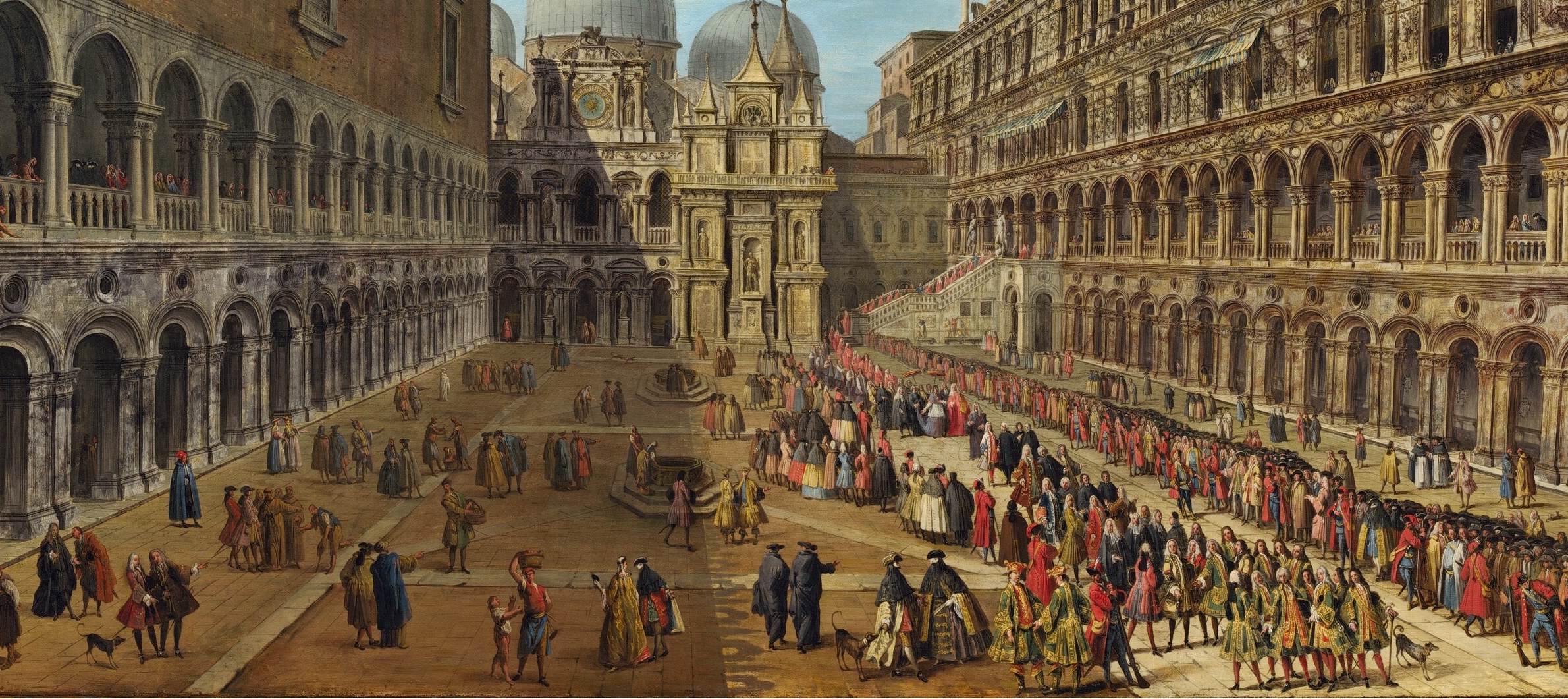
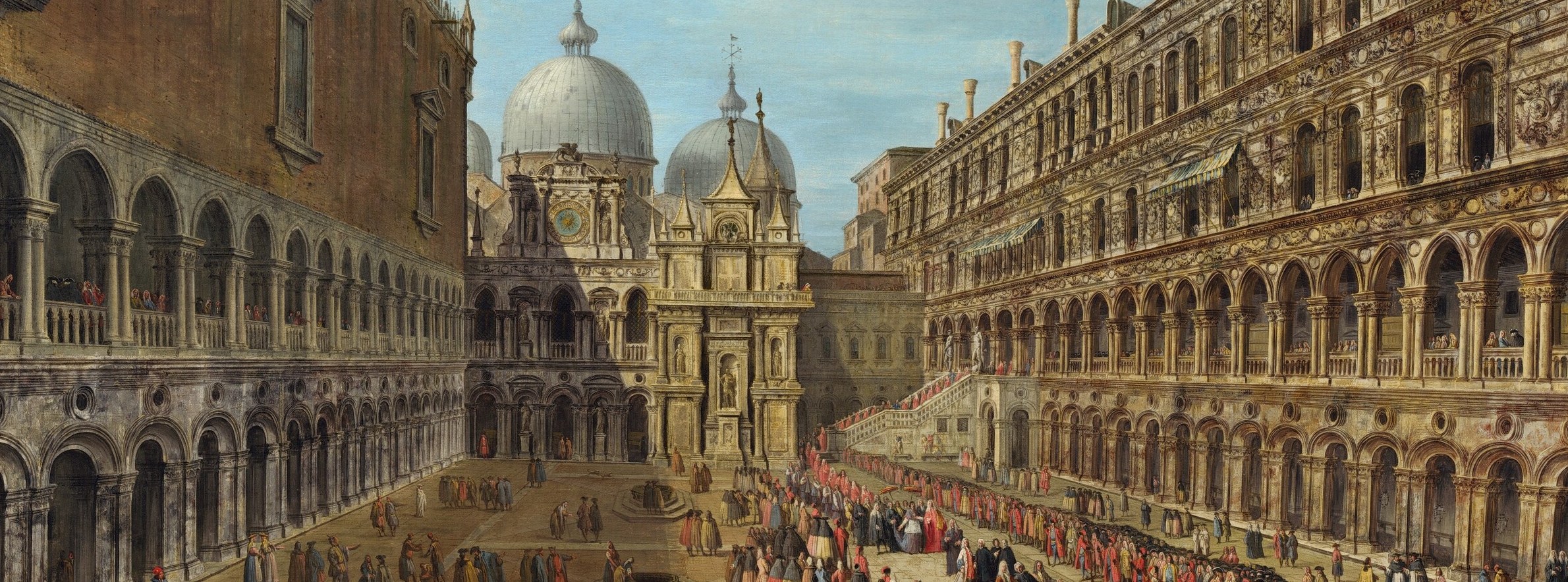
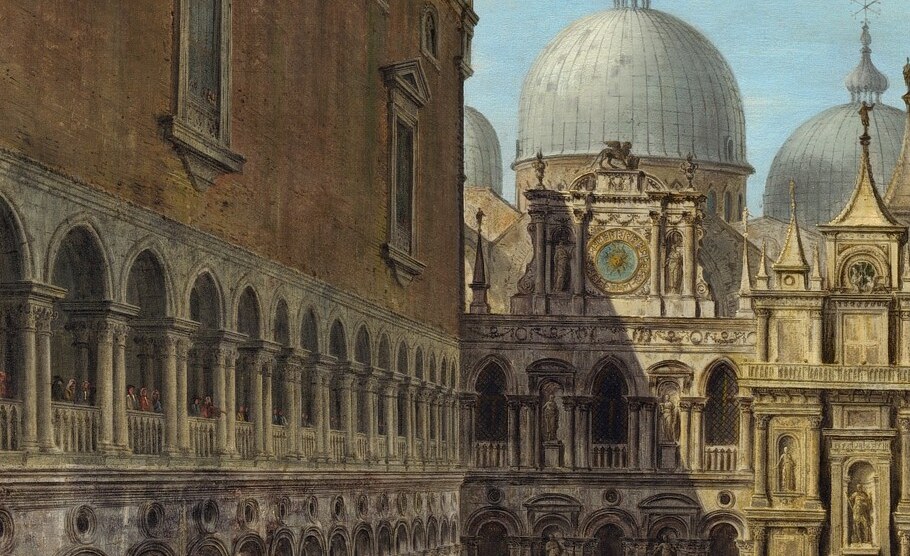
Antonio Joli’s “Procession in the Courtyard of the Ducal Palace, Venice” (c. 1742) is a Grand Tour souvenir painted by a man who spent years designing for the theatre. The painting belongs to a private collection and captures the palace not as a frozen monument but as a living civic stage.
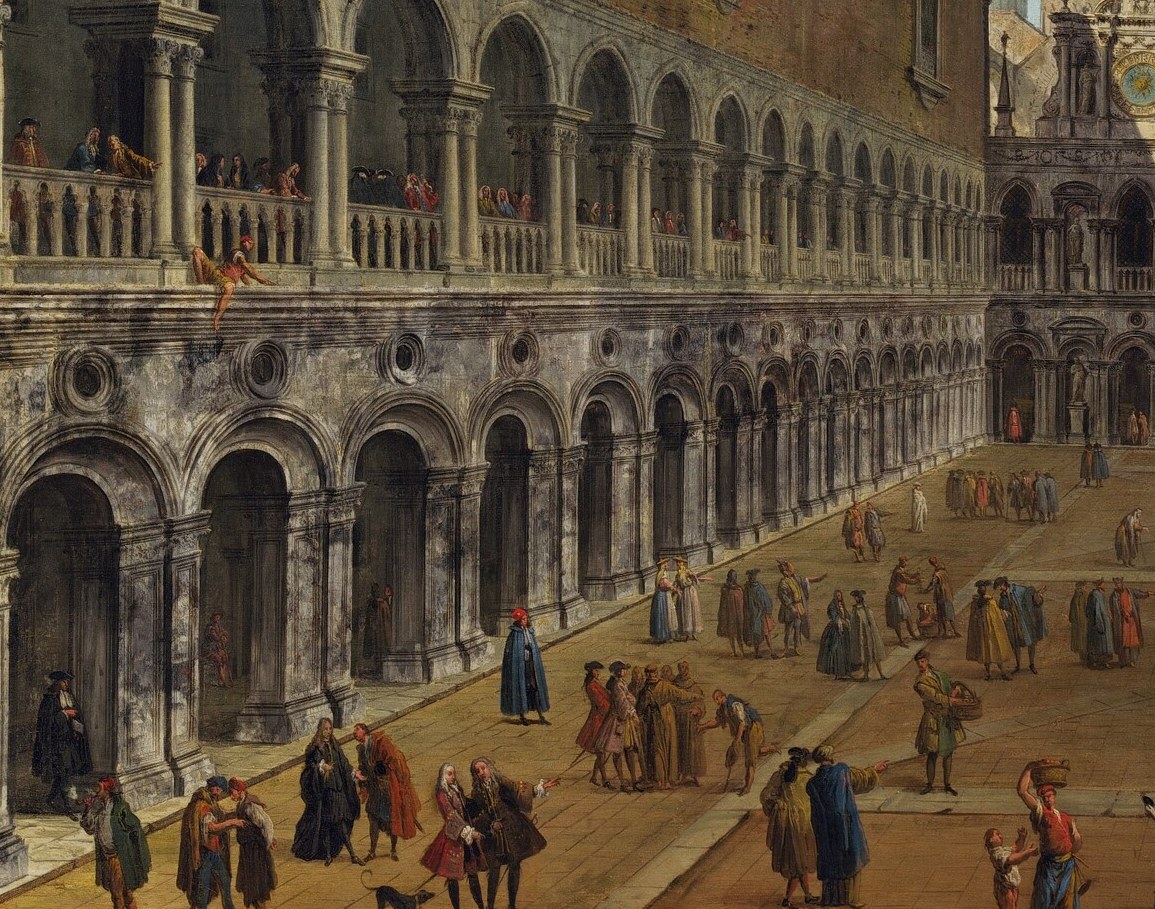
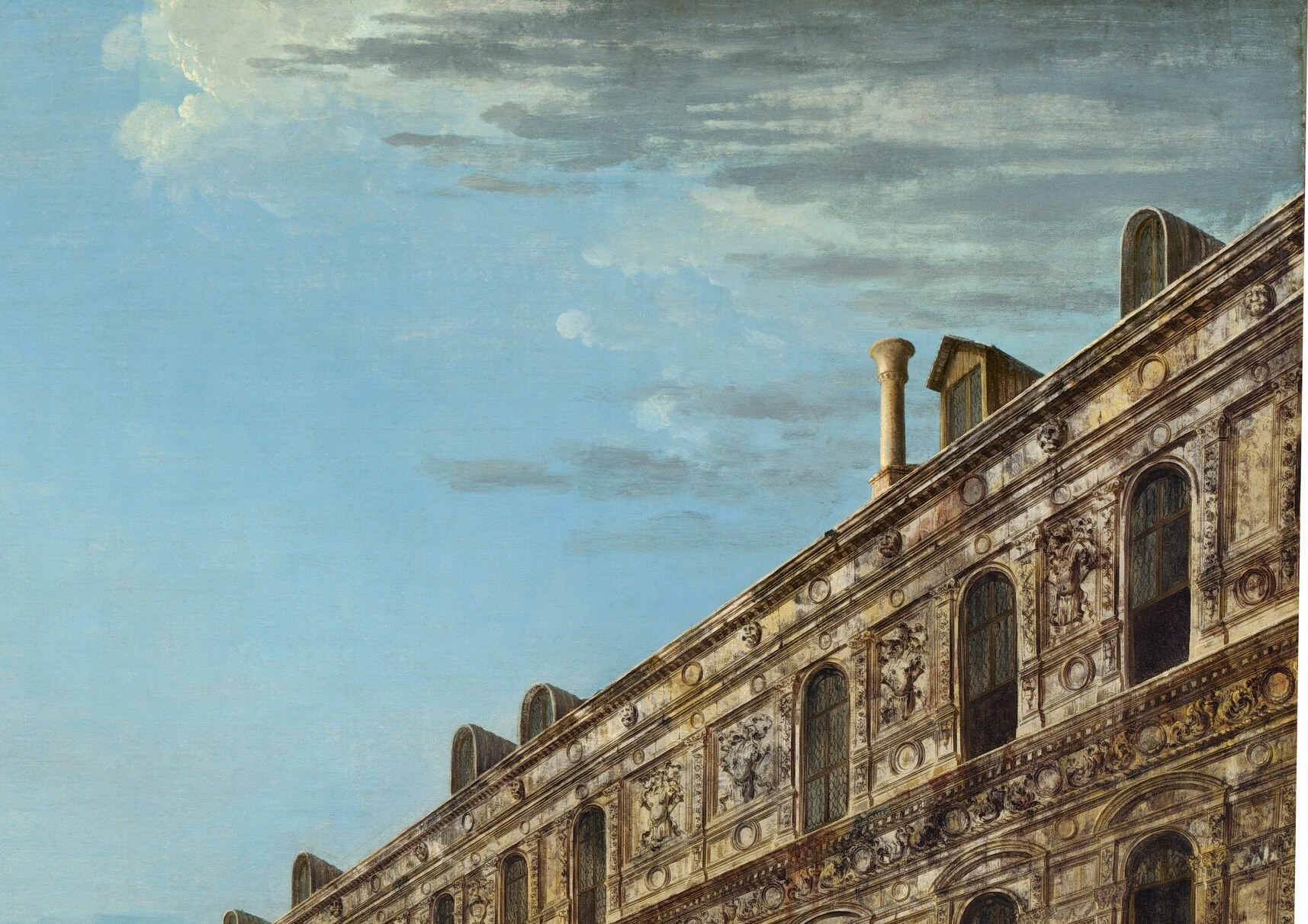
Start with the pavement. The strong one-point perspective pulls your eye straight through the guards’ red procession toward the sunlit archway and the dome beyond. That geometry is the visual engine of the whole scene. Then look up: in the right loggia’s upper windows you can make out figures or shadows. The palace itself is watching the ceremony. And in the deepest archway, silhouetted against the bright background, a handful of tiny figures are just visible.
Joli was born in Modena in 1700 and trained in Rome under Giovanni Paolo Panini before moving to Venice, where he designed sets for the San Cassiano and San Samuele theatres. His vedute, influenced by Canaletto, were in high demand among affluent northern Europeans on the Grand Tour. This particular view of the Ducal Palace courtyard would have been a prized memento: proof that the traveler had stood in one of the most famous spaces in the world.
It is a painting that rewards patience. The longer you look, the more the city looks back.
Details
Transcript
The courtyard of the Doge's Palace looks like a grand stage. The pavement pulls your eye toward the sunlit arch. Antonio Joli painted this for travelers on the Grand Tour. A keepsake to prove they had seen the famous palace. Look closely above the right loggia: the palace is watching back. And under that far archway, tiny figures are just visible. Joli was a set designer. He knew every inch of the stage.