Xiaomei by Song Xu
This is Xiaomei (Little Plum), a winter landscape by the Ming-dynasty painter Song Xu, dated 1594 and now at the Cleveland Museum of Art. The title promises plum blossoms, the first flower of the Chinese new year and a symbol of resilience. But look at the painting: every tree is bare. There is no flower in sight.
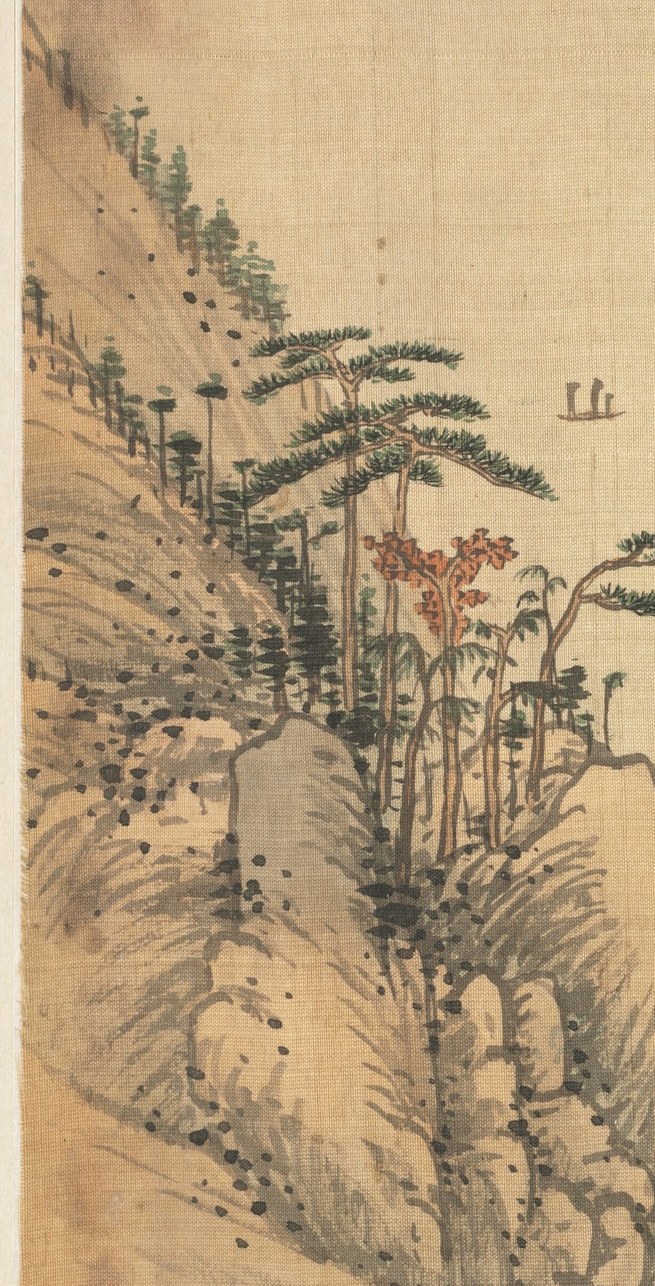
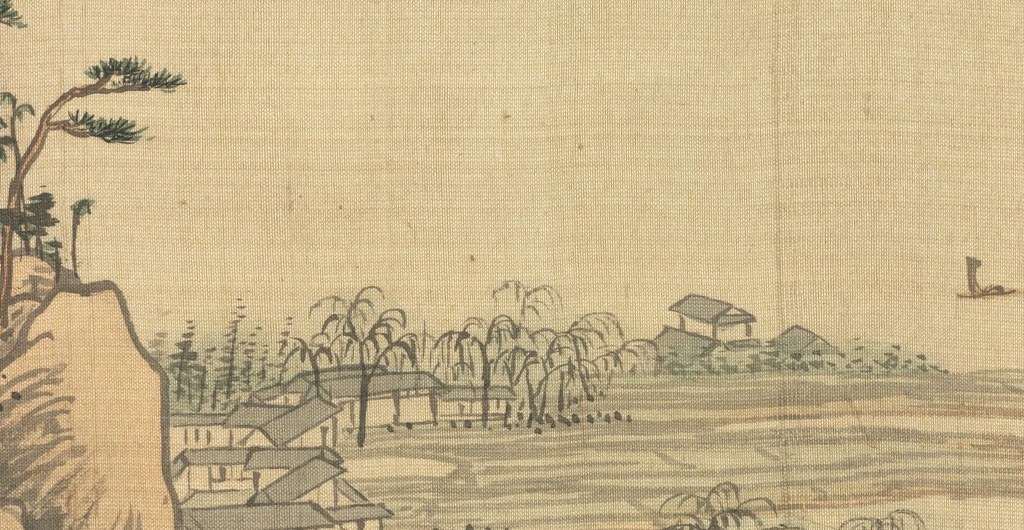
The visual weight sits on the left, where a towering cliff face is built from layered dry-brush strokes called cun. That technique gives the rock texture and geological mass. Across the river, a village hides among bare branches. Above it all, two flat, dark clouds float in a pale sky. The painting feels suspended, still, cold.
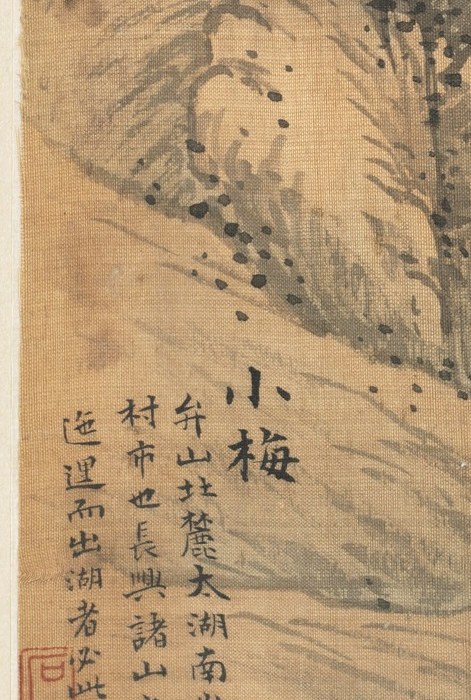
Song Xu worked in the late Ming period, active from around 1525 into the early 1600s. This painting carries a poetic dedication in its upper-left inscription. It explains the riddle. The plum blossom is not in the landscape. It is the lone boatman crossing the freezing river: small, solitary, enduring the winter before anyone else stirs. He is the first sign of life, the fragrant flower before spring.
The title is not a description of what you see. It is a metaphor for the man you might have missed. Next time you look at a Chinese landscape, check the inscription. The real subject is often hiding there.
Details


Transcript
The title promises plum blossoms. But it's winter. Every tree is bare. The rocks are painted with dry, dragged strokes. A technique called cun, giving stone its geologic weight. And above the mountain, two dark forms float. Now look at the smallest boat on the river. A single man in winter. Fragile, alone, moving. The painter's inscription says: that man is the blossom.