The Dispatch-Bearer by Giovanni Boldini
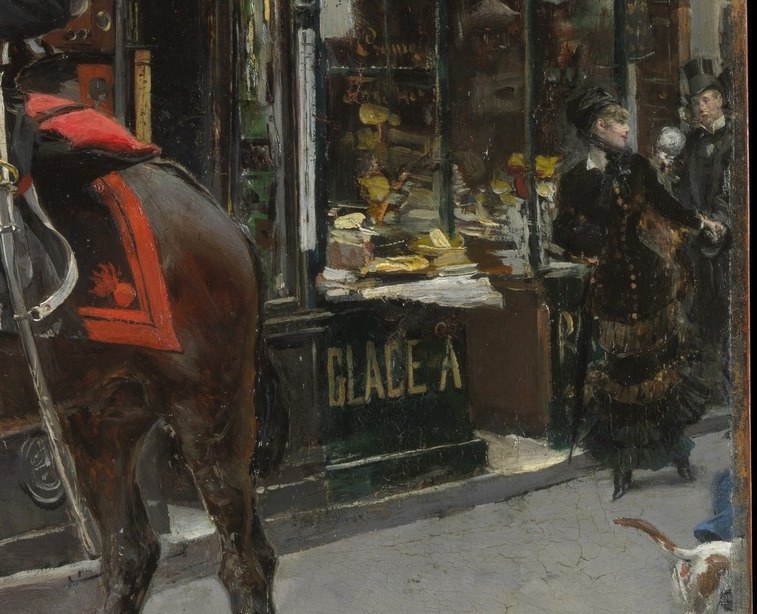
Giovanni Boldini’s *The Dispatch-Bearer* (1890, oil on canvas) hangs at the Metropolitan Museum of Art. It looks like a genre scene, a soldier on a horse in a Paris street, but it functions as a portrait of a precise person in a precise system. Every detail of the uniform, the horse's tack, and the shopfront was legible to a Parisian of 1890.
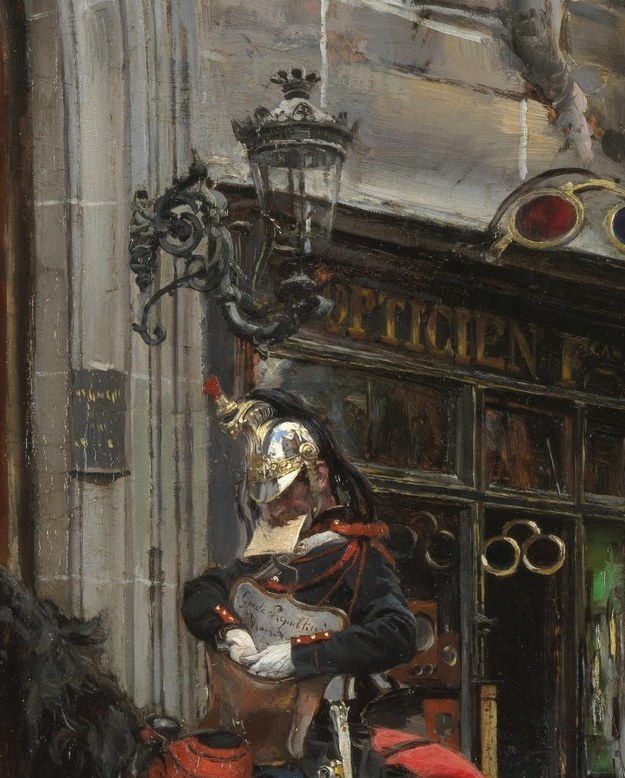
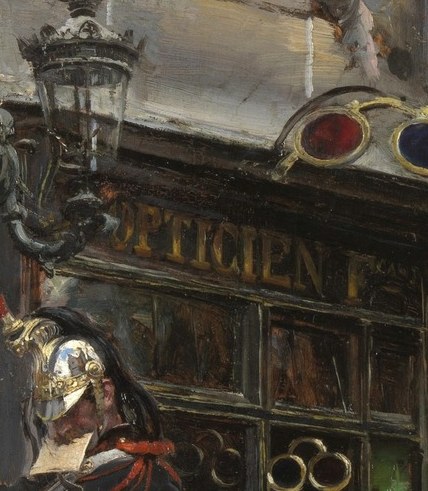
Look first at the red and blue tunic. Regimental colours were fixed by army regulation; the trim and cut told a contemporary viewer the man's unit and rank instantly. The polished brass helmet is the painting's technical peak, Boldini used rapid, loaded strokes to make reflected light feel wet and glancing, which is why a 1933 *Time* article called him the "Master of Swish." Then move to the rolled dispatch in his arm. The document is why he is there; everything else, the archway, the shadowed civilian, the shuttered optician's shop, orbits that single paper tube.
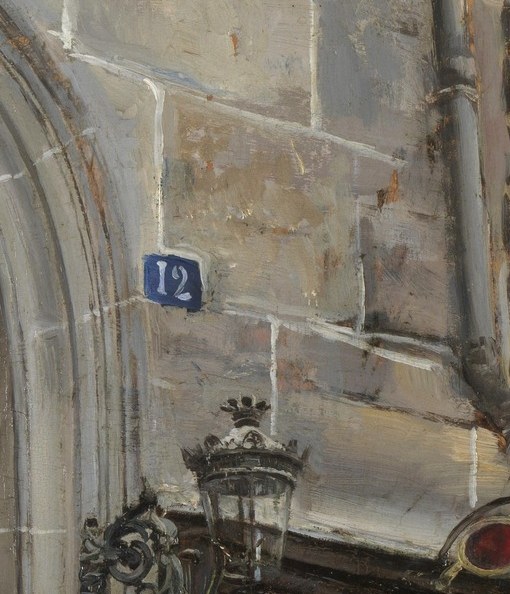
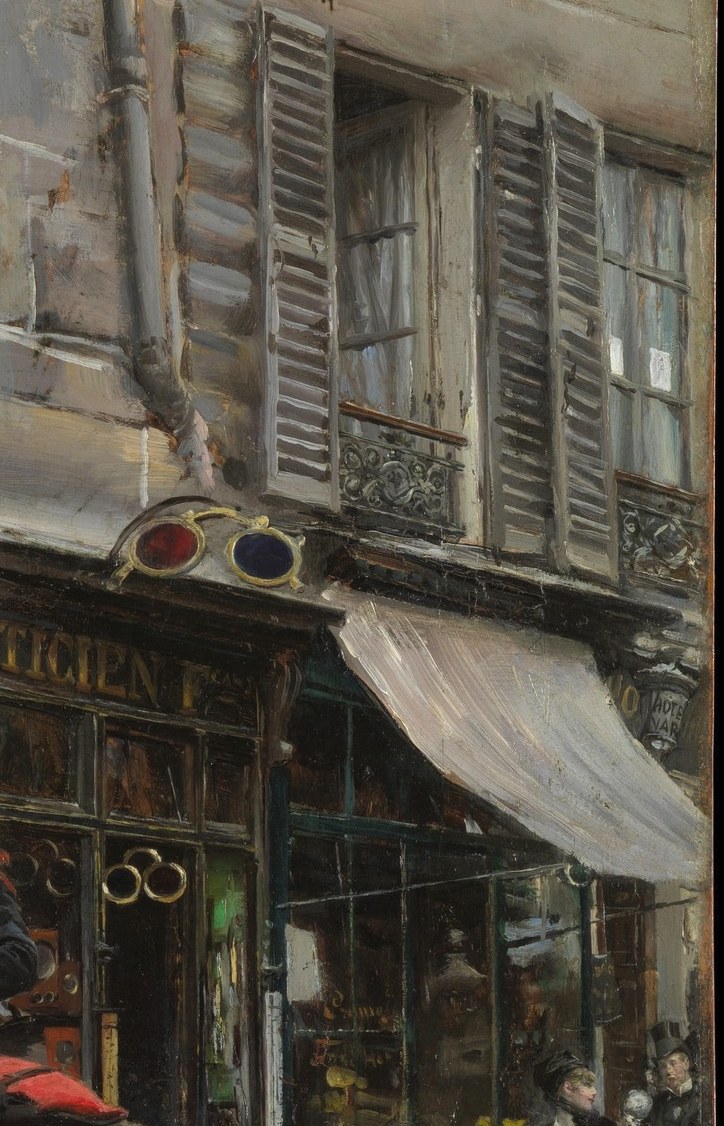
Boldini was Italian but worked in Paris for most of his career, and he painted the city as he found it. The shop sign and the address plaque near the archway likely record the actual street, and the closed shutters and cobblestones place the scene at a specific time of day. This is Second Empire Paris documented in oil. The city itself is as much the subject as the soldier.
The painting asks a quiet question: the man half-hidden in the left doorway, is he waiting for the message, or just watching a rider pass? The dispatch has not yet been handed over. The moment is suspended.
Details
Transcript
Paris, 1890. He isn't any soldier. The red and blue uniform is a precise regimental ID. The helmet's gleam is Boldini's true signature. The rolled paper is the dispatch itself. The painting's reason. That shop sign names the exact Paris street. Closed shutters: it is midday, in a working district. A man watches from the doorway. Is he waiting for this message? Boldini painted it all from life. A real moment, not a stage set.