Still Life with a Hanging Bunch of Grapes, Two Medlars, and a Butterfly by Coorte, Adriaen
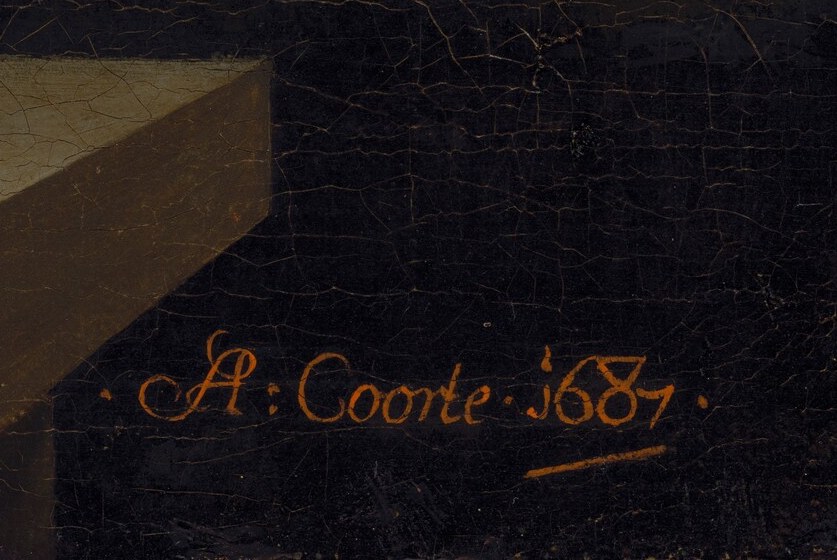
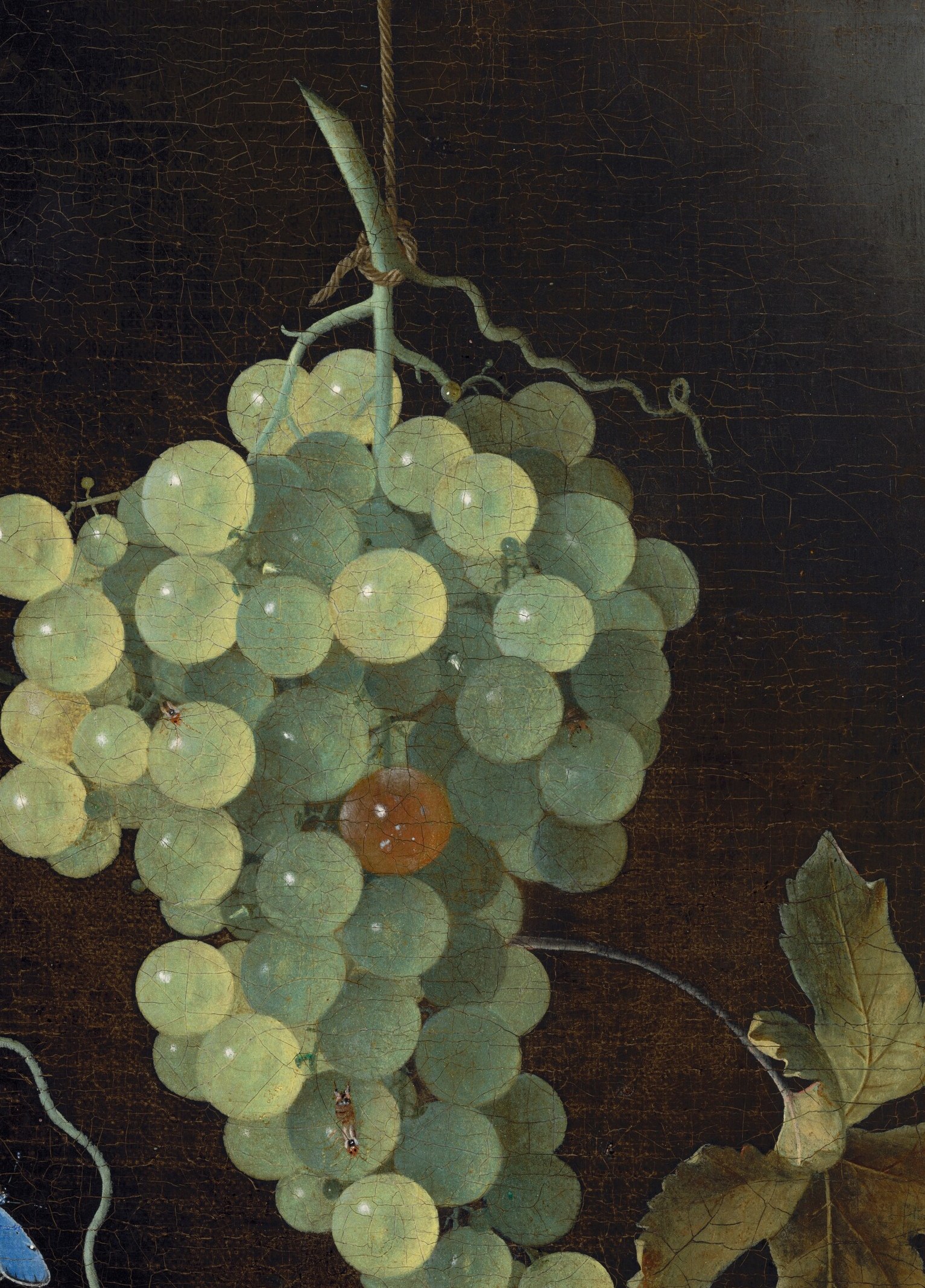
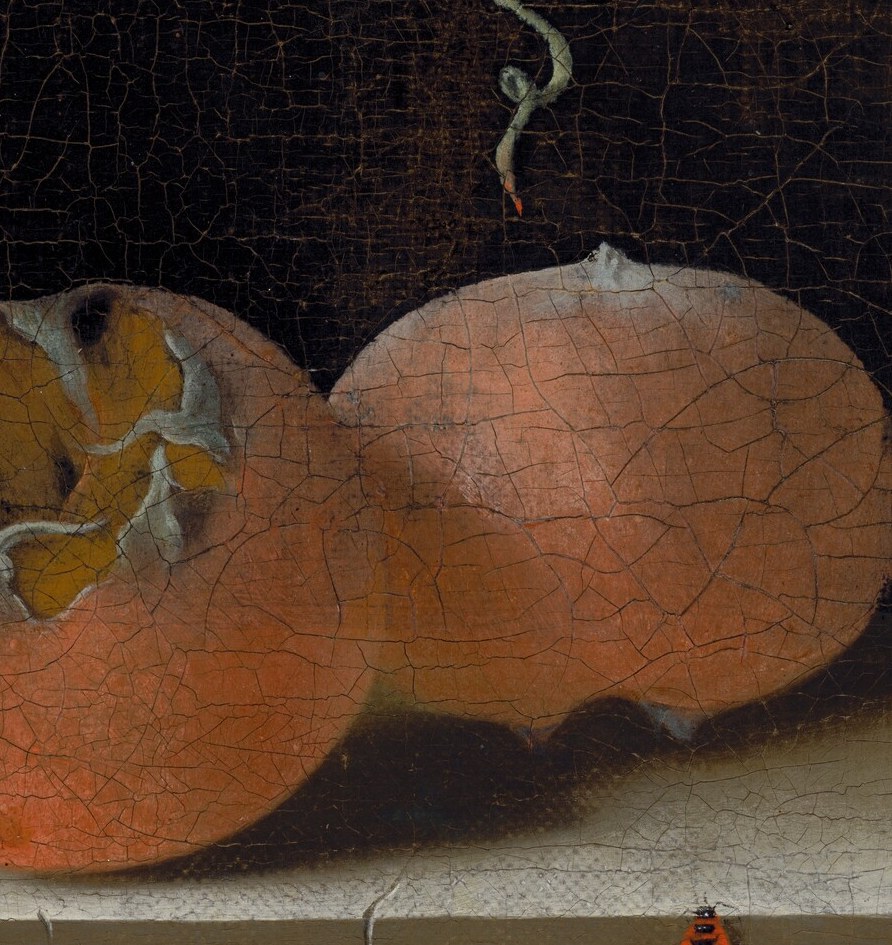
Adriaen Coorte's Still Life with a Hanging Bunch of Grapes, Two Medlars, and a Butterfly (1687) is one of the most quietly radical paintings of the Dutch Golden Age. While his contemporaries were filling canvases with ornate silver, dead game, and imported flowers, Coorte was painting a single suspended bunch of grapes on a bare stone ledge, against total darkness. For nearly two hundred years, no one knew his name.
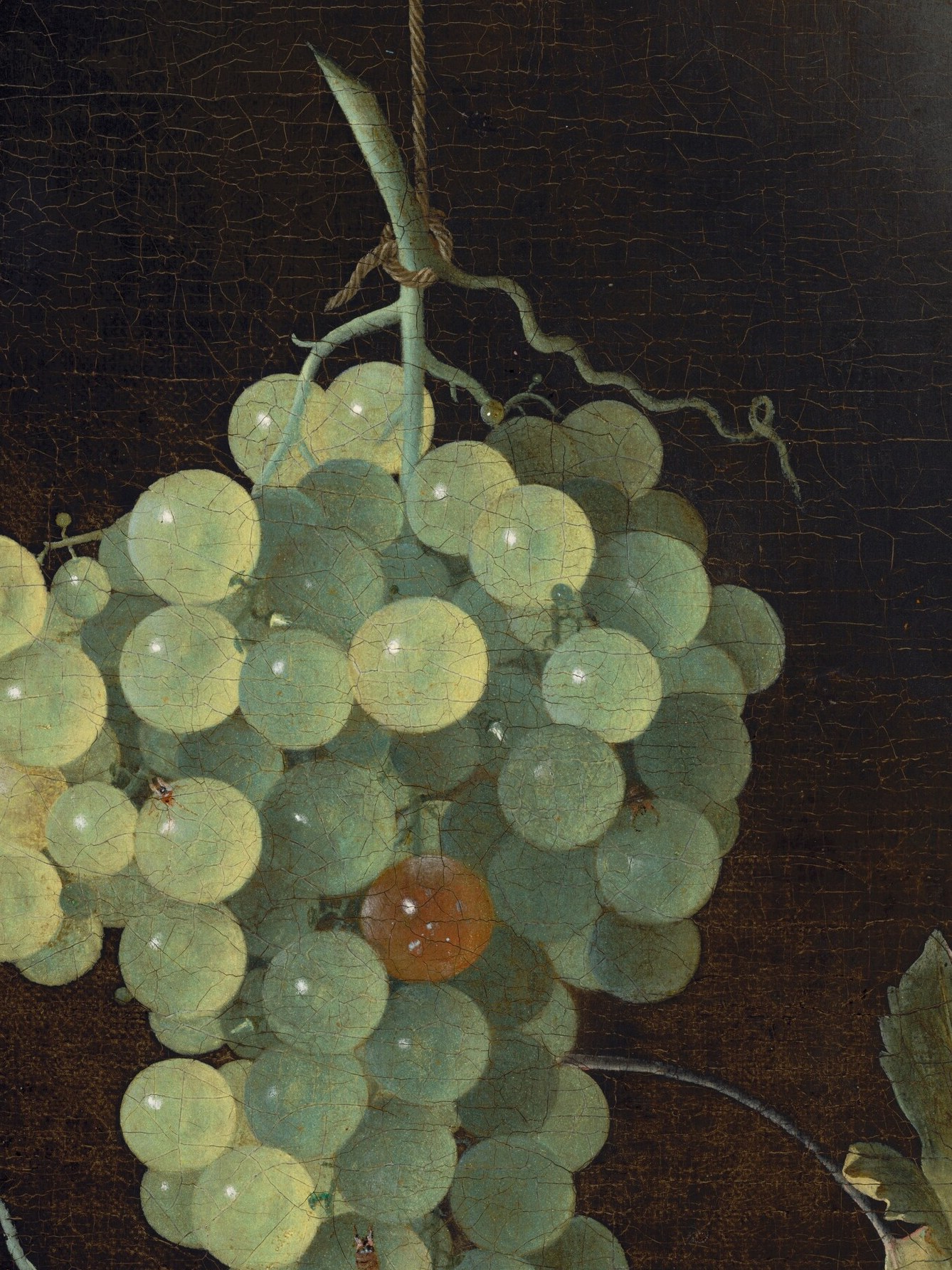
What to look at: the highlights. Each grape carries its own hot-white dot of light, placed with near-scientific precision to describe the sphere beneath it. Coorte then added a softer secondary glow to make the fruit seem translucent. Then look up at the thin line from which the whole cluster hangs, the composition's only structural support, and at the vine tendrils curling into the black void, painted so finely they test the visible limit of oil paint.
Coorte worked in Middelburg, a provincial city, and signed works between 1683 and 1707. He never married, never joined the painters' guild, and left almost no paper trail. His paintings disappeared into attics and minor collections. The rediscovery began in the 1950s when Dutch art historian Laurens J. Bol recognized a handful of signed works and assembled a catalogue. In 2008, the Mauritshuis mounted a major retrospective of an artist most visitors had never heard of. Since then, Coorte's minimal still lifes have become objects of quiet devotion, each small panel a concentrated argument that one bunch of grapes, truly seen, is enough.
There are fewer than 80 known works. Every new one that surfaces rewrites a life story we are still piecing together.
Details
Transcript
For two centuries, this painting had no name attached to it. Look at how each grape holds its own small sun. A single thin line suspends the entire composition. Coorte stripped away everything: no table, no room, no story. By 1900 his work was so obscure that a major collector paid almost nothing for one. Today fewer than 80 of his paintings are known to exist.