Madame Cézanne in a Yellow Chair by Paul Cézanne
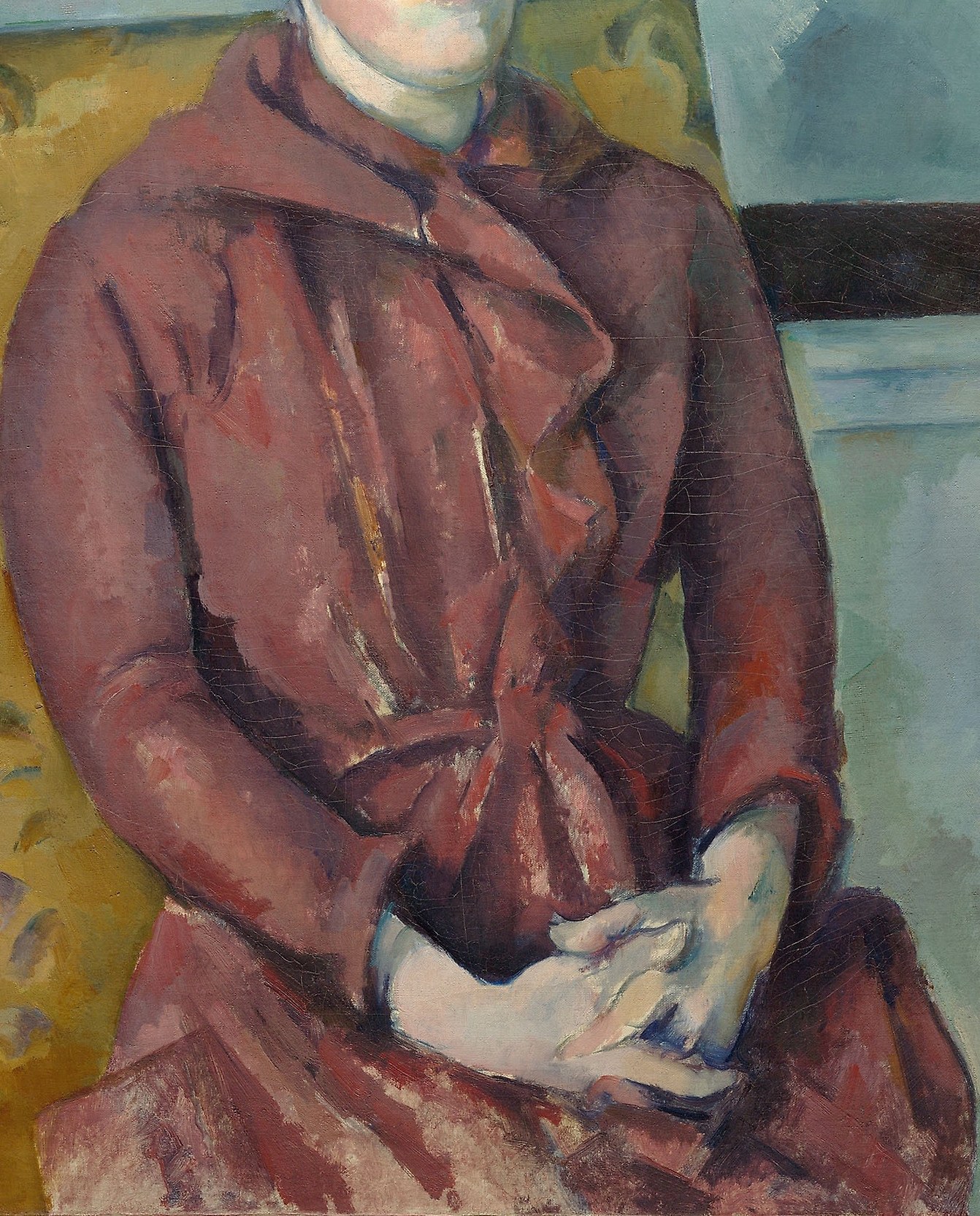
Paul Cézanne's "Madame Cézanne in a Yellow Chair," painted in 1888, captures his wife, Marie-Hortense Fiquet, in a moment of quiet stillness. This oil painting, held at the Art Institute of Chicago, is one of more than two dozen portraits he painted of her.
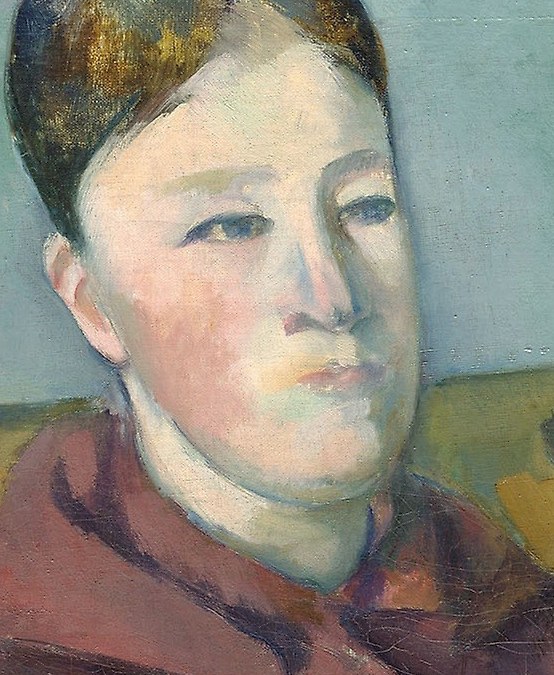
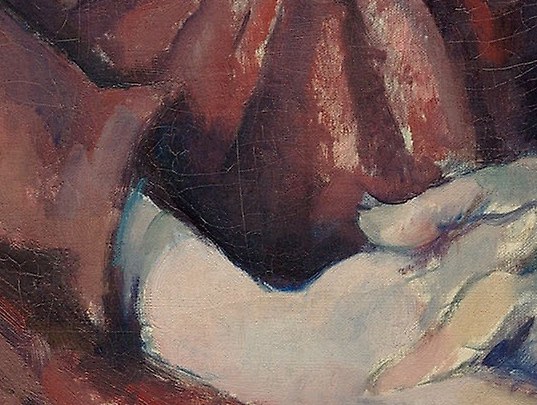
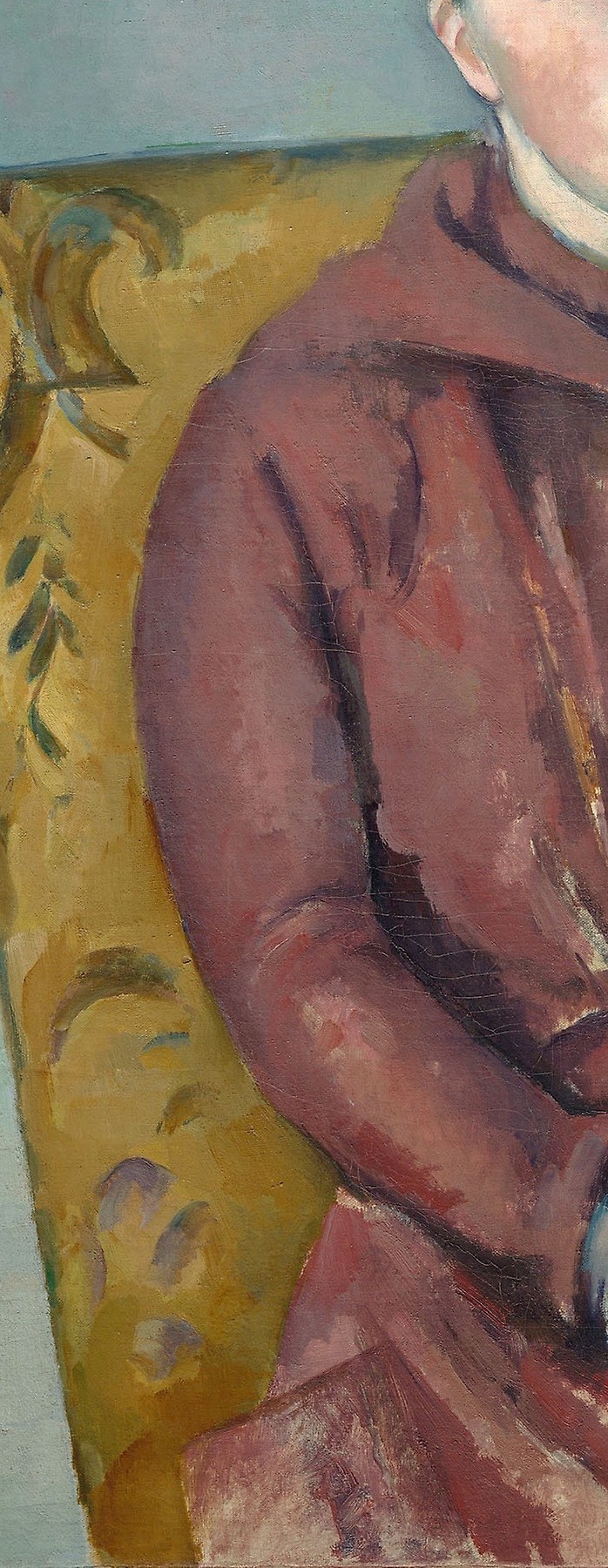
Look closely at her composed posture, particularly her clasped hands and the subtle, averted gaze of her face. Cézanne's methodical approach is evident in the structured forms of her maroon dress and the intricate pattern of the yellow chair.
Cézanne, a Post-Impressionist master, used his wife as a constant subject, exploring form and color through her unchanging presence. These portraits were not about capturing a fleeting impression, but about a sustained, analytical study of the human figure within a defined space.
What do you see in her expression?
Details
Transcript
This woman sat for over 27 portraits by one painter. She was his wife, Marie-Hortense Fiquet. Her hands, clasped in her lap, are a picture of composure. The painter was known for his methodical approach to form. Her steady gaze, though averted, suggests deep introspection. He found endless study in her quiet presence.