Queen Zenobia Found on the Banks of the Arax by http://www.wikidata.org/.well-known/genid/4a164ee42a30ab9431b7fa880d7b1be4
Elisabetta Sirani's "Queen Zenobia Found on the Banks of the Arax" (circa 1640), held at the State Hermitage Museum, tells the dramatic story of a defeated warrior queen.
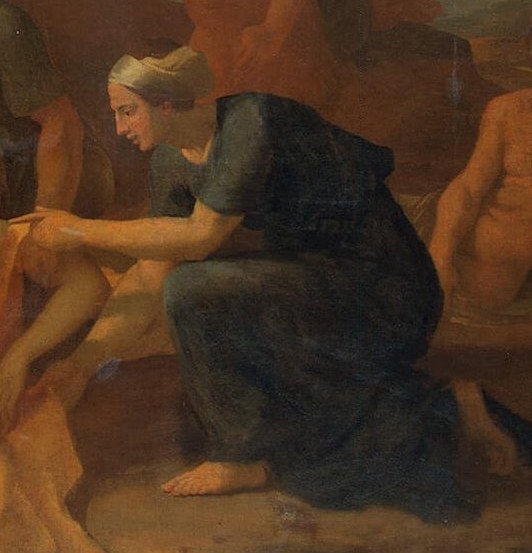
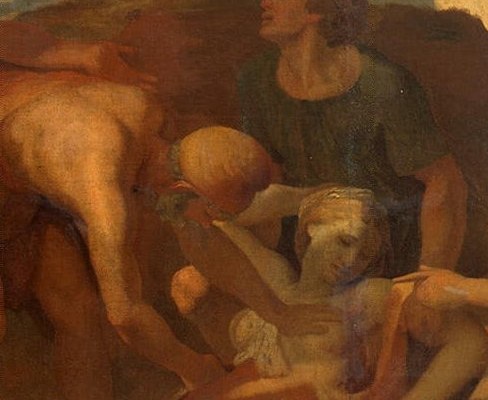
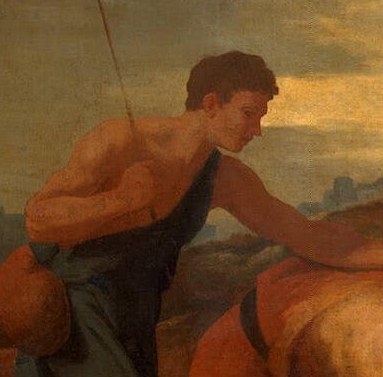
Zenobia, once ruler of the Palmyrene Empire, is depicted in her moment of vulnerability, attended by loyal figures. Notice the strong contrasts of light and shadow, a technique called chiaroscuro, which adds to the emotional depth of the scene.
Sirani, a prodigious painter from Bologna, achieved significant fame and supported her family through her art. Her ability to infuse classical stories with vivid emotion and technical skill made her a celebrated artist of her time, despite her tragically short life.
This painting is a testament not only to Zenobia's historical saga but also to Sirani's remarkable talent and resilience.
Details
Transcript
This is Queen Zenobia, a warrior queen defeated by Rome. She is found by her loyal attendants, stripped of her empire. In the 17th century, her story was popular for its drama. The painter was a young woman, Elisabetta Sirani, in Bologna. She became a prodigy, supporting her family by painting. Her work here, with its dramatic light and shadow, was celebrated.