Corn Fields by Félix Vallotton
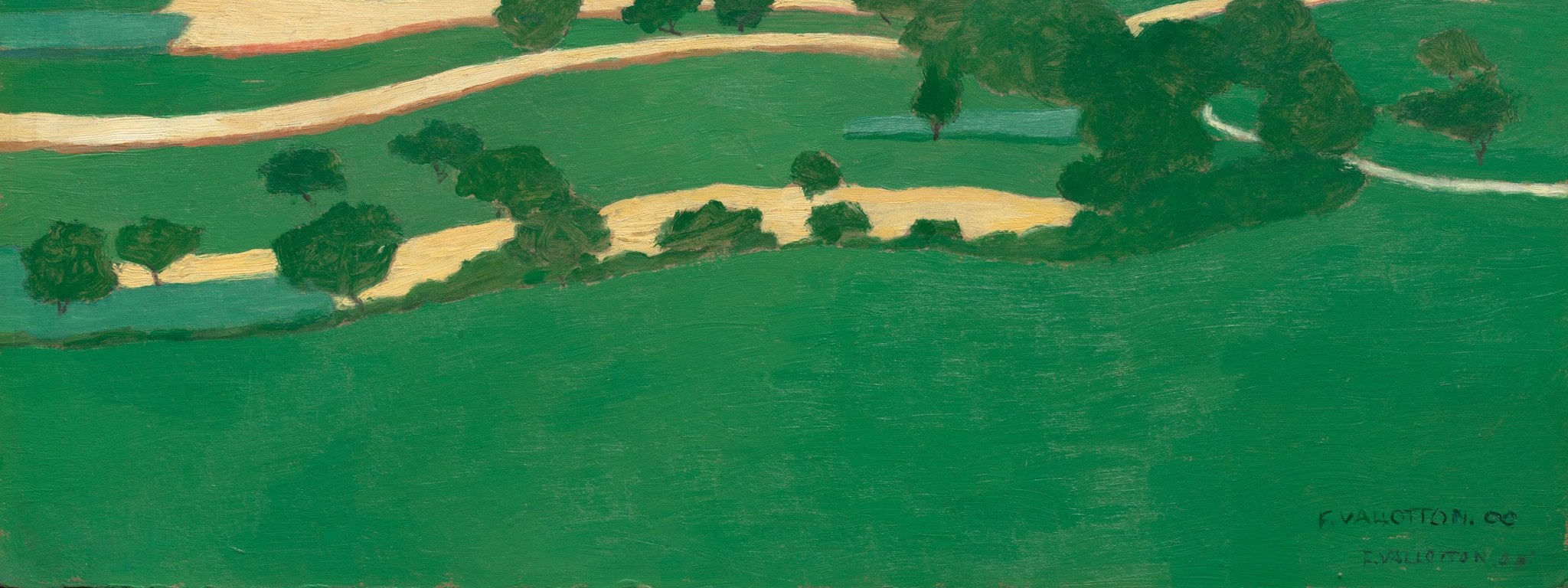
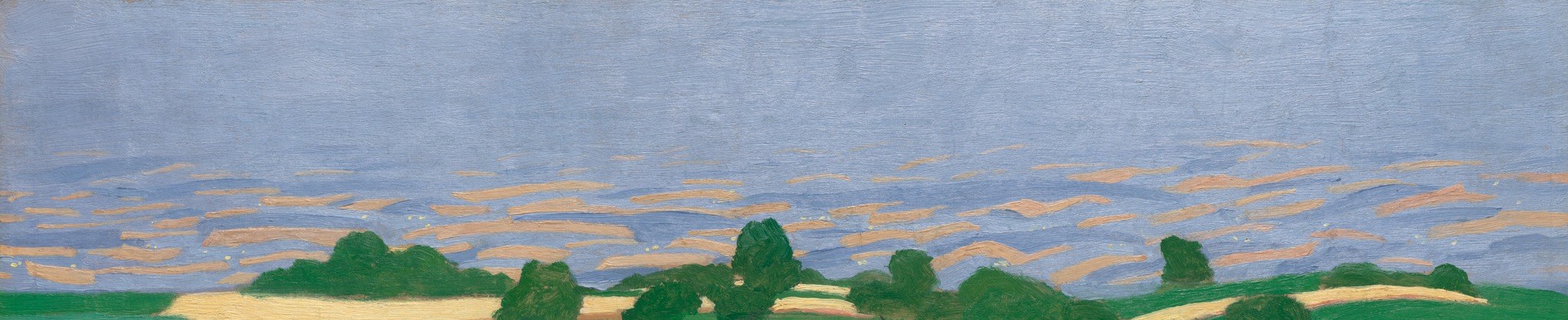
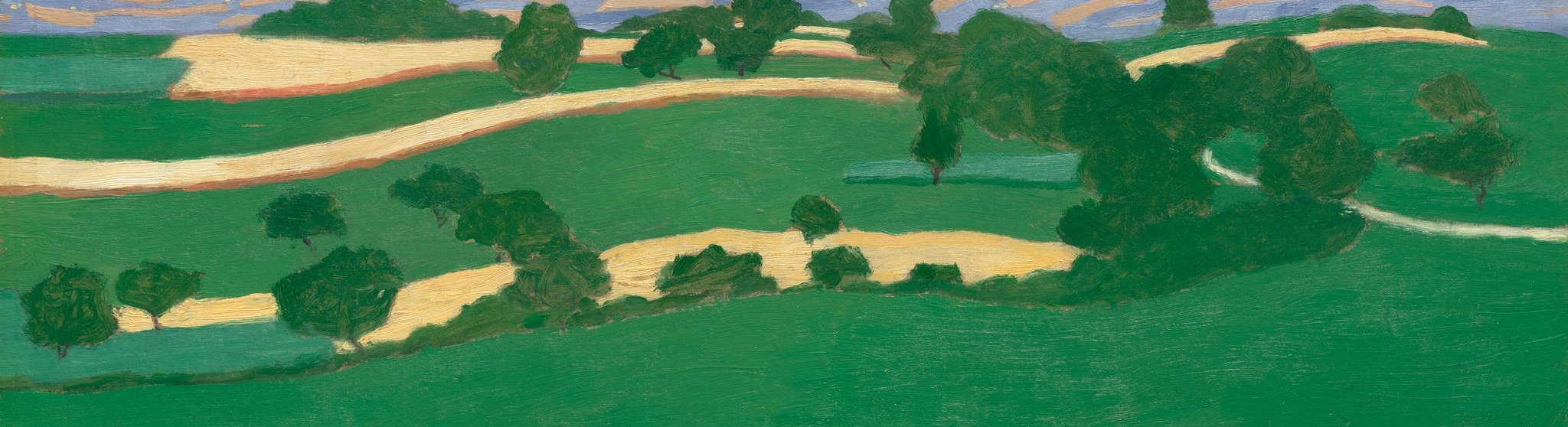
Félix Vallotton's "Corn Fields," painted in 1900, is a compelling landscape where the true hidden detail lies not in a tiny figure, but in the artist's unique technique. This oil on canvas, held at The Cleveland Museum of Art, invites a closer look at its surface.
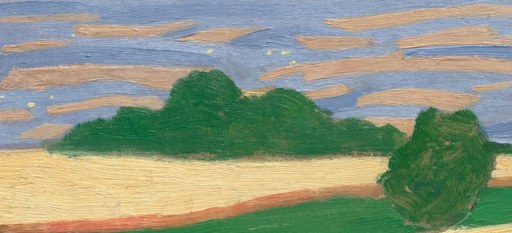
Notice the bold, almost sculptural quality of the paint, particularly in the dense green fields and the winding path. Vallotton, a Swiss and French painter associated with Les Nabis, developed a simpler, more graphic style, emphasizing form over atmospheric depth. His visible, thick brushstrokes create a tactile texture that makes the landscape feel both real and intentionally rendered.
Completed at the turn of the century, "Corn Fields" showcases Vallotton's exploration of natural environments. He used bright, unmodulated colors and often omitted shadows, giving his landscapes a distinctive, flattened appearance that foregrounds the painting as an object itself. This work is a wonderful example of his approach to modern landscape painting.
What do you notice first when you look at Vallotton's brushwork?
Details
Transcript
This landscape, painted in 1900, seems straightforward. Look closely at the dense green fields. The painter used thick, visible brushstrokes for texture. Félix Vallotton was known for this bold, almost flat style. He favored form over atmospheric depth. Even the winding path is defined by stark, short marks.