The Spinner by Quirijn van Brekelenkam
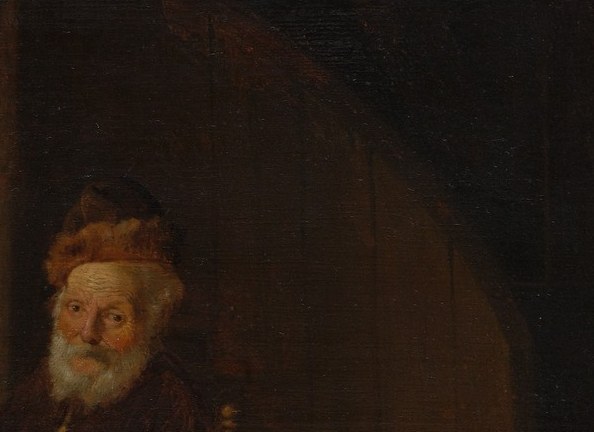
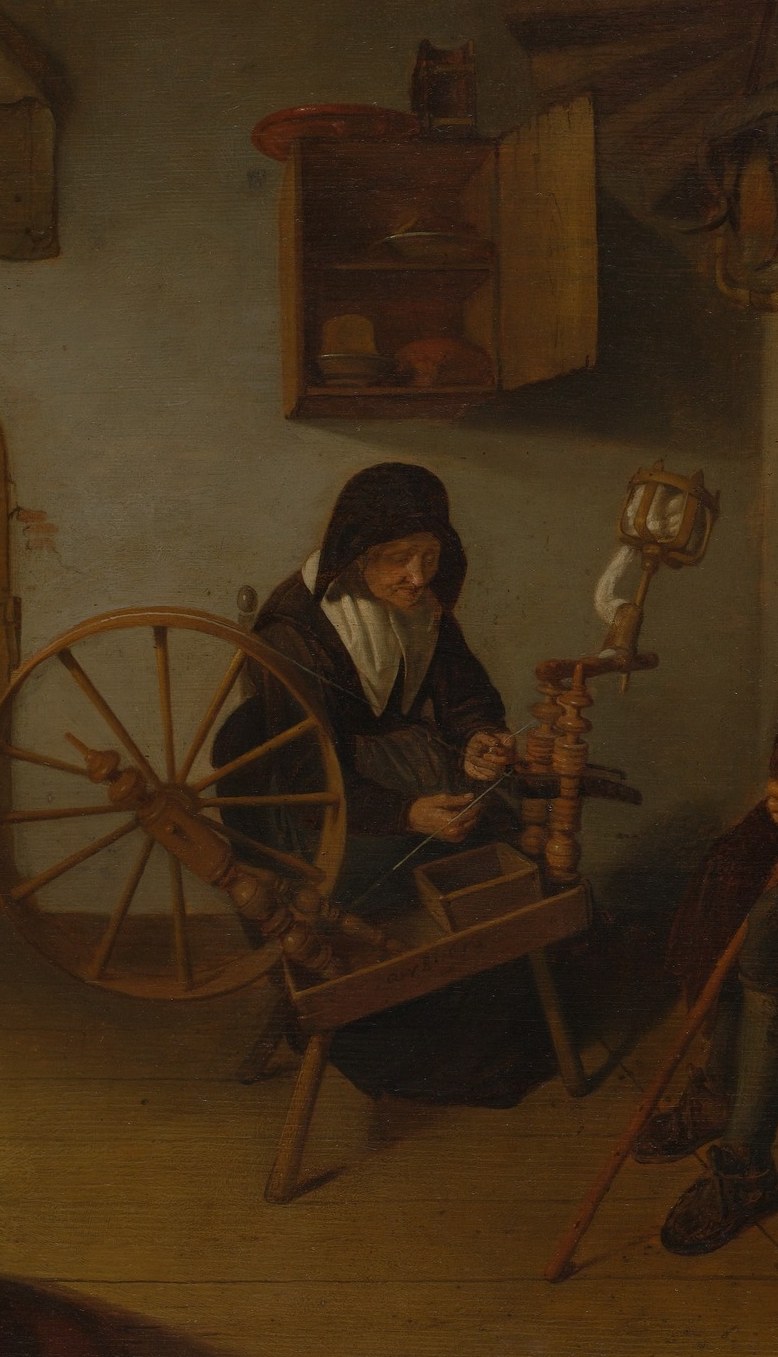
Quirijn van Brekelenkam painted The Spinner around 1653, and at first glance it is simply a quiet domestic interior: a woman working, an older man watching. But Dutch genre painting of the 17th century was a moral art form, and almost nothing in it is neutral.
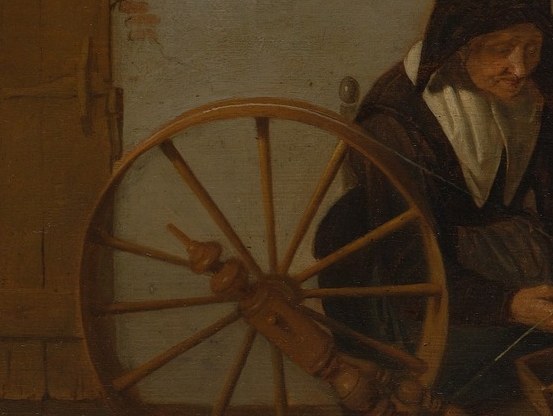
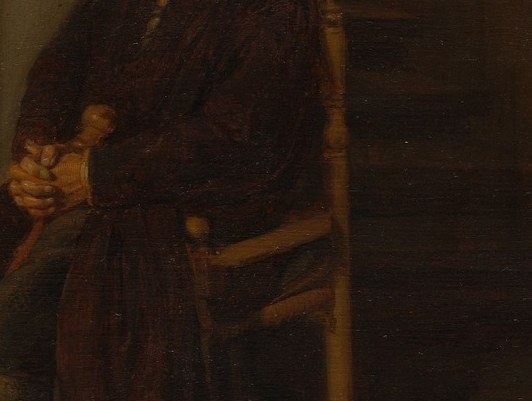
Look at the two pairs of hands. Hers are active at the spindle, turning raw fiber into thread, the kinetic and moral center of the whole painting. His rest motionless on the top of a cane. The contrast is not accidental. It is the same visual argument Gerard Dou and the Leiden fijnschilders made again and again: industry versus idleness, a useful life versus a passive one.
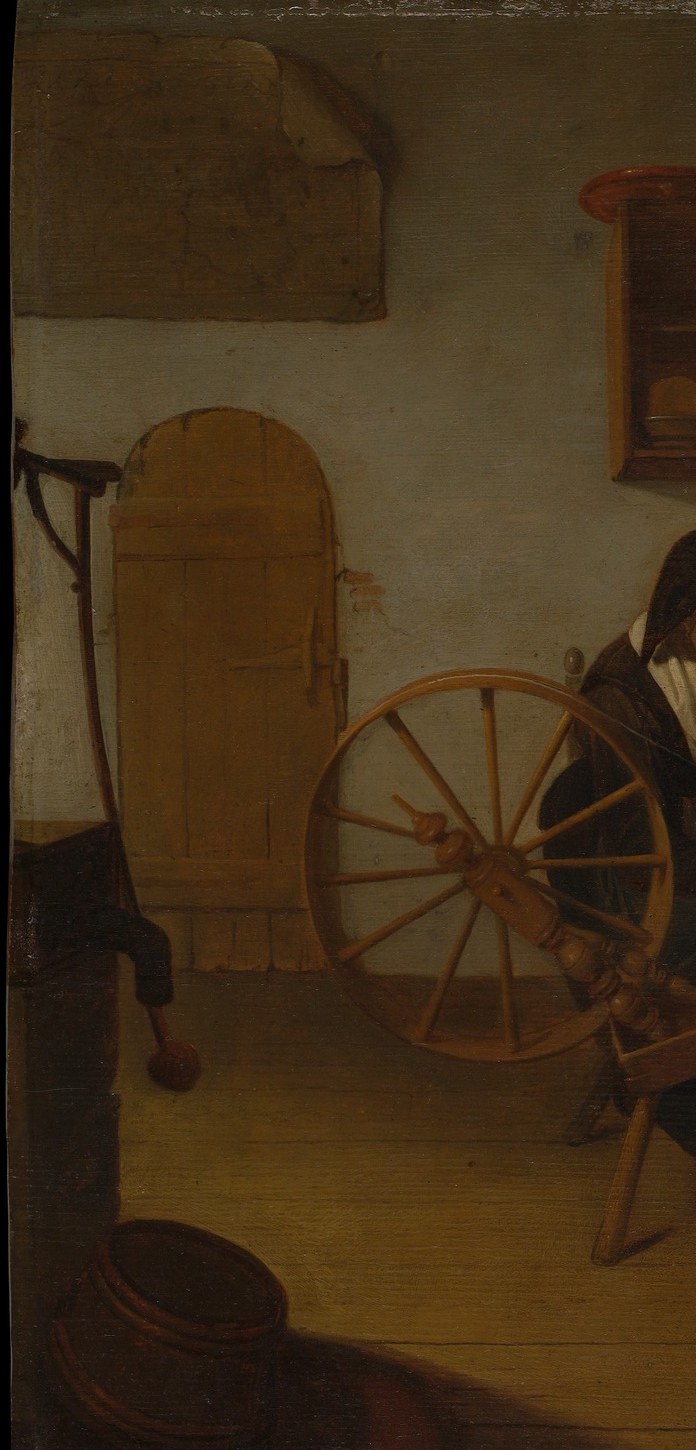
Van Brekelenkam likely studied under Dou, and his early work shares the same meticulous finish and the same delight in codifying virtue and vice through ordinary objects. The spinning wheel itself is the title character here, labor made visible and structural. The shelf of earthenware, the dish on the floor, the bare walls: all insist this is a working household, not a rich one, which makes the moral stakes feel closer to the bone.
We tend to see old paintings of domestic life as quaint. The Spinner was not quaint to its first viewers. It was a mirror they were meant to check themselves in. Which hands would yours be?
Details
Transcript
Two people in a modest room. Everything looks ordinary. But Dutch genre paintings were never just snapshots of daily life. She spins. Her hands never stop. He leans on a cane. His hands never move. This single pairing, repeated in dozens of Dutch homes, was a moral lesson. Industry versus idleness. A life well-spent versus a life watched.