Four Xingu Indians by Catlin, George
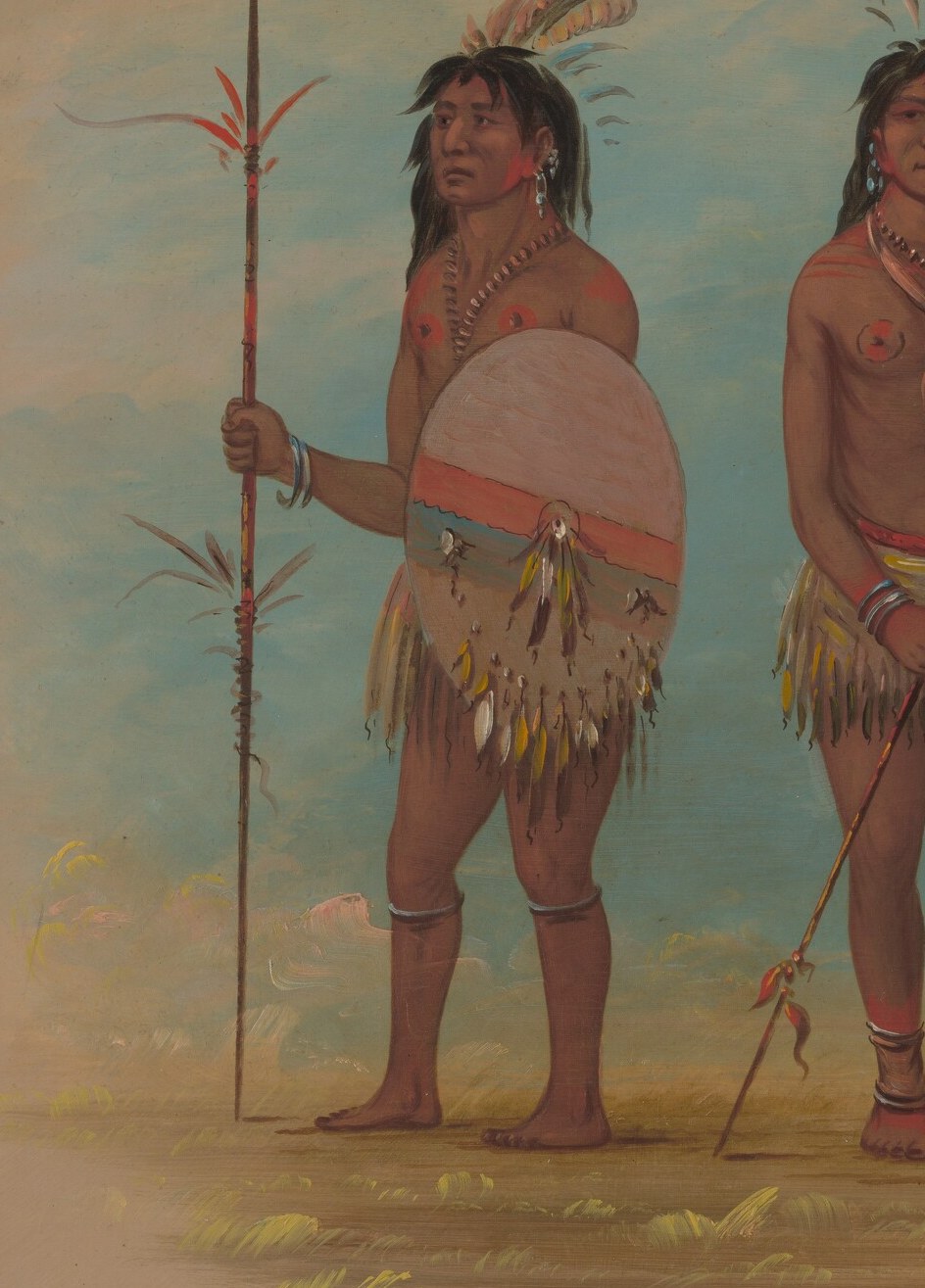
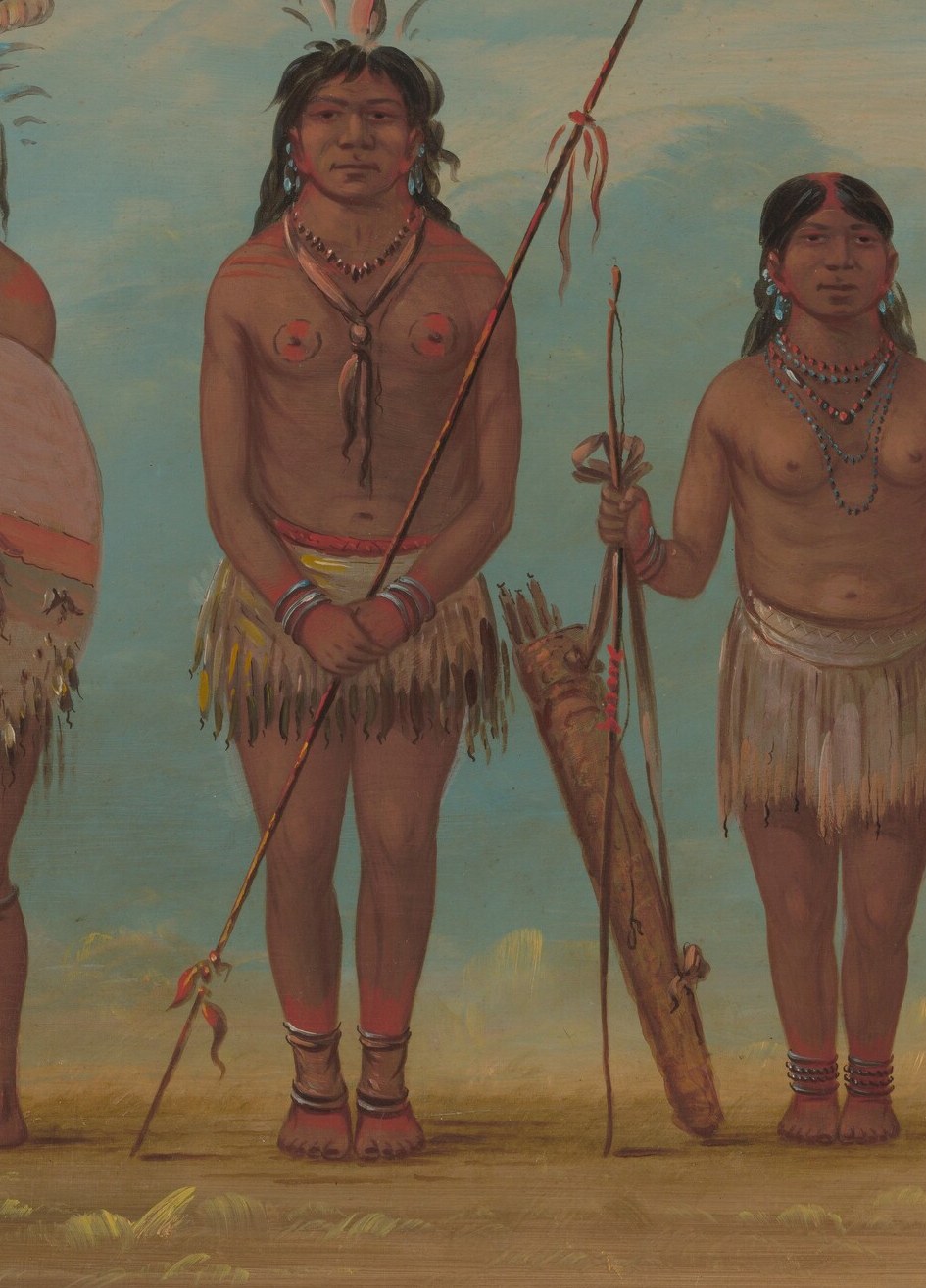
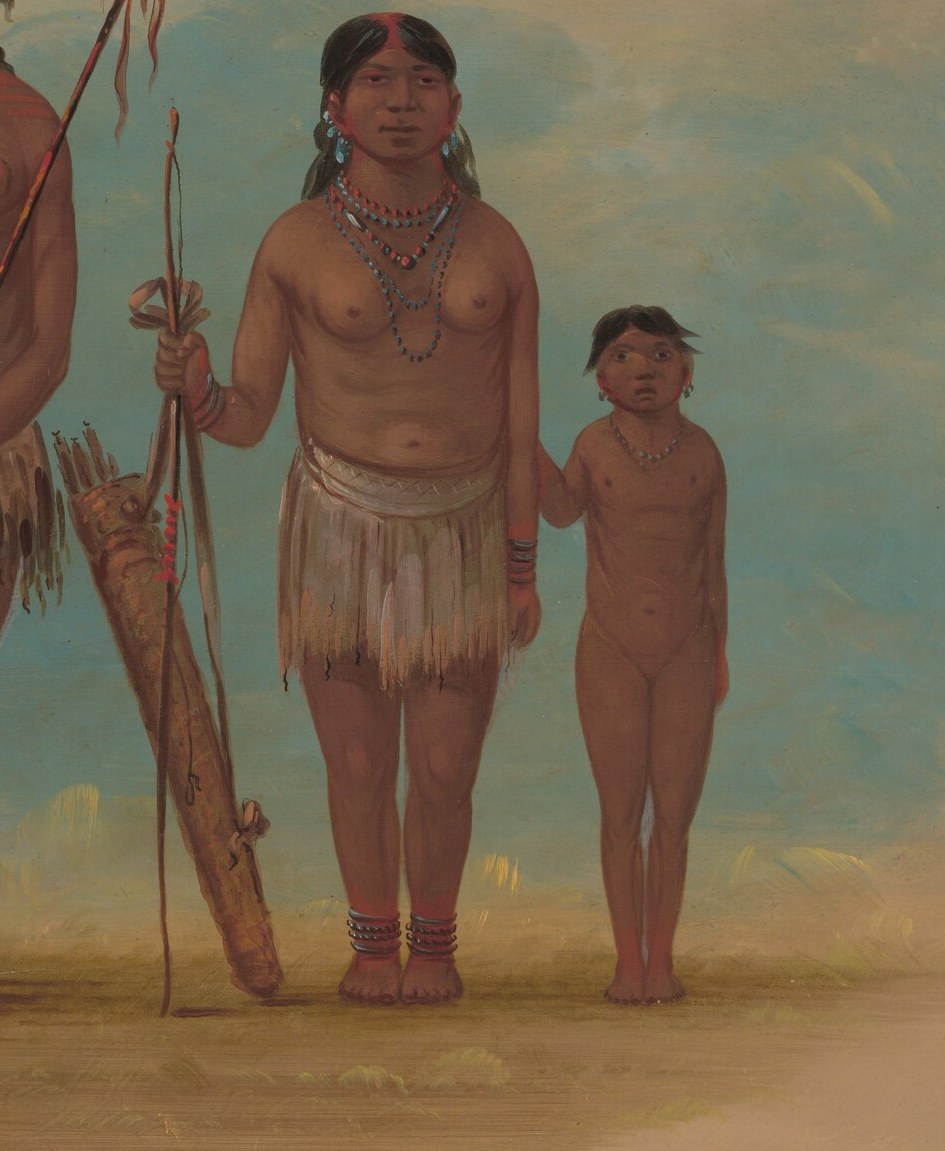
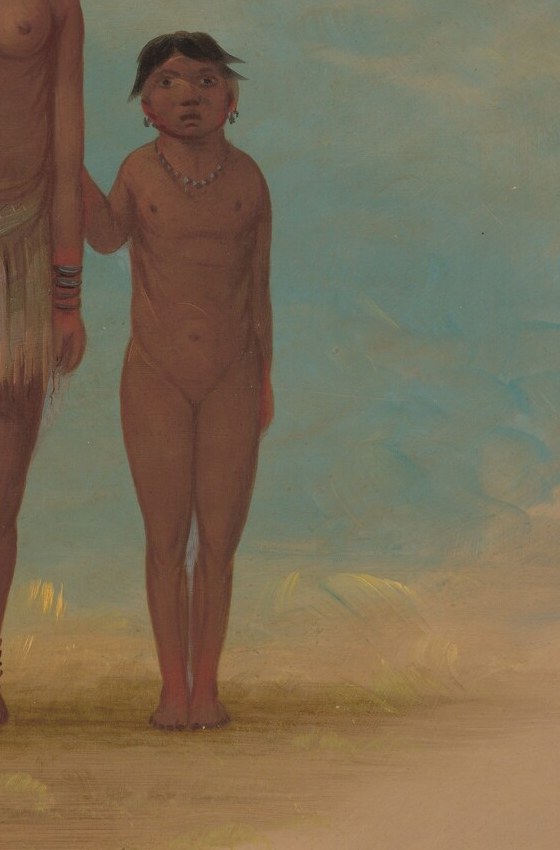
This is George Catlin's "Four Xingu Indians," painted in 1862 and now in the collection of the Smithsonian American Art Museum. The oil on card was created decades after Catlin traveled the American frontier, and it portrays a group of Xingu people from memory rather than direct observation.
Look closely at the upper background of the painting itself. The number '463' is inscribed directly onto the card. It is not a date or a secret code; it is the lot number from an auction, a stark piece of the painting's physical history that remains visible.
Catlin made his name in the 1830s documenting Plains Indian life for an eastern audience, but by the 1860s his most famous work was behind him. This small study on card, later mounted to paperboard, traded hands modestly. The market for his ethnographic portraits was quiet, and many works like this one entered museum holdings not as marquee acquisitions but from unassuming sales.
The lot number painted directly on the surface is a reminder that the value of a work of art is rarely fixed. A painting can be a window into another world and a line in an auction ledger at the same time.
Details
Transcript
This painting does not come from the American West. George Catlin painted it in 1862, decades after his expeditions. He worked from memory, far from the Xingu people he once met. An inventory number, 463, was added later to the card itself. That mark tells the real story: it was lot 463 at auction. It sold not for millions, but as a modest study on paperboard.