Claude Monet by Renoir, Auguste
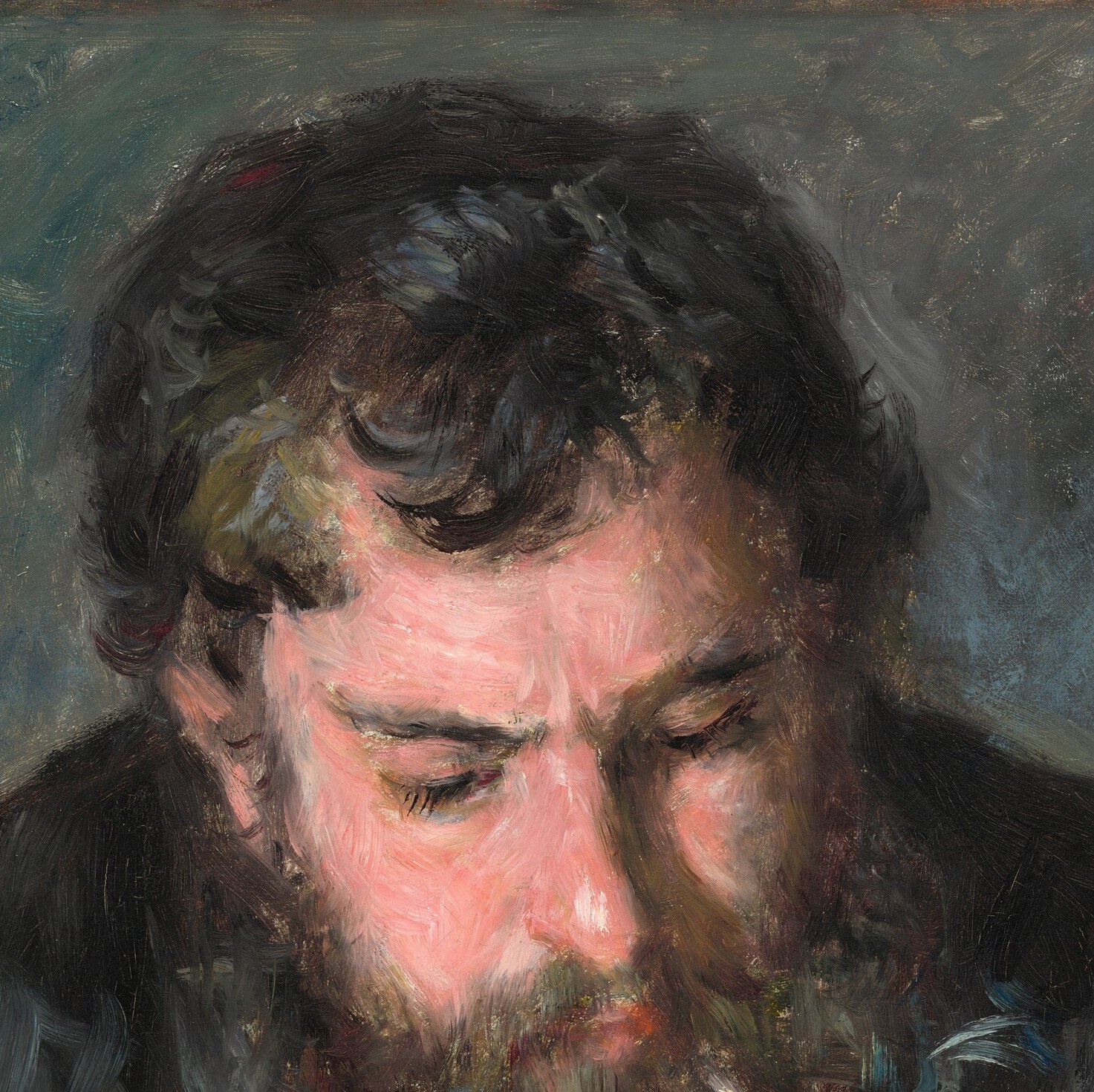
Auguste Renoir's portrait of Claude Monet, painted in 1872, is not the view of Monet we usually get. The man who spent his life outdoors, chasing shifting light across haystacks and water lilies, is here indoors, seated, perfectly still. The painting lives at the Musée Marmottan Monet in Paris.
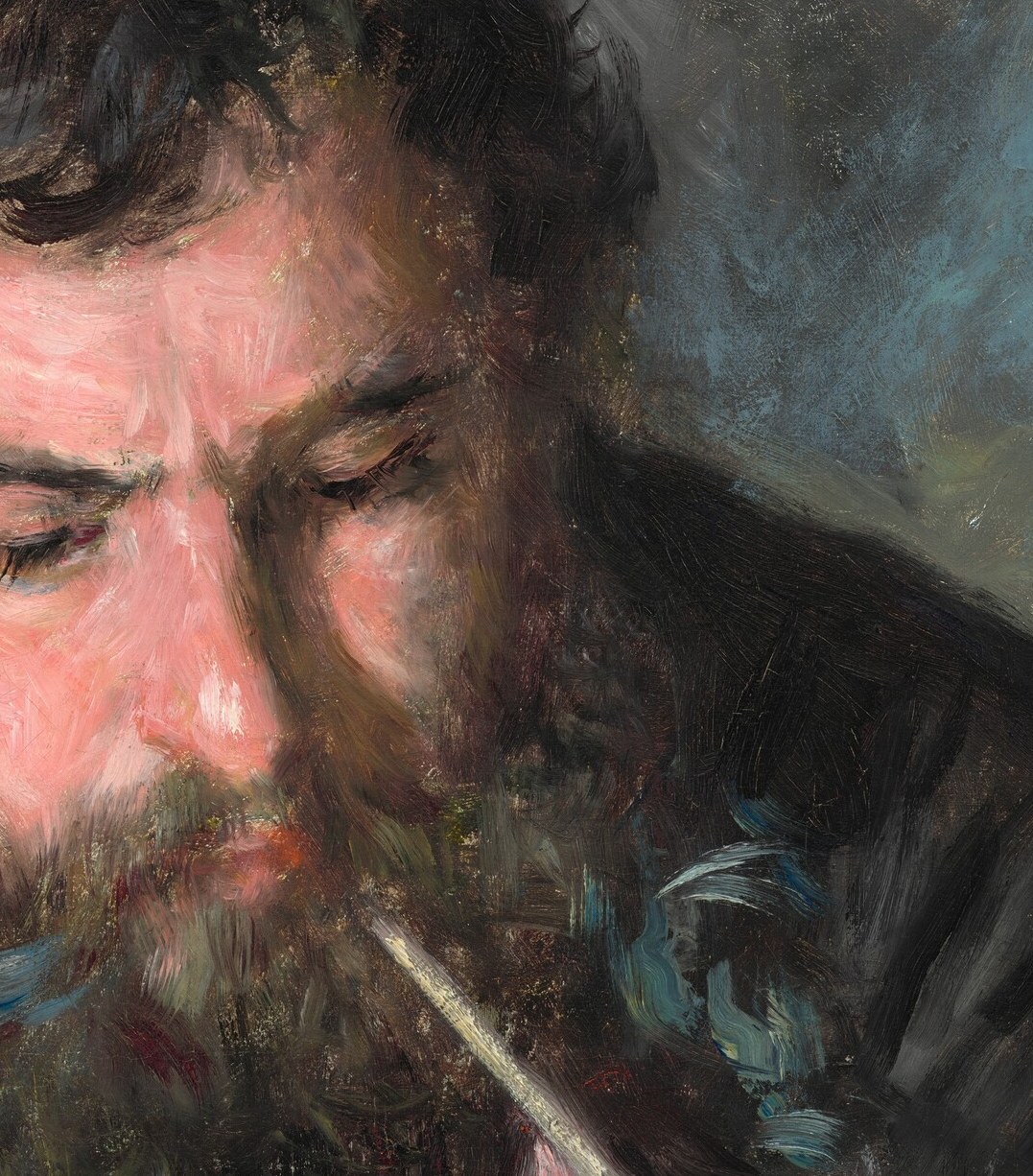
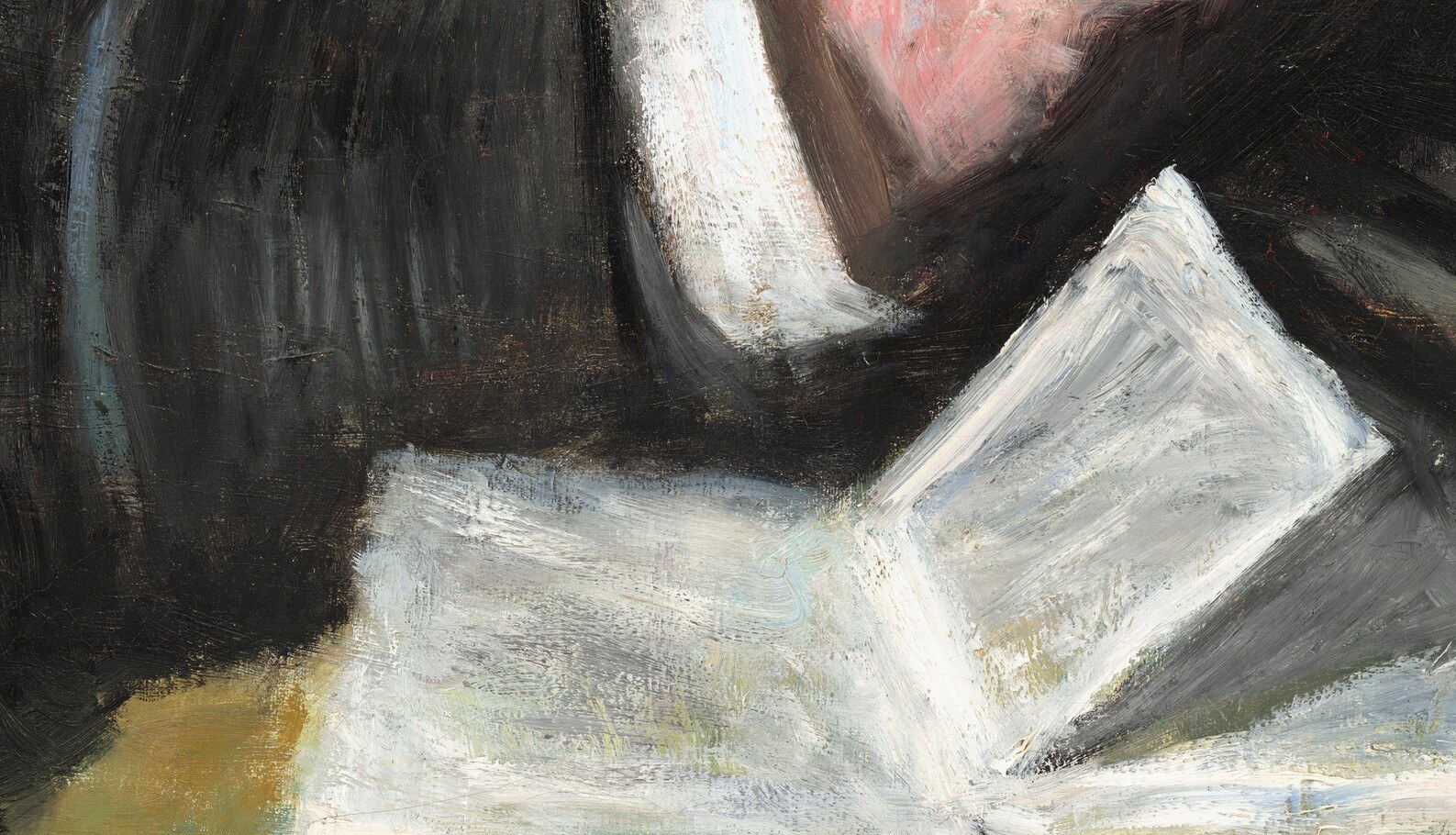
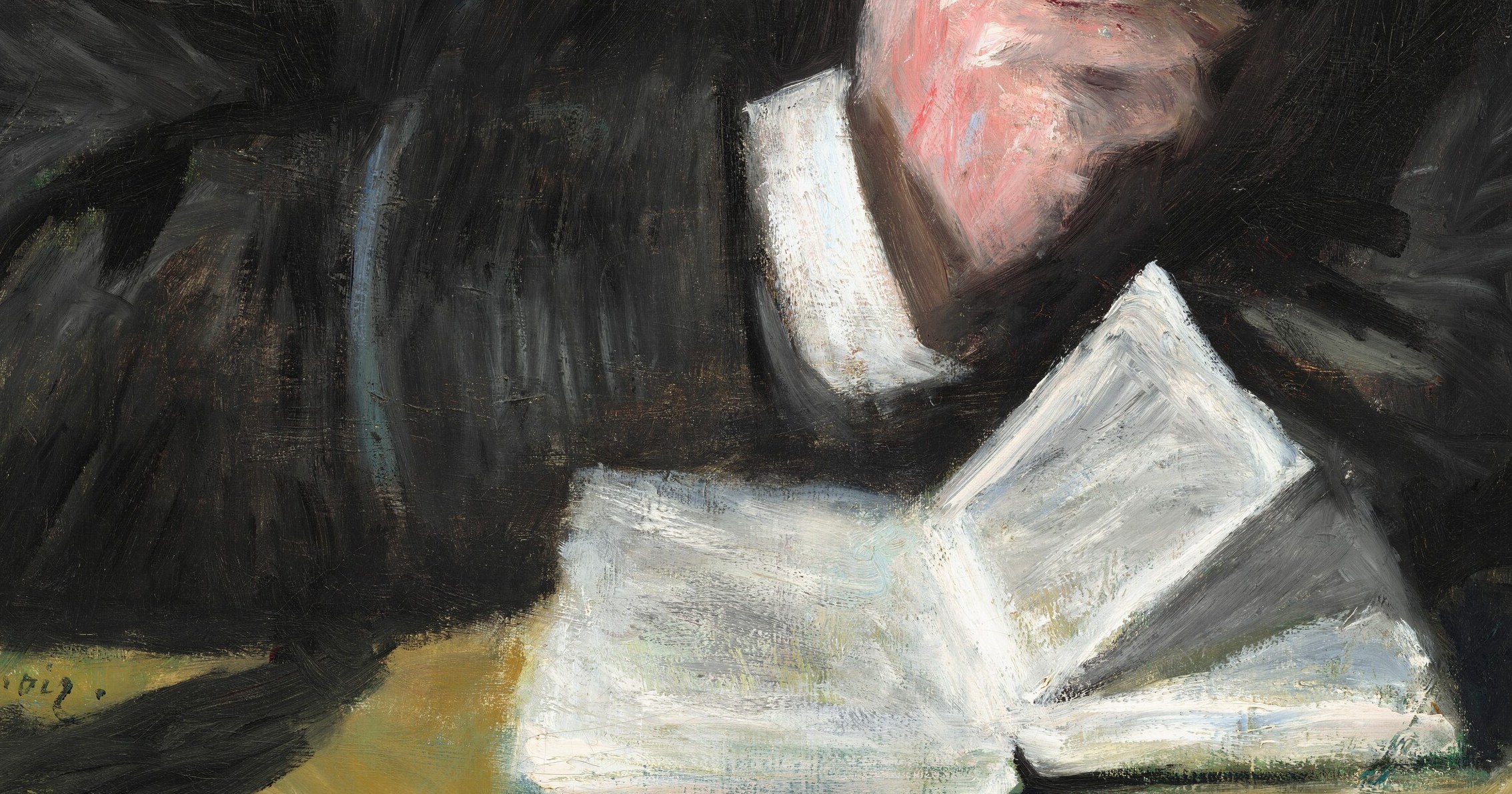
Renoir presents his friend without a painter's tools. No easel, no palette, no beret. Instead, Monet holds a long clay pipe and rests his hand on an open book. The pipe was Renoir's addition, a prop that signals bohemian ease and the informal camaraderie between the two men. Look closely at the book's pages and you can see Renoir chose to imply printed lines with just a few loose strokes, enough to suggest legibility without ever forming actual letters.
The painting was made when both artists were in their early thirties, still struggling, still inventing what would become Impressionism. Renoir painted it in his studio, but the background dissolves into warm and cool tones with no horizon, no room, no props beyond the figure himself. Everything is on Monet.
Renoir and Monet painted side by side at La Grenouillère three years before this, producing some of the first truly Impressionist pictures. Here, Renoir turns that eye on his friend, and gives us a quiet record of who Monet was when the world had not yet decided what either of them would become.
Details

Transcript
A portrait of Claude Monet, painted in 1872. But this is not the Monet we know. Renoir asked his friend to sit still, an unnatural state for a man who chased light. His hand holds a long clay pipe. Renoir added it himself as a prop of bohemian ease. The open book on his lap is painted with loose strokes that almost form words. Together they sketch a man of thought, not just a man of paint.