Altar Frontal by http://www.wikidata.org/.well-known/genid/497fe0f11323cfaf34f5b5a370242d39
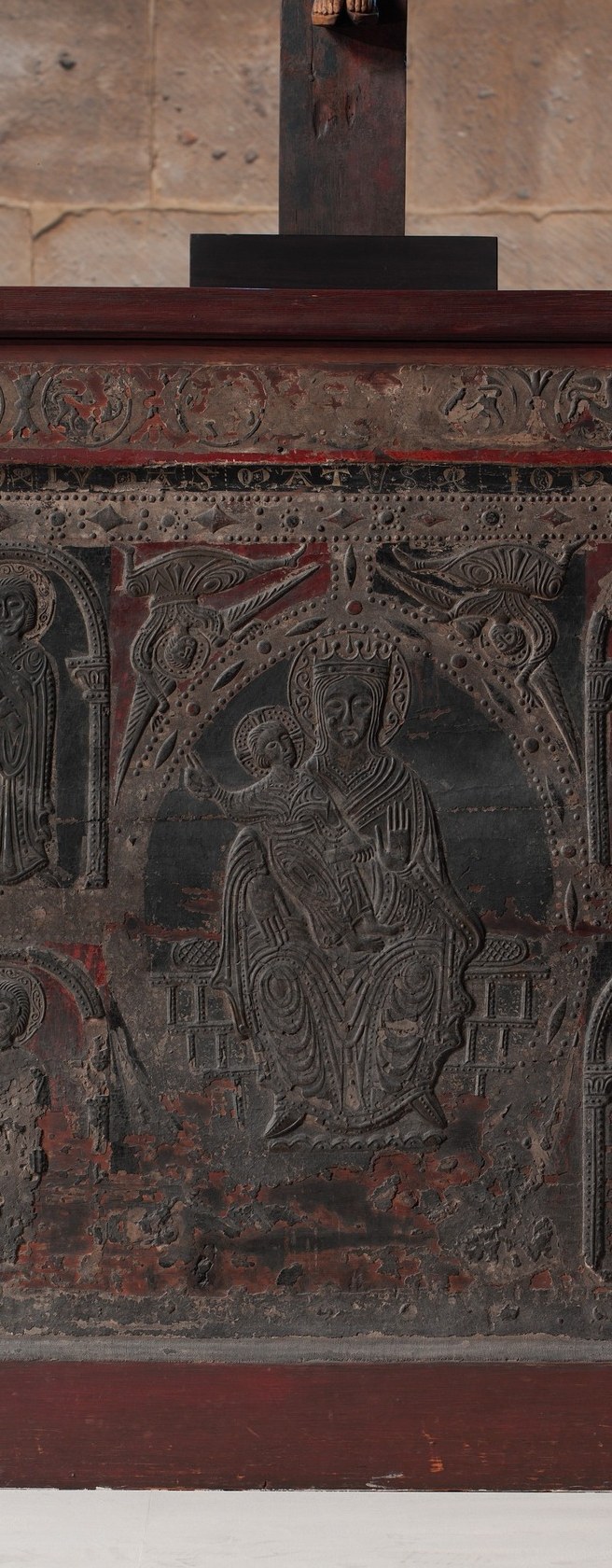
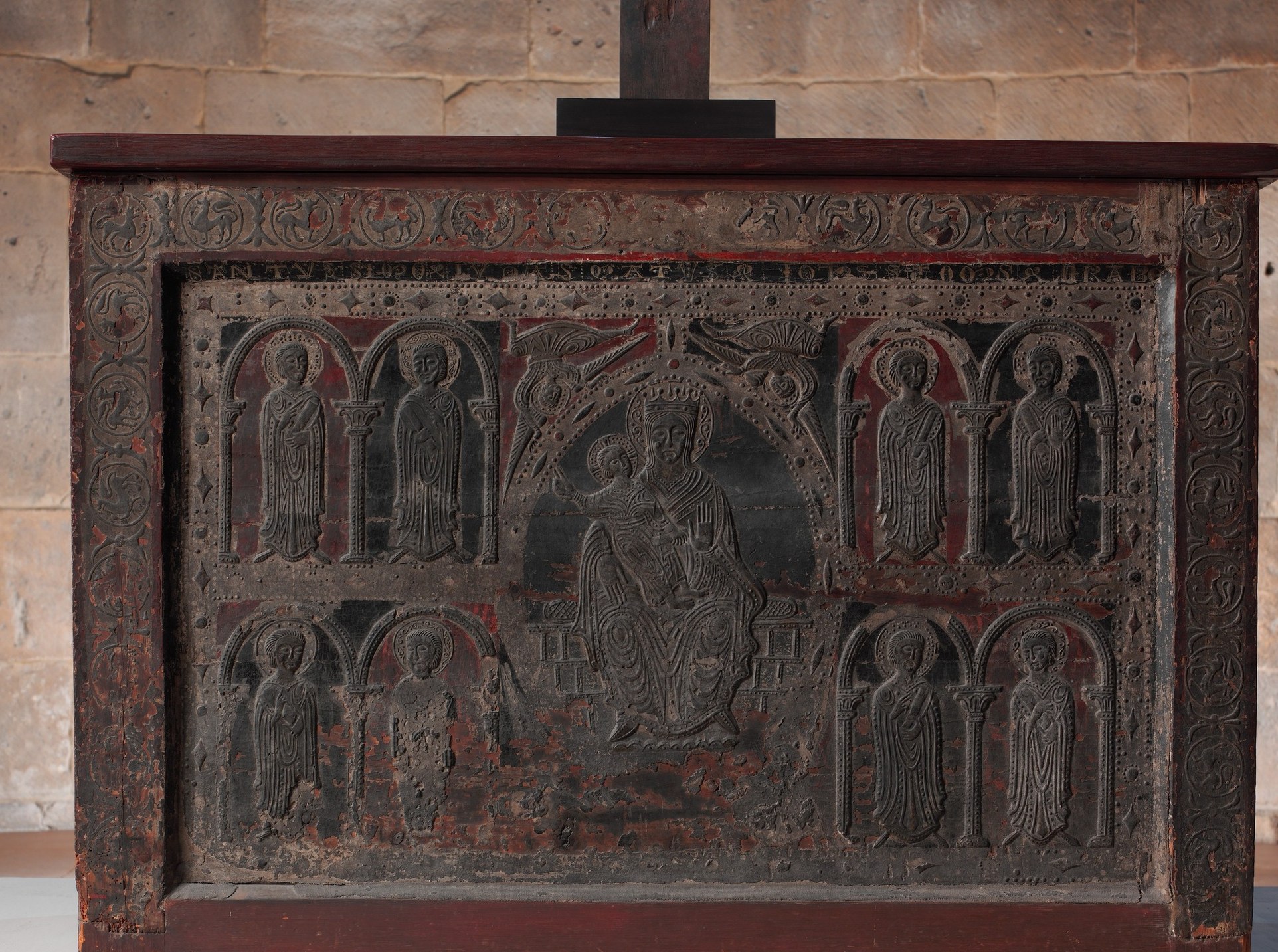
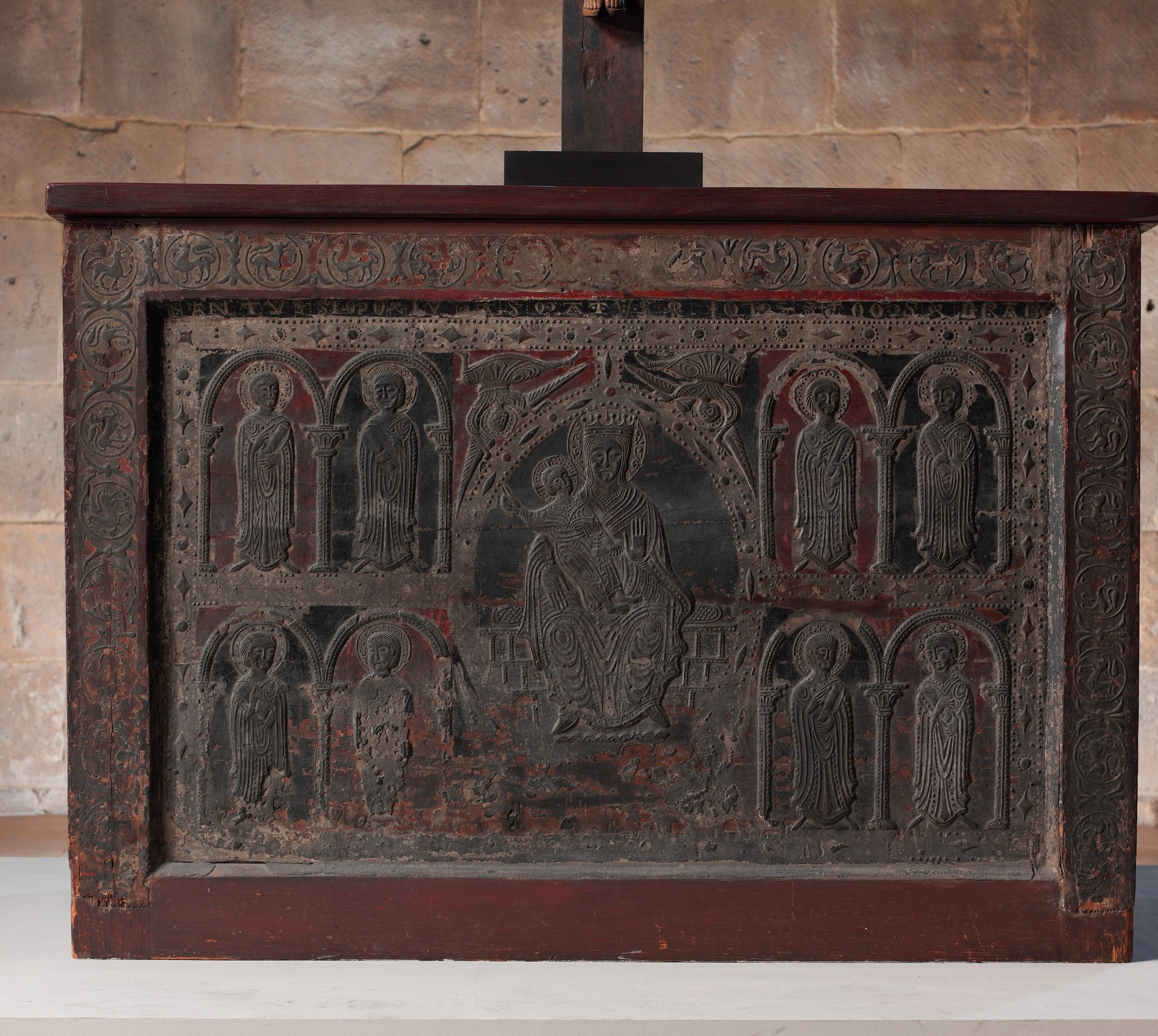
This is an altar frontal, carved in wood around 1225. Its maker is unknown, and its original home is lost to history, but it survives as a rare witness to a transitional moment in medieval art. The architecture behind the figures moves from the round arches of the Romanesque into the pointed arches of the Gothic, a precise stylistic datemark carved right into the panel.
The frontal shows the enthroned Virgin and Child flanked by six standing saints. The figures are stylized, their faces simplified, their identities no longer legible. Most of the original polychromy is gone: what remains are muted browns and grays, with faint traces of red and gold in the more sheltered niches. The leaf-scroll border along the top is one of the least-handled zones, and workshop identity can sometimes be read from these decorative vocabularies.
The most compelling detail is the carved bottom rail. On surviving altar frontals of this period, the lower edge frequently concealed donor inscriptions, consecration dates, or workshop stamps, marks never meant for the congregation's eye. Here the wood has been worn smooth by eight centuries of handling, and whatever was written is gone. But the candle mounted above the frontal tells you the object has never fully left its original life. It is a museum piece that someone still lights a candle for.
What name do you think was once carved along that bottom edge?
Details

Transcript
An altar frontal, carved in wood, almost 800 years old. You see the Virgin, the Child, and six saints. The paint is nearly gone. Brown, gray, faint traces of red and gold. Its age is written in the architecture: Romanesque shifting into Gothic. But look at the bottom rail. The hidden part. This is where a donor would leave their name, or a workshop its mark. The wood is worn smooth. The inscription is lost to handling and time. But a candle still burns above it. Someone still stands before this panel.