Textile Merchant by American 19th Century
This is "Textile Merchant," painted around 1840 by an unknown American artist. It hangs today with no famous name attached to it. The sitter's name is also gone. What remains is a quietly extraordinary portrait of a working man in a moment of suspended action, his quill paused above the page.
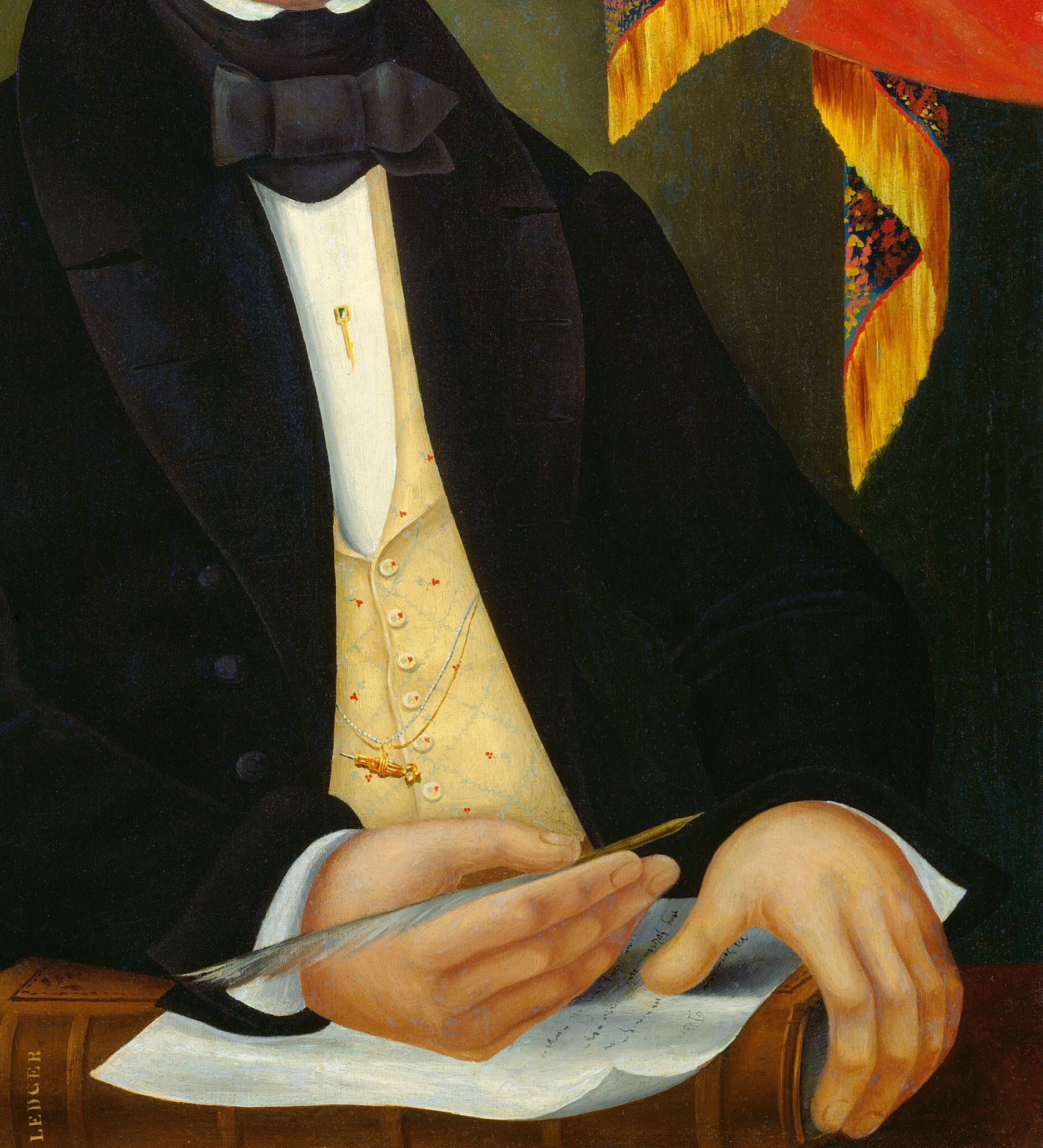
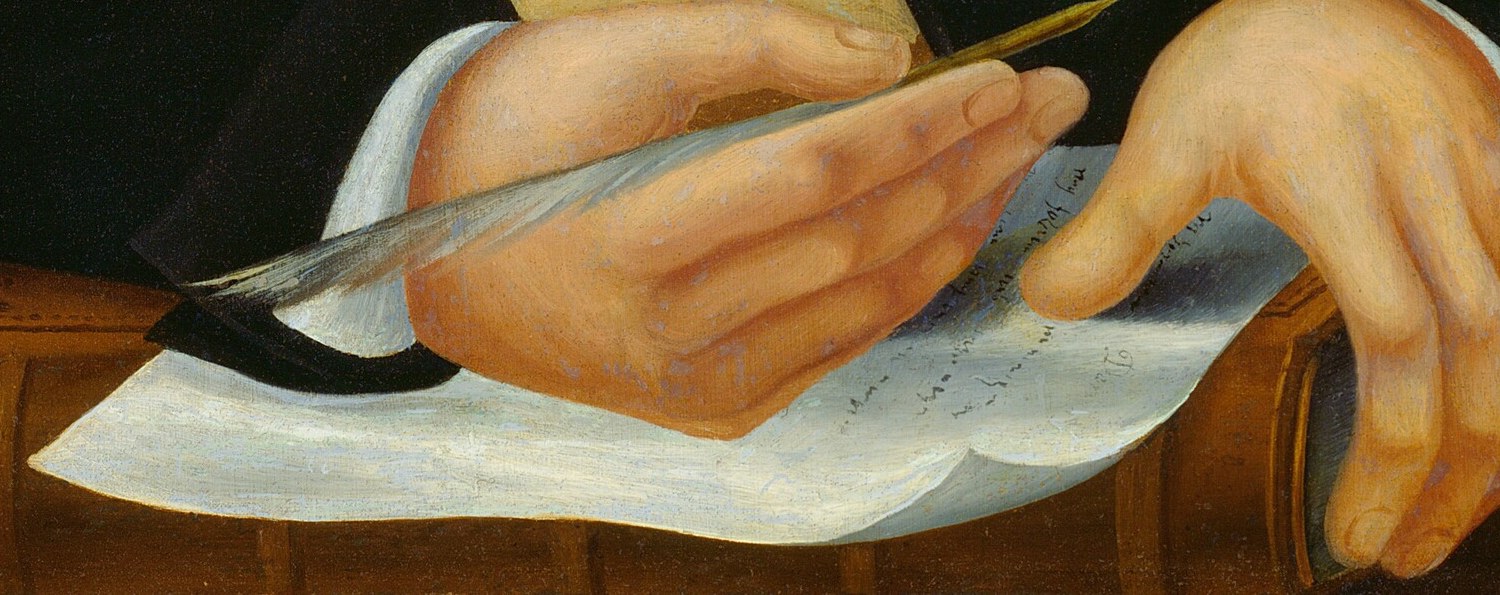
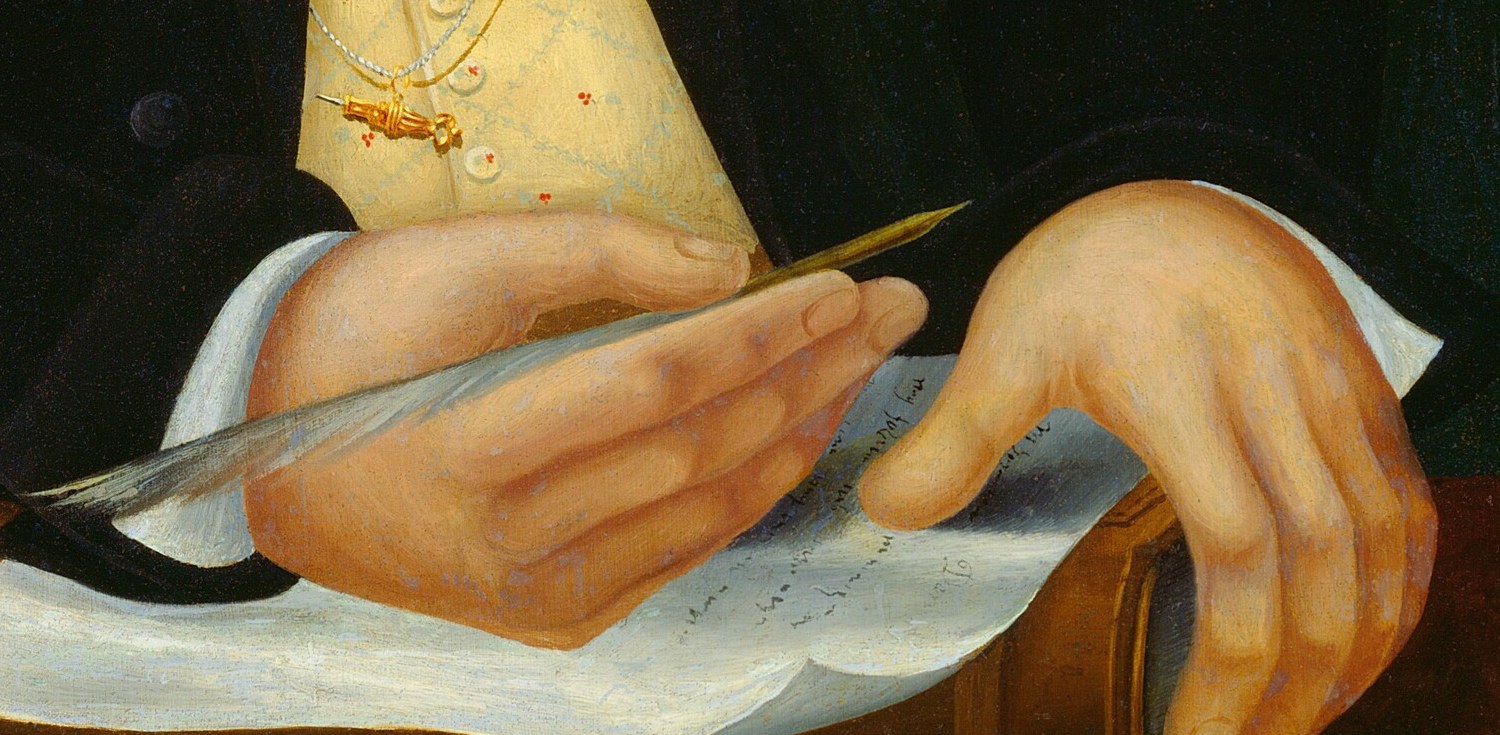
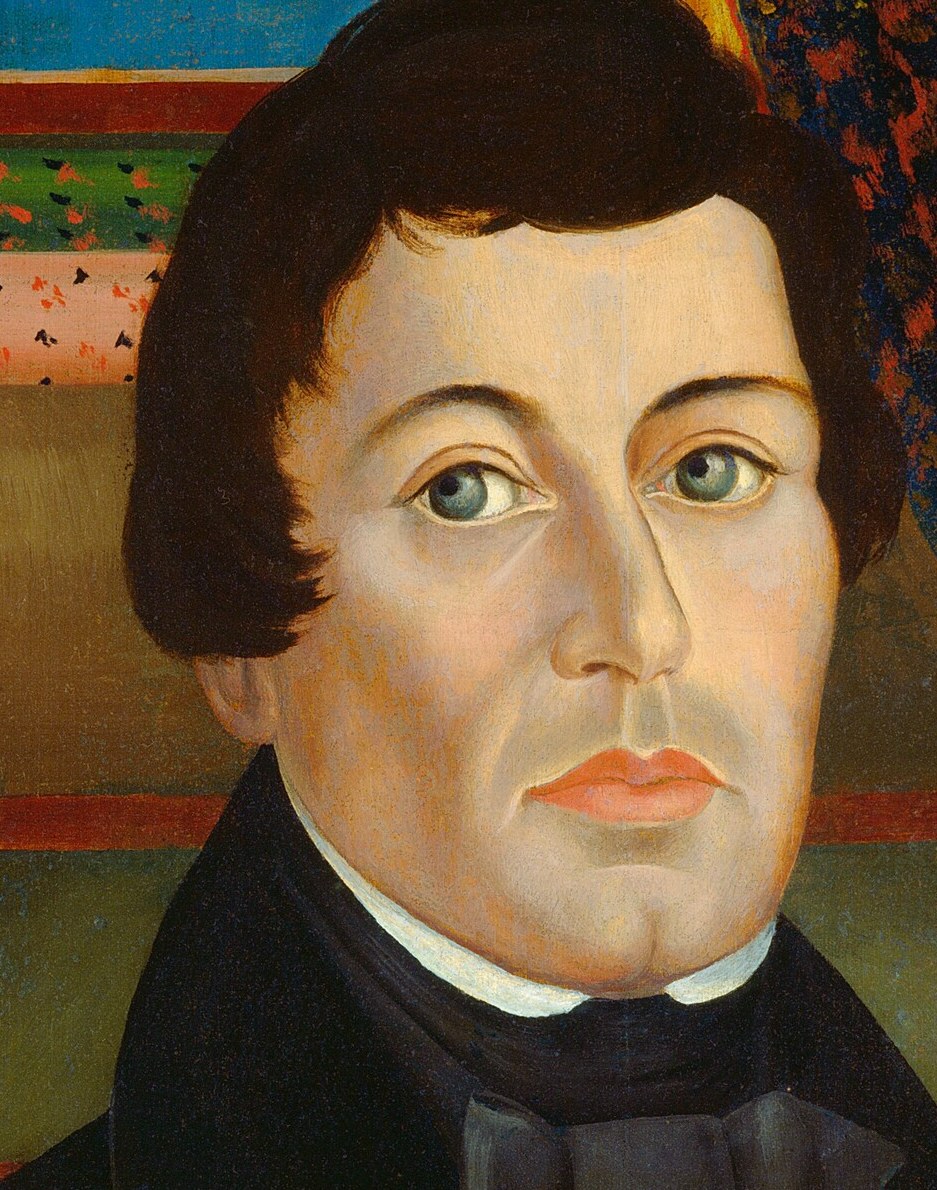
Look first at his eyes. The blue is startling and specific, painted with real attention. Then look at his hands: the quill is held lightly but deliberately. Behind him, the rolls of fabric and the red curtain tell you what he did and that he could afford to commemorate it.
In the 1840s, having your portrait painted was still a significant expense and a marker of arrival. This isn't a general or a governor. It's a textile merchant, shown in the act of writing, the administrative heart of trade. The Romantic period was beginning to find dignity in ordinary labor, and this painter gave him the same careful treatment a more famous subject would get.
We don't know the man's name. But nearly two centuries later, his attention still holds us. What do you think he was about to write?
Details
Transcript
Before photographs, a portrait was an event. You dressed in your best. You sat still. You paid. This man is a textile merchant, mid-work. He holds his quill paused, just for a moment. But the painter made us meet his eyes. And his eyes are strikingly, unusually blue. The artist's name is lost. The merchant's name is lost. All that remains is this quiet, serious dignity.