Madame Gaye by Mariano Fortuny Marsal
View the artwork: Madame Gaye →
Mariano Fortuny painted "Madame Gaye" in 1865, when he was just 27 years old. The portrait is now held in a private collection and is not on public display, which makes every high-resolution reproduction a rare chance to see it up close.
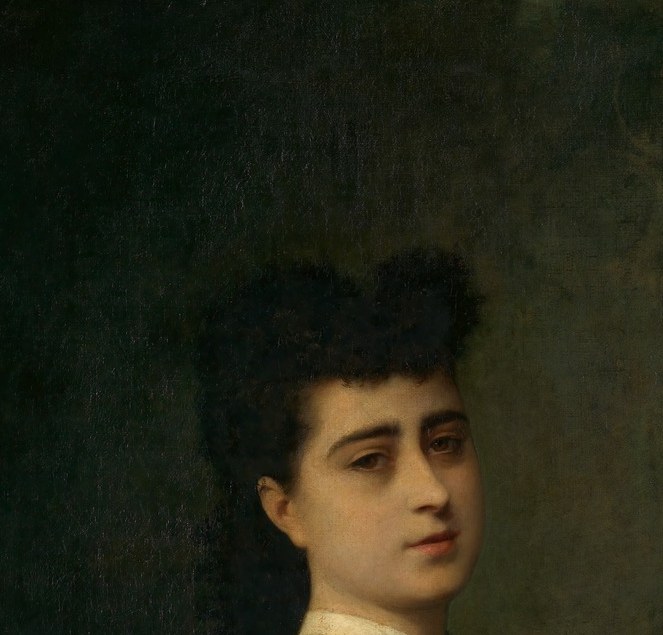
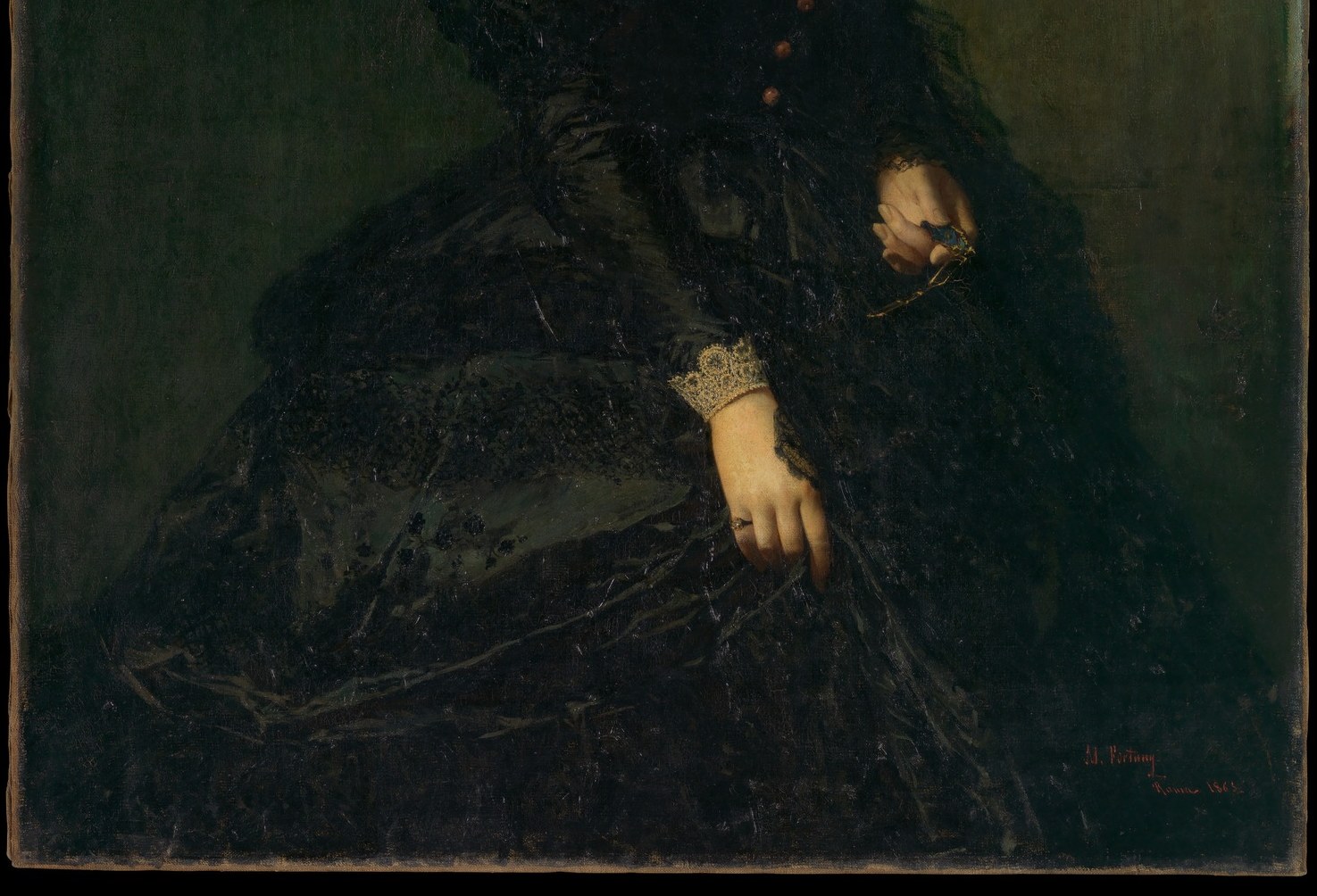
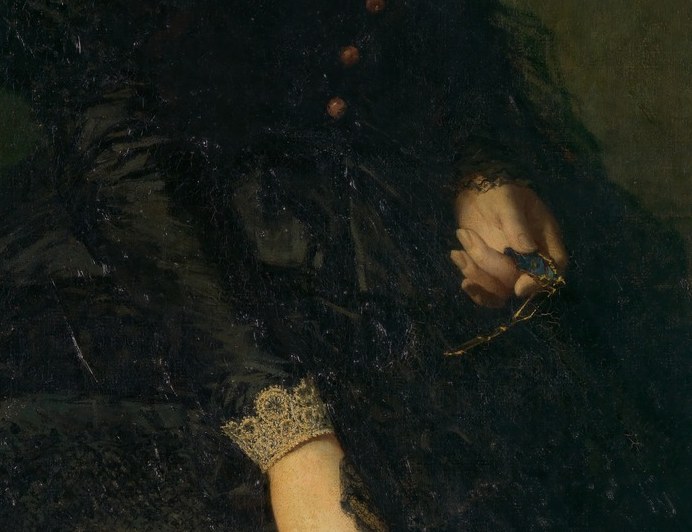
The sitter is composed but not performing. Her dark eyes drift just past the viewer, a deliberate choice that makes the portrait feel more like interior thought than social display. Fortuny builds the entire composition around her face and hands: a warm, narrow band of light sculpts the cheekbone, while the hands rest in her lap with the formal stillness expected of a bourgeois sitter in 1860s Madrid. In her fingers, she holds a small ring, a detail the artist documentation specifically records, and one that rewards the closest possible looking.
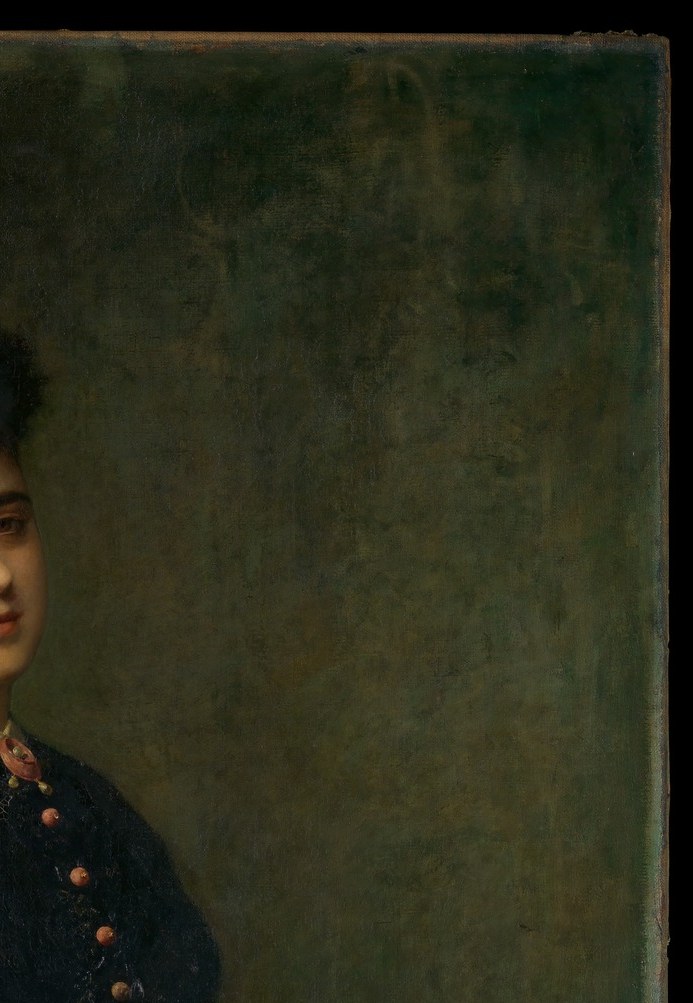
Fortuny studied Velázquez intently in the Prado, and you can see the debt in how he uses near-total darkness to project presence. The gown, the background, the lower canvas, they are almost formless voids. Every ounce of attention is forced onto the woman herself. The lace cuffs are the lone technical showpiece, a signature of his early career.
The artist was already famous when he painted this. He would die of malaria in Rome in 1874, aged only 36. There is a strange weight to the portrait when you know that: a young man painting a woman who seems already to be looking somewhere else.
#arthistory #marianofortuny #19thcenturyportrait
Details
Transcript
She meets your look, but her gaze skips away. Madame Gaye, painted in Madrid, 1865. The painter pulls every ounce of light to her face. In her lap, her hands are perfectly still. Look closer. She holds a small ring. The brushwork on the lace cuffs is deliberately brilliant. Fortuny was 27. He would be dead within nine years.