Artwork
Madame Gaye
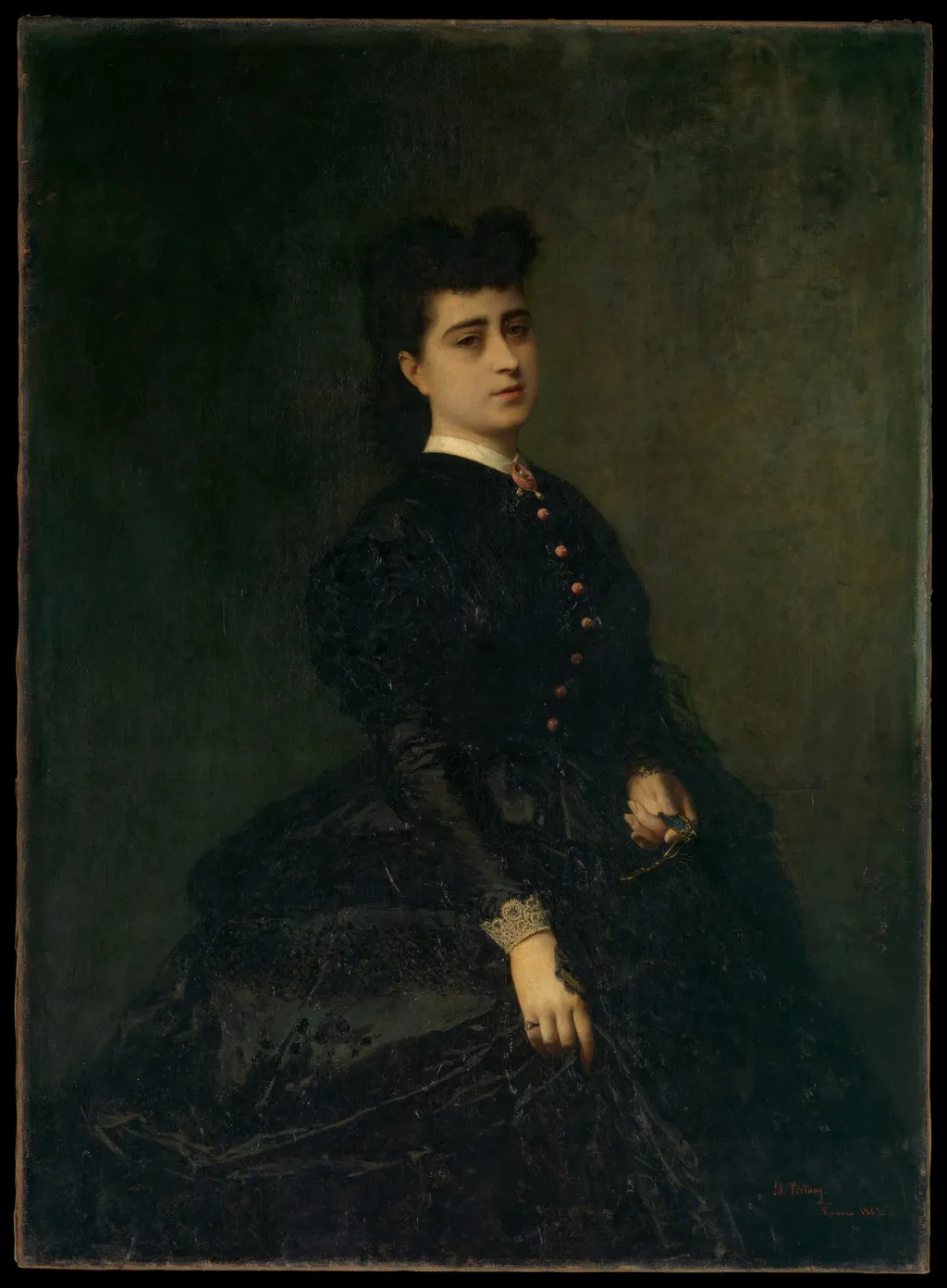
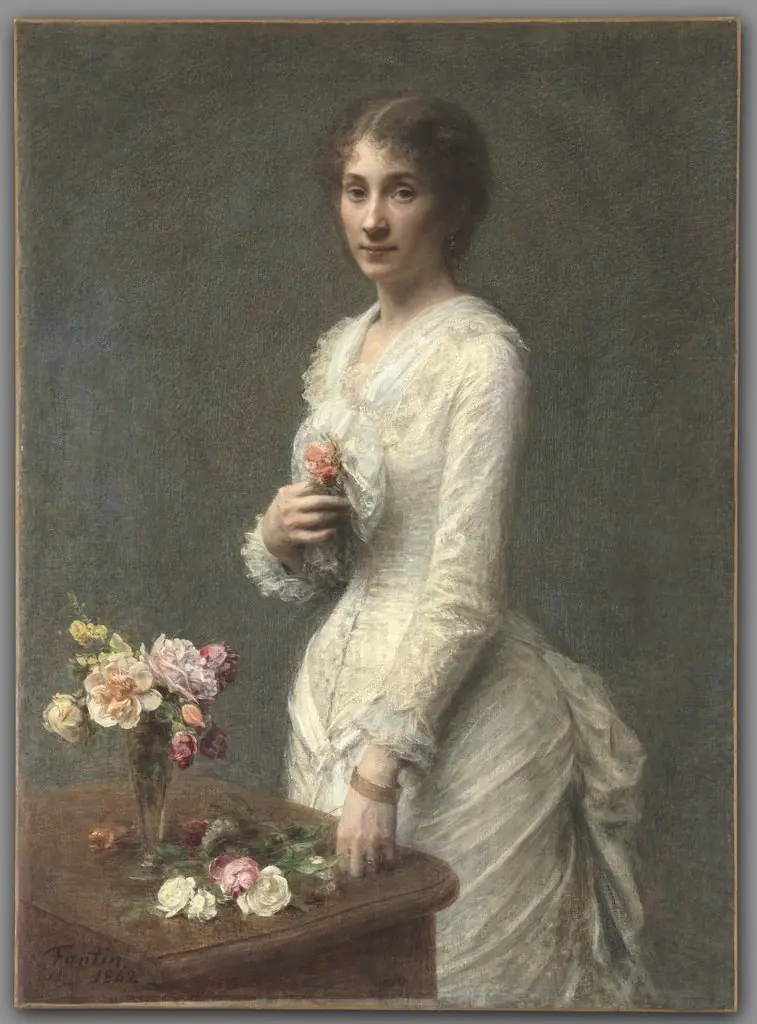
Madame Gaye is an oil painting by the Realist artist Mariano Fortuny Marsal. It dates from 1865 and is held in the collection of the Metropolitan Museum of Art.
About this work
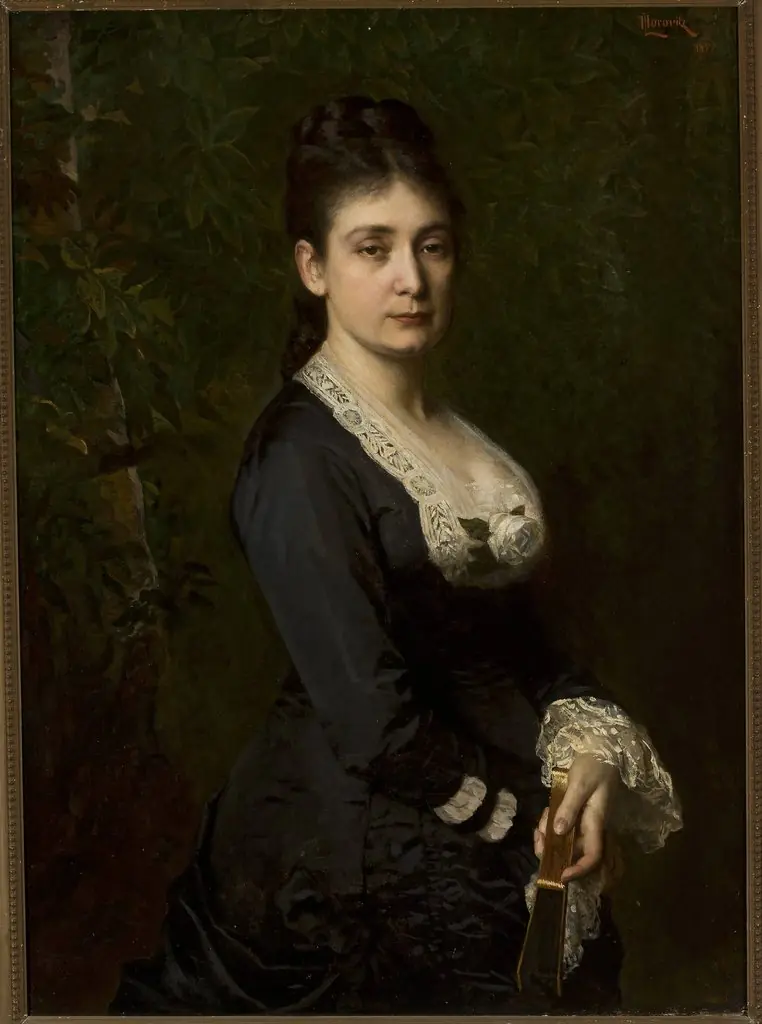
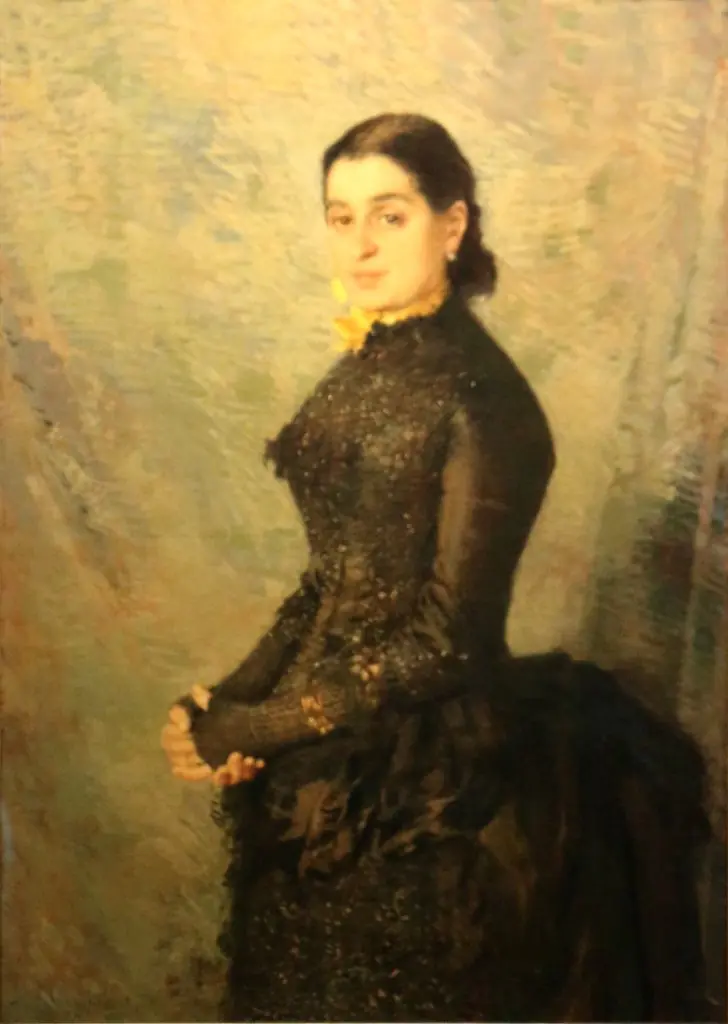
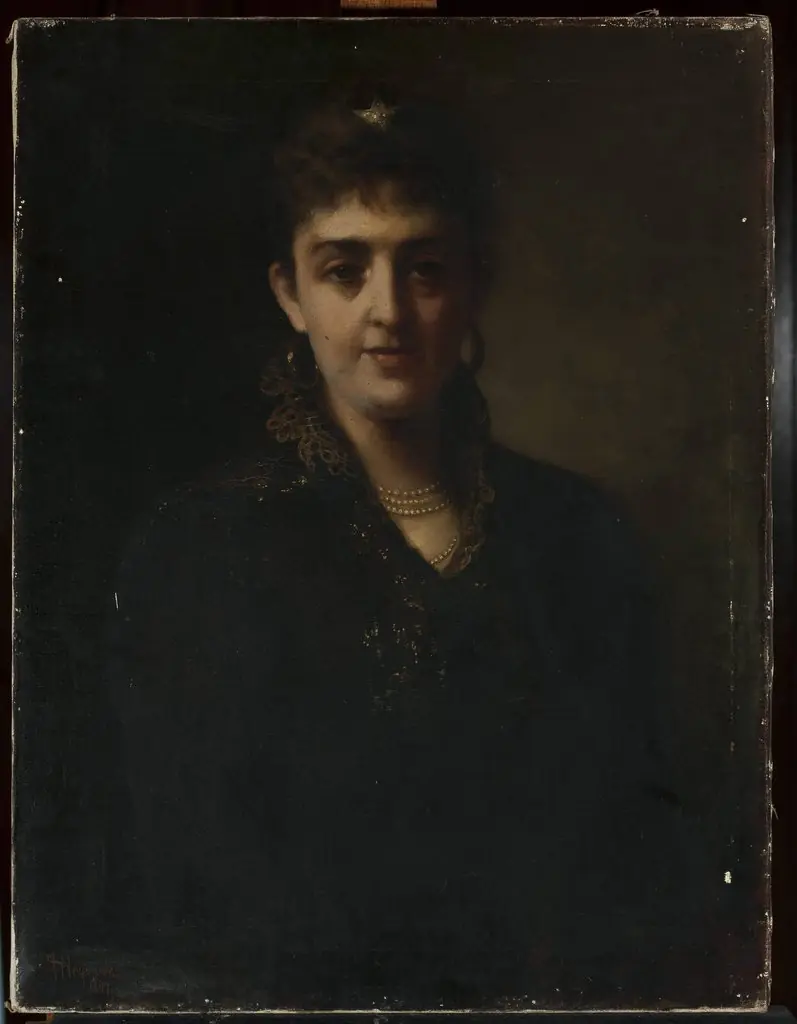
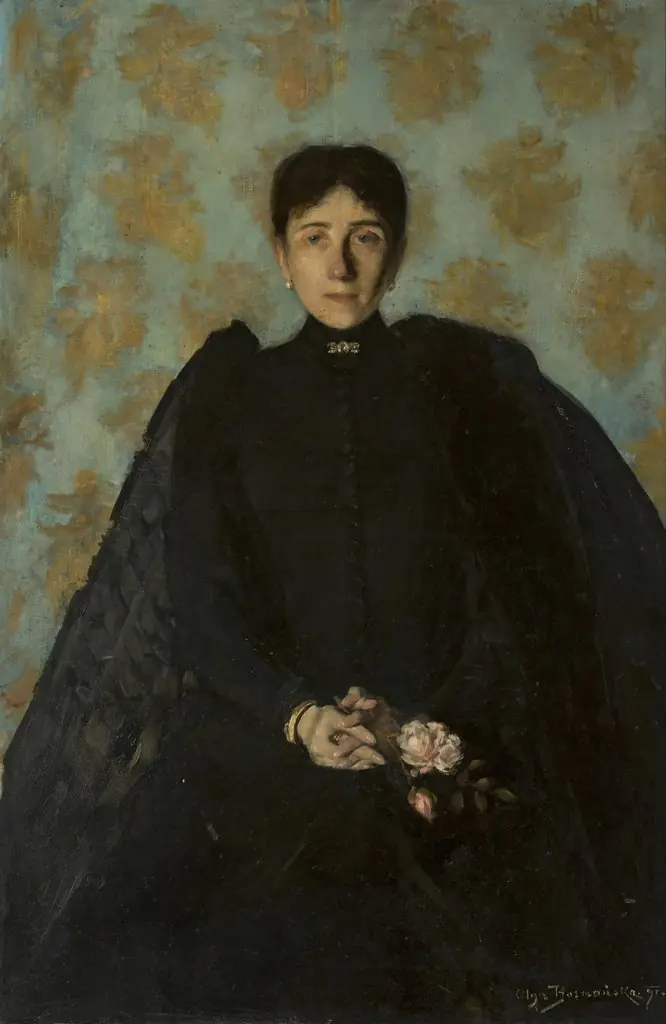
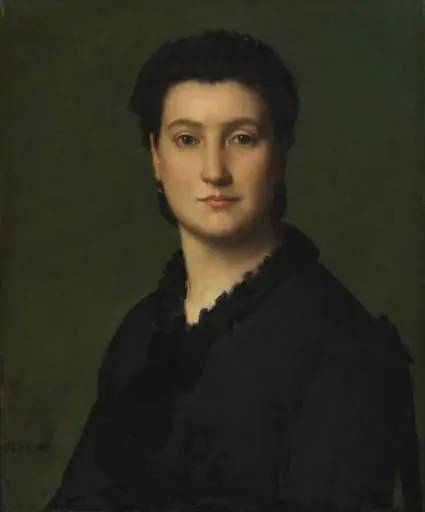
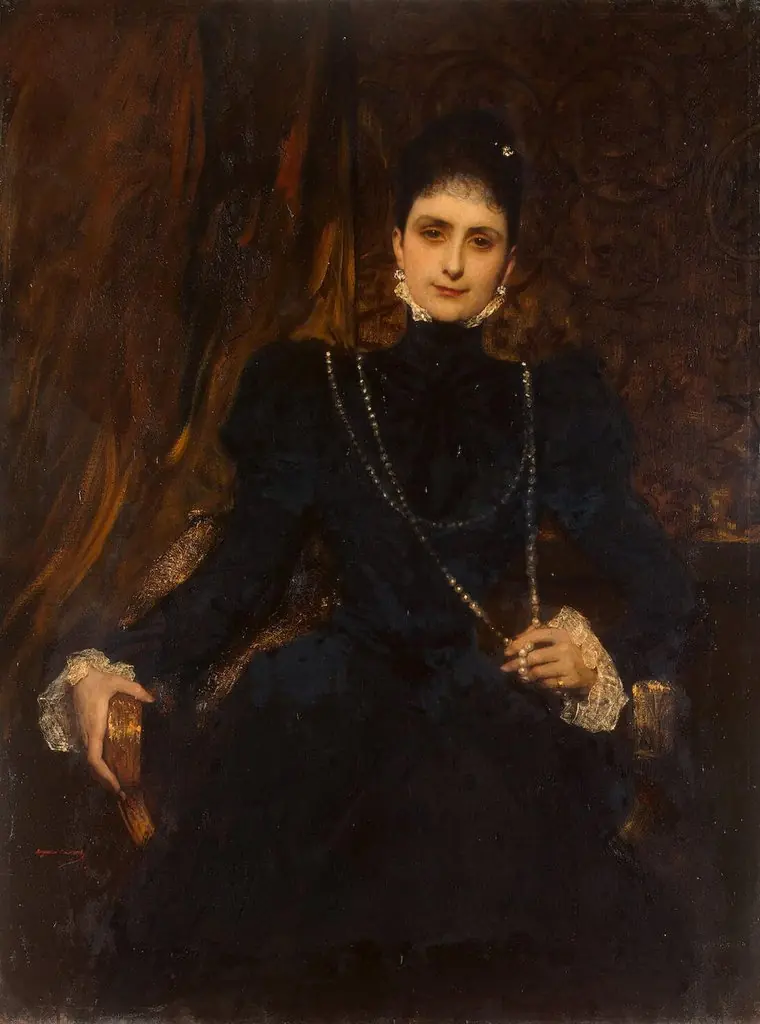
A woman sits in a dark, formal dress with lace cuffs and a row of buttons, her hair piled high, a small ring in her hand. Soft light catches her face and hands while the plain dark background sets her forward. Mariano Fortuny Marsal, 1865.
Subject & Meaning
These elements serve as visual markers of her attire and status, functioning as iconographic cues within the painting.
The work is a portrait that shows a woman rendered in oil on canvas, dating to 1865. She is identified by the presence of lace, a cuff, a button, a ring and a pearl within the composition, details that the sources record as part of the depicted subject. These elements serve as visual markers of her attire and status, functioning as iconographic cues within the painting.
As a portrait by Mariano Fortuny Marsal, the piece uses these specific decorative features to convey the sitter's identity and social context, while the overall arrangement functions as a conventional representation of a bourgeois woman in the mid-nineteenth century.
Technique & Style
Madame Gaye is an oil painting on canvas created by Mariano Fortuny Marsal in 1865. The work portrays a woman adorned with lace, a cuff, a button, a ring, and a pearl, rendered with meticulous attention to texture and detail characteristic of Fortuny’s portraiture. The medium is oil paint applied to a woven canvas support, and the painting’s formal qualities emphasize the delicate rendering of fabrics and jewelry. It is held in the collection of the Metropolitan Museum of Art.
History & Provenance
Madame Gaye was painted by Mariano Fortuny Marsal in 1865 as an oil-on-canvas portrait. The work’s creation date is confirmed by both the artist’s attribution and the inception date of 1865-01-01. While no specific commission details are recorded in the sources, the painting entered the collection of the Metropolitan Museum of Art, where it is currently housed.
The provenance therefore traces from the artist’s studio to its present location at the Met, with no further ownership transfers documented in the available material.
The painting Madame Gaye, created by Mariano Fortuny Marsal in 1865, is held in the collection of the Metropolitan Museum of Art. The work, an oil on canvas portrait measuring 137.2 by 100.3 centimeters, is located at this institution. While the sources confirm its current residence and physical attributes, they do not provide a specific inventory or accession number, nor do they list any past or present exhibitions in which the piece has been displayed.
Context
Mariano Fortuny Marsal’s 1865 oil portrait Madame Gaye, classified as a 19th‑century Spanish portrait, exemplifies the artist’s focus on meticulous realism and intimate characterization. The work, recorded in the Metropolitan Museum of Art’s collection, reflects the broader tradition of Spanish portraiture that combined academic technique with a keen interest in contemporary dress and accessories, as documented in contemporary catalogues. Its inclusion in the museum’s holdings underscores its significance within Fortuny’s oeuvre and provides a point of reference for scholars examining the evolution of portrait genre in the mid‑1800s.
Overview
This oil painting, titled Madame Gaye, presents a seated woman in a formal portrait. She is depicted with a composed demeanor, dressed in an elaborate dark gown, against an unadorned, dark background. The artist's approach emphasizes the sitter's presence, allowing her figure and attire to emerge prominently from the shallow pictorial space. The work serves as a direct representation of its subject through the traditional medium of oil paint.
Own this work as a print
Artist & collection
Artist
Mariano Fortuny y Marsal (Catalan: Marià Fortuny i Marsal, pronounced; June 11, 1838 – November 21, 1874) was a Spanish painter known for works focusing on Romantic fascination with Orientalist themes, historicist genre…