Virgin and Child Enthroned with Four Saints, Saints John the Baptist, Antony Abbot, Elizabeth of Hungary, a female saint by http://www.wikidata.org/.well-known/genid/ffc58e3a0f8a836c6d43f2fb8efaa86f
The "Virgin and Child Enthroned with Four Saints," painted around 1350 by an unknown artist, holds many secrets. With no documented commission or ownership history, its origins remain a compelling mystery.
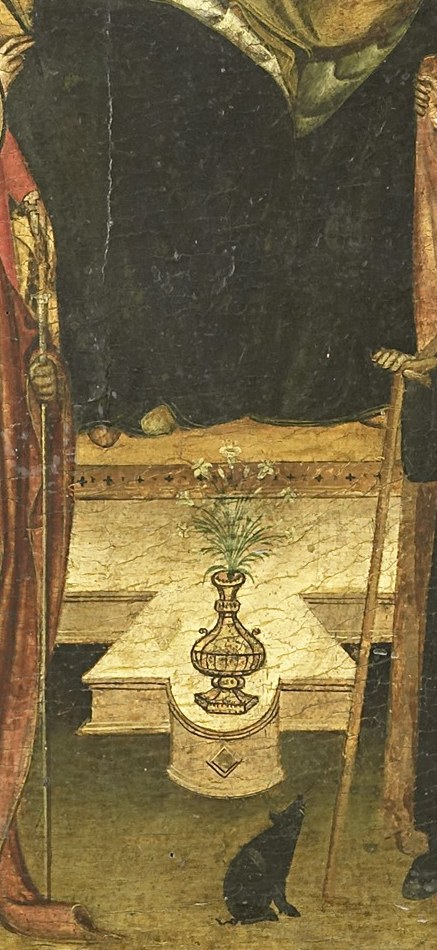
Yet, this tempera painting contains a striking, subtle detail. Behind the ornate golden throne, a small black cat casts a shadow. This unusual element, often seen as a symbol of evil, is here overcome, adding a fascinating layer to the devotional scene.
Despite its enigmatic past, the artwork's survival suggests its profound value in a private chapel or devotional context. The balanced arrangement of the Virgin, Child, and various saints aligns with the 'sacra conversazione' tradition, inviting quiet contemplation.
What other hidden meanings might this painting hold?
Details
Transcript
This painting is a mystery. No one knows who commissioned it. No one knows where it was painted, or for whom. But look closely, hidden behind the throne. A small black cat casts a shadow. The cat's shadow, often a symbol of evil, is being overcome here. A quiet detail in a painting otherwise full of devotion.