Untitled by Isei
This is 'Untitled' by the Japanese artist Isei, painted around 1550 in ink and color on paper. For a long time, its authenticity was the subject of a genuine scholarly scandal. Connoisseurs argued fiercely over whether it was a true 16th-century work or a much later forgery designed to capture a nostalgic vision of old Japan.
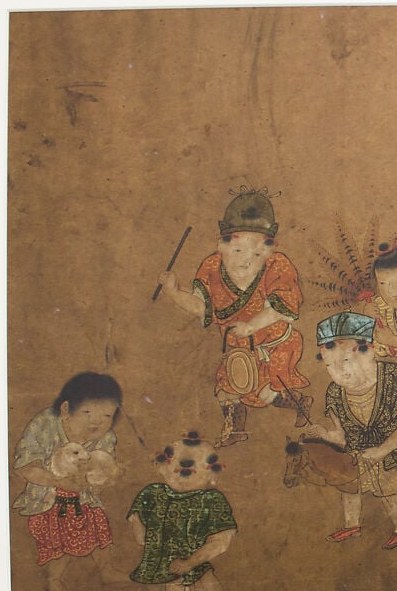
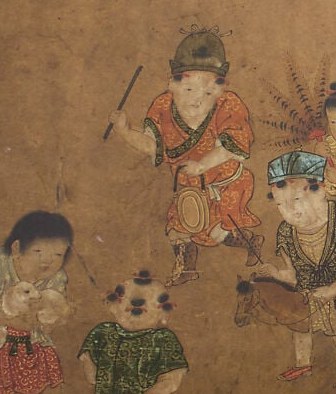
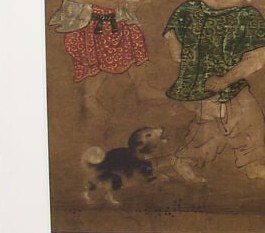
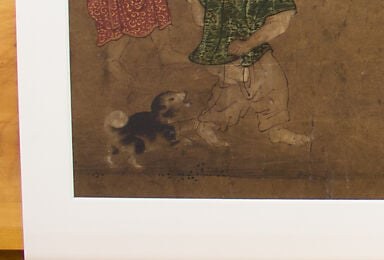
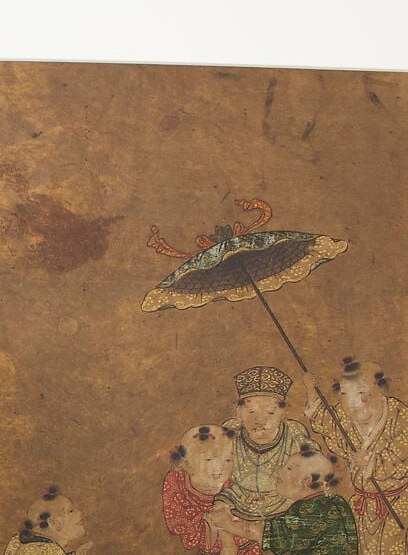
The scene itself is disarmingly charming: two aristocratic boys in layered, colorful robes play with a small dog beneath a flowering tree. Look closely at the central boy's active posture in the left panel and the way his robes are patterned. His dynamic diagonal stance pulls the composition forward. Then shift your eye to the right panel, where a boy with a parasol and a crouching blue-robed figure complete the narrative.
The dispute was settled by the physical evidence on the paper. The controlled ink washes on the rock formations, the dry-brush textures, and the evenness of the warm ochre ground across two panels revealed a technical mastery that late forgers rarely achieve. The fine-line work on the textile patterns encodes real social rank, not an imagined version of it.
This painting was created during the Muromachi period, the same era when Titian and Michelangelo were working in Europe. It is a record of childhood exuberance from a completely separate but equally sophisticated artistic tradition. What do you think settles an art debate: the story in the image, or the physical proof on its surface?
Details
Transcript
It looks like a simple scene of children at play. Two boys in rich robes, a small dog, a flowering tree. For years, scholars debated whether it was a genuine 16th-century work. Skeptics pointed to the unusually vivid colors and the playful subject. But the ink washes betray a master's hand, impossible to fake. The artist was Isei, a painter working while Europe had its Renaissance.